I had a question asked of me on Twitter today, or should I say I answered one that was being discussed. Someone was wondering how we decide what tags go on which cows. I had never thought of it before. Sometimes, when you’re on the inside, things seem so obvious that you forget that others don’t know why you’re doing it…it’s an epidemic in agriculture, and one we’re working on fixing.
To answer the question, yes the tag does mean something. When calves are first born (or at least soon after), they get a tag in their ear with the same number their cow has. The white tags mean that the calf is a bull, the yellow tag means that it’s a heifer (a female that hasn’t had a calf yet).
Separating the two sexes of calves helps make giving the calves their vaccinations easier. Plus, you don’t have to worry about trying to castrate a heifer! 🙂
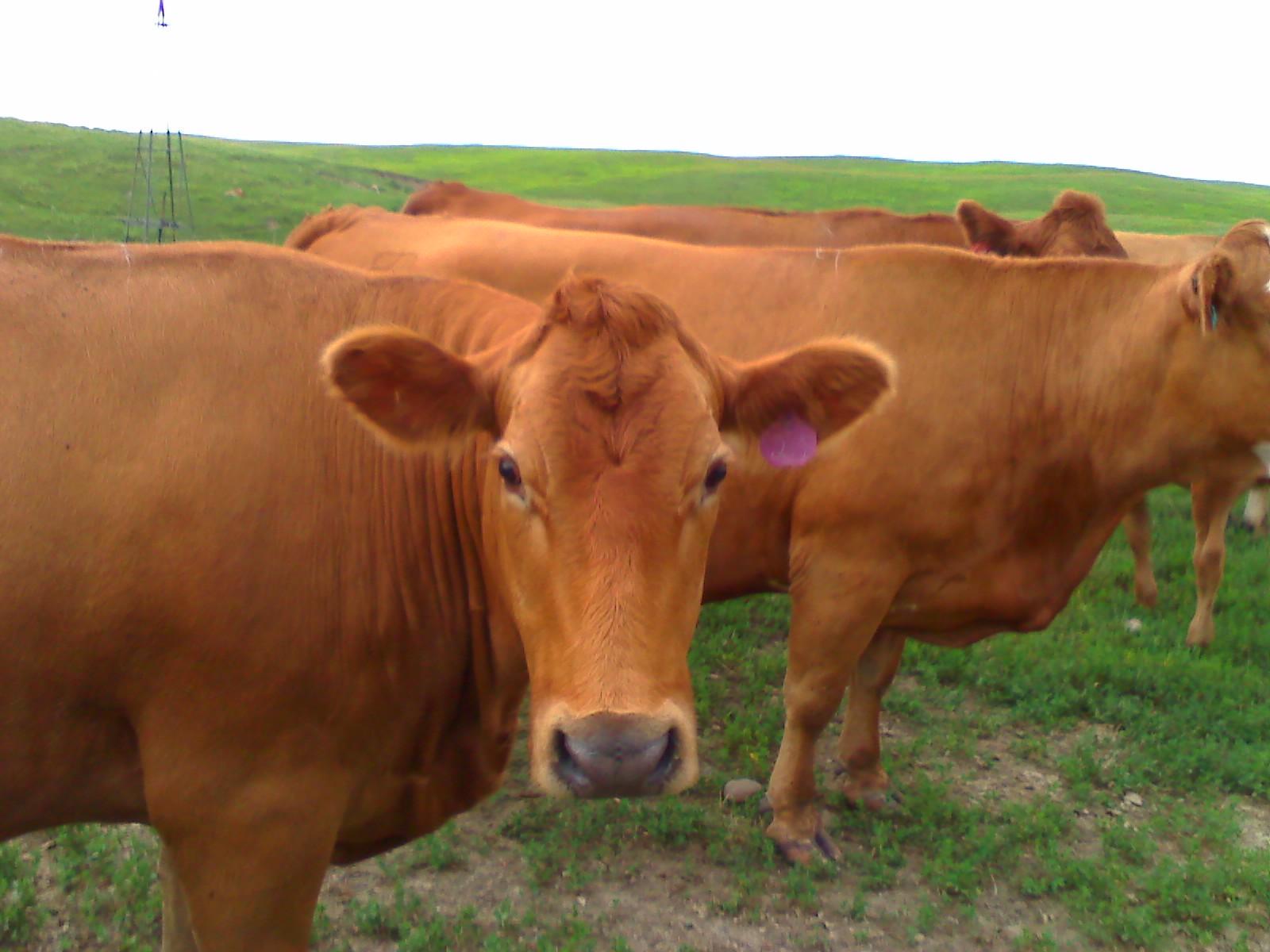
This cow has a purple tag, you can see the one in the background has a blue tag.
Now the cow tags are different colors for a different reason. Each year the cows get a different color ear tag. Tags come in tons of different colors, so it works pretty well. Cows are normally only on the farm for 10-12 years, as long as they have a calf, they stay. You can look at the cows tag and know which year she was born in. (We have a closed herd, which means every cow that’s on our farm was born and raised here…I’ll explain that more in another post some time.)
Another benefit of having different colors is so that you can easily determine which cow you need to bring in (sometimes looking at a sea of red faces is confusing, but the color of the ear tag helps), during calving season…or any other time of the year, if there is a health issue.
There’s a lot more to it then that, but that’ll do for now. I don’t want to overwhelm you with cow information!
If you have any questions, please, feel free to ask. I love talking about our farm…and I’ll gladly take a video or some photos to help out the process! 🙂

 Wag'n Tales