Safe at home

We made it home last night. It was a relief to finally pull in, see the lights of home, hear the cows mooing to their calves, see our lab sitting at the front gate and to hear George raising a ruckus, because he knew where we were…home.

Our last appointment went about as well as our first. She did order another test to check his ferritin level, since I told her that he was waking up during the night a lot. (Apparently it’s a measure of iron, and a lack of it can cause your legs to feel restless.) Normal levels are between 25 and 336. George’s were 11. So we start a multivitamin to combat the low Vit. D and the low iron.

I asked about getting a prescription for a trip to Florida for a week or two. Dr. L said that the sun would work, but Boss Man piped up that the vitamins were cheaper. He’s no fun.

When I sat at my desk last night, I was going to write up a new blog post, but then I read a few of my friends’ posts and decided to wait until today.

Apparently a group, called Mercy for Animals, released hidden video footage of animals being abused on a dairy farm in Texas. Again, this group is attempting to undermine all of animal agriculture, because of one sick, twisted situation.

Here’s my take on the situation: If you are on a farm, and someone is abusing an animal, they should be IMMEDIATELY reported to the proper authorities. If they are a hired hand, they should be fired and turned in. If they are the owner, they should be turned in. Simple as that. The animal deserves better. Yes, I raise animals that I know are being consumed by someone. I know that our cows will someday be processed into something that will feed others. But we treat our cattle with respect.

There is no excuse for the action taken by the perpetrators in the video. That’s not what raising cattle is about. I don’t know of one single cattle producer that would condone such behavior…and it’s definitely the exception, not the norm.

We just spent three days away from our farm. We were on a medical trip with our youngest child. Although our focus was definitely on George’s appointments, part of Mark’s mind was back here. He was constantly on the phone, making sure that there weren’t any problems, the cattle were being fed, none had become ill, the mud wasn’t becoming unmanageable, planning for what to do when we got home, etc. It was non-stop. He spent hours upon hours before our trip, preparing the lots, so that things were easier when we were gone. Making sure that there was enough feed ready to go. Moving panels so that the mud was a little easier to manage, for both the tractor AND the cattle. That’s just what ranchers do. That’s what ANY animal caregiver would do.

I didn’t watch the latest abuse video. I don’t need to. Hearing about it is enough. It disgusts me. It angers me. And it frustrates me when groups try to tell the rest of the world that those types of actions are normal in our industry. It’s not. No way. No how. And if you don’t believe me, come to my farm and I’ll show you.

And I know of many others who would do the same.

Day 2 – More good news

I had to make a quick, mid-appointment update to bring some really great news…George no longer needs to have growth-hormone shots!

Now, this may only be temporary, we will have to come back in 4 months and double-check on things, but I’m certain that things will continue to go on the right track. Sadly, our visits with Dr. Lteif (endocrinologist), may become fewer and farther between…but that’s only sad because she’s such an excellent physician, and thinks pretty highly of our little man.

Up next, we see the neurologist, who will become the lead doctor in George’s care. Dr. Renaud is a pretty great doctor, too.

So, as long as everything goes as planned, we’ll be on the road heading north shortly after lunch. And for once, I’m leaving Mayo feeling as if we’ve finally turned a corner, not just headed further into the abyss. What a great feeling that is! (And for those new to my blog, George is suspected to have Ornithine Transcarbamylase Deficiency, a disorder that doesn’t allow him to break down protein…which means he won’t be enjoying full servings of meat, dairy, etc., for most of his life.)

Yesterday, when they drew his blood, I saw on the paperwork that his tests were heading to Baylor for the genetic testing. George hasn’t travelled much in his almost-2 years, but his blood certainly has!

Ag Book of the Day 13:

“What Do I Make? (Let’s Find Out!)” by Dale Simpson. A great board book, with turning wheel, where you can match up the animal with their gift to us! Great for the little guys! Include milk from cows, honey from bees, clothes from sheep, etc. And with the cute cow-shape of the book, and great illustrations, it keeps the little ones interested in the book!

Details

Records – Part 2 (Ag Book of the Day 7)

So, as promised yesterday, I said that I would explain what records we keep for our heifers (females that haven’t had a calf).

At birth, the records are the same. We keep track of the cow number, the sire (or bull), date of birth, weight at birth, calving ease number and weaning weight (adjusted to 205 days). The only thing that is different, is when we decide to keep a heifer to include her in our herd.

As I’ve mentioned before in my blog, bull calves get white tags at birth, heifer calves get yellow tags. If a heifer is chosen to stay in the herd, she keeps that yellow tag until after she’s been bred with her first calf. Sometime between breeding and calving, those heifer tags are switched to a new cow tag, the chosen color for that year and a new number.

That’s why it’s so important to have those records. This way we can keep track of which calves came from which cow, which bull sired which calves, etc. This way, if we have really large calves, we can see if the bull is the problem, or if there are other genetic abnormalities or issues. Also, we can make sure that no heifer is bred to its own bloodline.

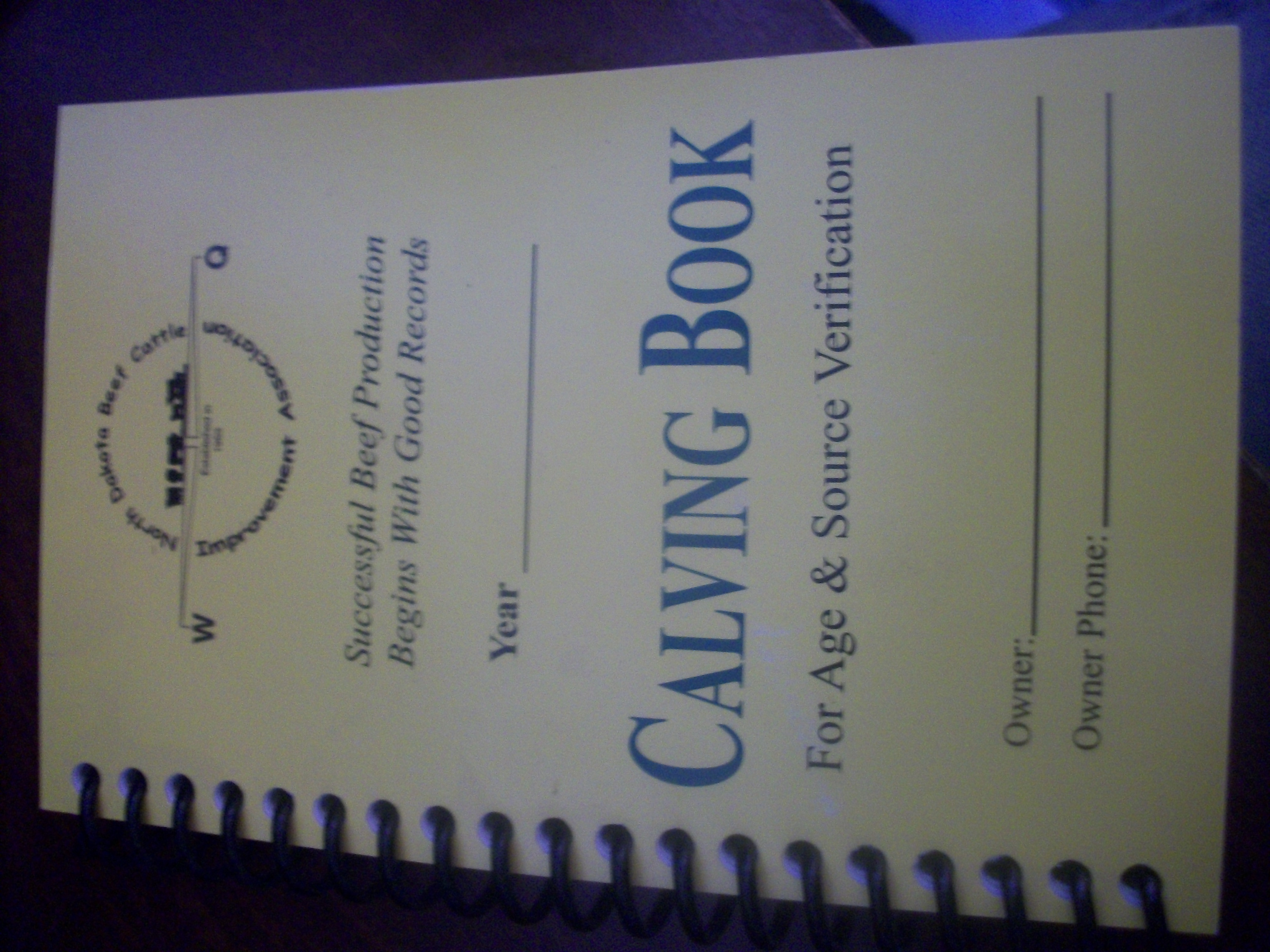
Boss Man writes down the calving information in a small notebook that he keeps in his pocket, then he transfers that information to his calving book that he keeps in the shop. We used to keep that information in the kitchen, so I could help with writing out tags and such, but one Easter morning, right before church, we found out that Scooter knew how to use a Z-tag marker.

What happens when you have a child find a Z-tag marker right before church on Easter Sunday. (Pic is of Scooter, Big Bro, EJ and their cousin)

So, needless to say, Boss Man does all his own tags now…in the shop.
On to Ag Book of the Day 7 – “Senses on the Farm” by Shelley Rotner.
I had the privilege of being able to be involved with the American Farm Bureau Young Farmer and Rancher committee that read this book to a small, young classroom outside of Atlanta this year. It’s a great book, with great pictures, allowing lots of discussion and question-answering.

A matter of record – Ag Book of the Day 6

I was asked if I could explain the records that we keep for our herd, so I will do my best to do just that. (And I’m willing to take other blog requests!)

Before I get to the details, let me tell you that our record-keeping has joined the 20th century (I would say 21st, but we don’t use smart phones…yet) and it’s mostly computer-based, and has been since 1988. We use what is called CHAPS, or Cow Herd Appraisal Performance Software.

We have one of these for every calving season, since 1988.

This is how the typical method of record keeping goes for a calf – from birth to sale barn (let’s just say that this particular calf is a steer, since most steers are sold). (And to clarify, a steer was born a bull calf, but was castrated within a few months from birth.)

Shortly after birth, the cow number, the sire (if known), date and weight is wrote down, as well as whether the calf is a bull or heifer. The calf number is the same as the cow, as long as it’s a single birth and both the cow and calf are healthy. The other number that is recorded at birth is the calving ease number.

Calving ease is just what it sounds like…how easily the calf was born. It’s a 1-5 scale, with 1 = no assistance, 2 = minor difficulty, some assistance (Boss Man may have to assist by using the obstetrical chains and pulling some, but just using his own strength, no mechanical assistance.), 3 = major difficulty, usually mechanical assistance (such as a calving jack), 4 = caesarean section (surgical removal of calf), and 5 = abnormal presentation (such as backwards calf, or feeling a tail, not a head).

In the fall of the year, the calves are weighed and weaned (adjusted to 205 days). We keep track of their weight, so that we can figure out what their gain was from weaning to sale time. That way we can make adjustments to feed, weaning date, etc., for the next season (if numbers aren’t where we like), or we can be assured that we’re doing what we need to do, producing the best results we can.

The next time we weigh the steers would be right before sale time. Not only will we know what their average rate of daily gain is (usually 3 pounds per day for our herd), but we can also sort our cattle into different groups, making it better for the buyer (uniformity is always a goal).

Once our cattle go through the sale barn, we have no data on them. We don’t retain any type or percentage of ownership, so there is no reason for whomever is finishing them to harvest weight to let us know how they did.

Now, I’ve mentioned before that our herd is a closed one, meaning that every cow here was born here. We can trace back any cow, calf, etc. that’s on our farm to her origins. It’s kinda cool.

Tomorrow I’ll talk about our heifer and cow records. If you have any specific questions, feel free to ask! I love answering questions about our farm and our herd!

And now on to today’s Ag Book of the Day – Day 6:

“Plow! Plant! Grow!” yet another John Deere book (but yet again, one of EJ’s absolute favorites!). It’s a board book, so it’s easy for even George to handle. The pictures are bright and colorful, and it talks about many of the different farming activities that happen on the farm. We don’t use all the methods that they cover, but it’s neat to be able to bring other methods into our discussions. Love it!

Calving by the numbers – Ag Book of the Day 5

I promised yesterday a calving post, but the day got away from me…I know, real shocker, right?

Here is the 2011 calving data:

2/11/11 – Starting date of calving

5 – cows left to calve, as of this posting

75 – number of bull calves

95 – number of heifer calves

9 – most calves in one day, including two sets of twins

2/19/11 – most sets of twins in a 24 hr. period (5 sets)

48 lb. – smallest calf (a twin)

130 lb. – largest calf (not a twin…but born by c-section, only vet call for an assisted delivery this year. Knock on wood.)

18 – number of sets of twins for this year

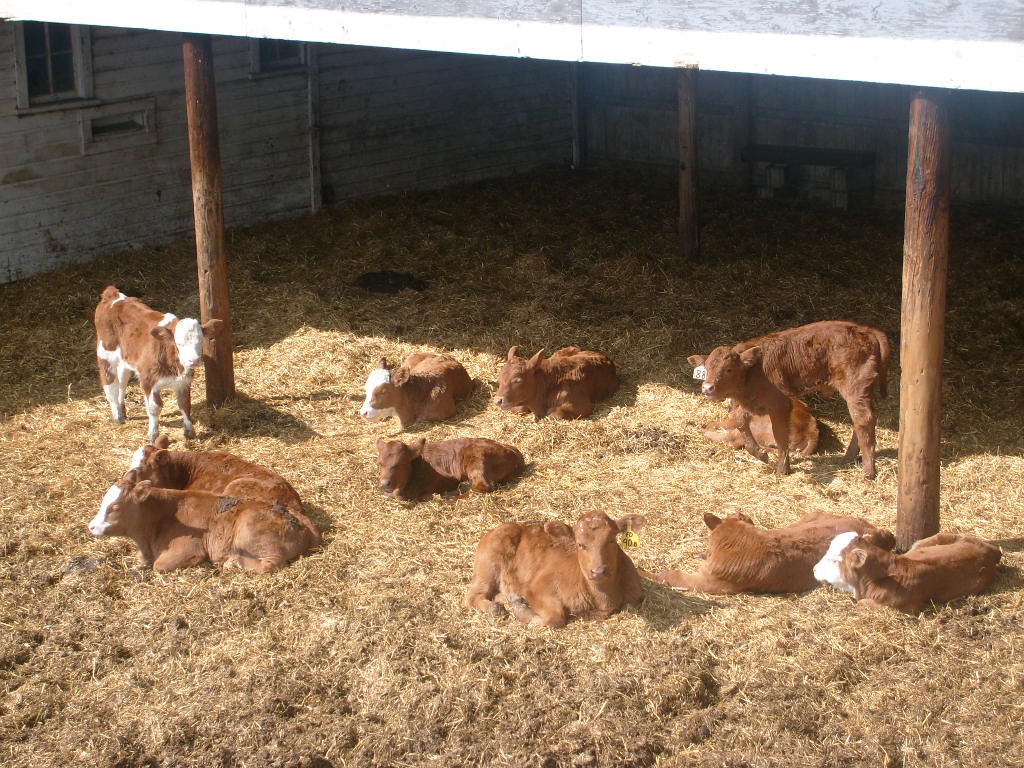
This group of twin calves is enjoying a day in the sun!

8 – number of sets of twins that were heifer/bull sets (I’ll get into why that’s important to know in another blog, but if you follow Cows_Life on twitter, you’d already know that answer!)

12 – number of calves that have died

3/17/11 – first day that we did not have a calf since calving began

165 – number of cows on the farm right now

170 – number of calves on the farm right now

This calf is a twin...notice the "B" on it's tag? There's an "A" to match!


And now onto today’s Ag Book of the Day:

“Buttercup, the Clumsy Cow” by Julia Moffatt and Lisa Williams. It’s a really cute book, focusing on how to make the most out of any situation. Yes, it’s silly, but you need some humor on the farm too! Plus, it still gives plenty of places where you can talk about real-farm stuff, like the dangers of wildlife to livestock, etc. Mostly, my boys just love it!

Maximum multiples

It seems that farms and ranches that are having multiple births have been in the news as of late. There have been articles in local papers with herds that have three sets of twins, some on the same day, etc.

Well, not to toot our own horns (but why would I have a blog if I didn’t want to share our story?)…but we’ve had 18 sets of twins this year. Yep, 18.

Now, not all of the twins made it, but as of this morning, six cows are still raising both calves. That means that our calving season has produced more calves than we have cows. Which is pretty cool.

Want to hear something more impressive? My brother-in-laws farm in South Dakota has produced 22 sets of twins this year. Now, genetically these herds are linked. They both come from the original herd started here on the farm. But they do follow different breeding protocols, so although similar, the herds are markedly different.

Twins are the norm around here…I’m just glad it’s stuck to only the cattle! 🙂

Fresh on the Farm

This is my first Wordless Wednesday post – ENJOY!

Silence

This slideshow requires JavaScript.

Another 45 have died. I know because I counted them. Add in the two dozen or more from before, and that seems to be a pretty significant number. (And apparently the coyotes can’t keep up.) According to Game and Fish literature, it’s expected that about 10 percent of a population will perish through the winter, especially in high-stressed areas. If this is an accurate percentage, then we definitely had more than 500 deer in our yard.

We were working on a bill that would have allowed unfilled deer licenses to be used in areas that are facing extreme amounts of deer pressure. These tags were ones that the Game and Fish Department had already sold and profitted from, I’m assuming with the intentions that they would be filled. If the Game and Fish Department deemed an area a “problem,” then December through March 15, the tags could have been filled.

A perfect solution? Of course not. Another tool in the tool box? Certainly. Apparently continuing on with the status quo isn’t working.

One of the legislators that I contacted regarding the issue was kind enough to reply. He told us that they are sending the bill to a “special committee” to come up with another idea, perhaps with food plots and feeding areas. They don’t want to see the deer shot. My question is why? These are tags that were already paid for and calculated by Game and Fish as being acceptable to lower deer numbers.

Somewhere, somehow, we need to start thinking outside the box and trying something new.

Rain, sleet or snow

Farmers and ranchers are responsible for their livestock, their land, their resources, whether it’s raining in the south, or snowing in the north. That fact is true, even during a blizzard.

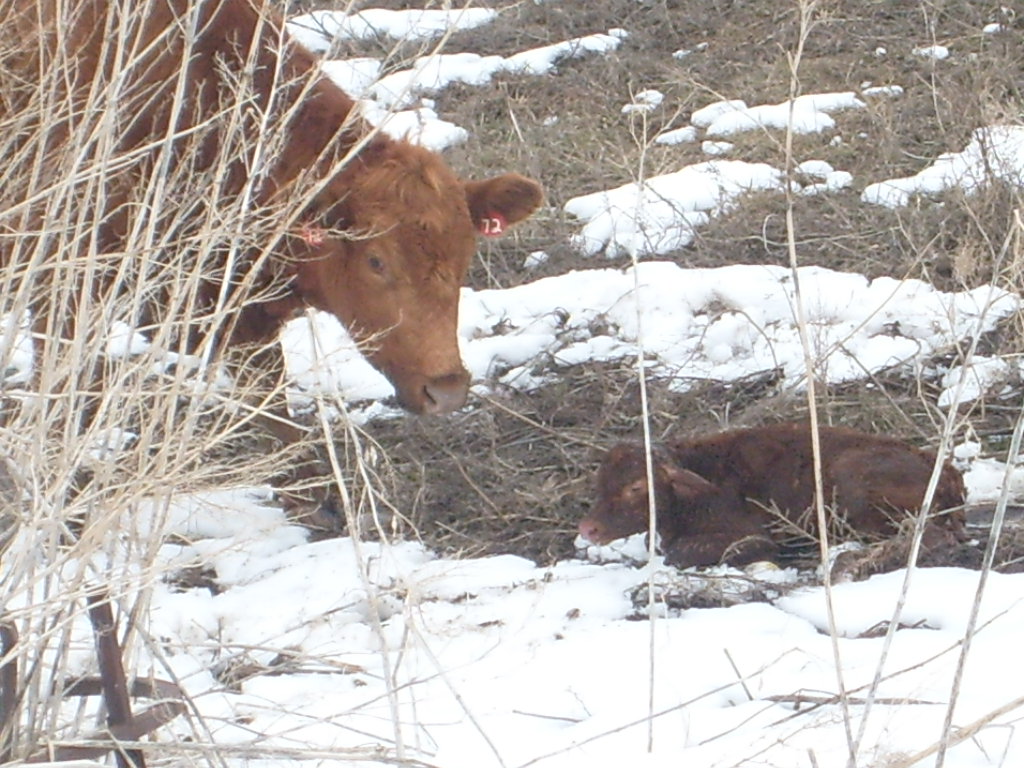
Our cows are normally red...not snow covered!

This afternoon a very strong storm hit our area. Now, compared to the tsunami that rocked Japan and the destruction felt in other areas afterward, what we were dealing with was small potatoes. But for our cattle, they still relied on us for safety, shelter and food.

That’s why Boss Man spent most of the evening in the barn, or out in the lot, covered in snow, not seeing more than a few feet in front of him, making sure that no new calves were born out in the terrible conditions.

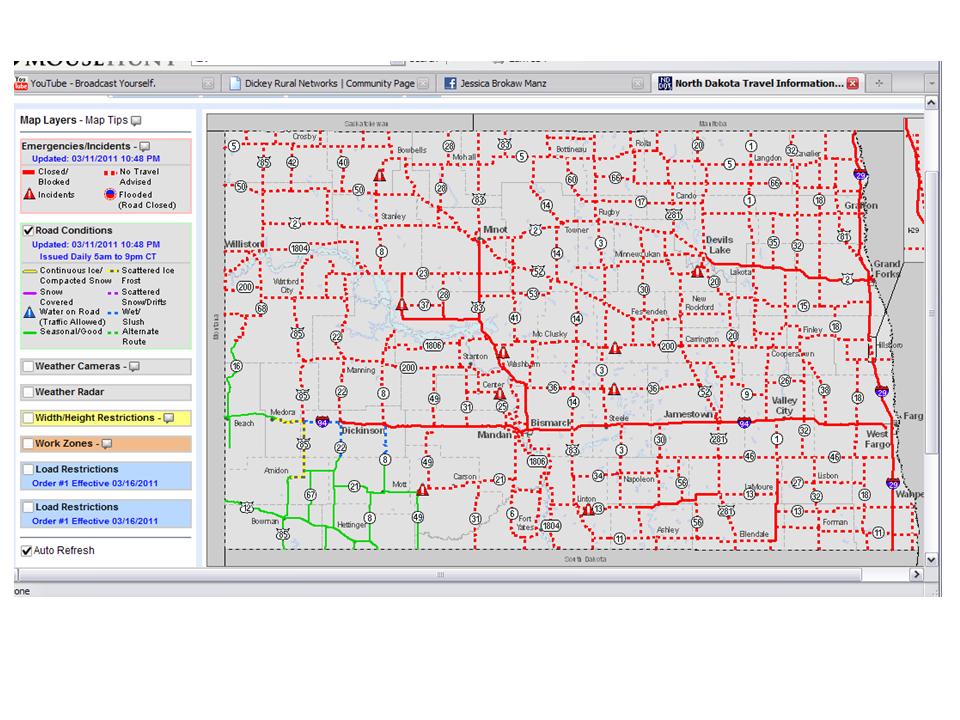
This was the travel map for North Dakota for this evening. Fun!

And I went out this evening, once things had settled down a little bit, to make sure things were still good to go.

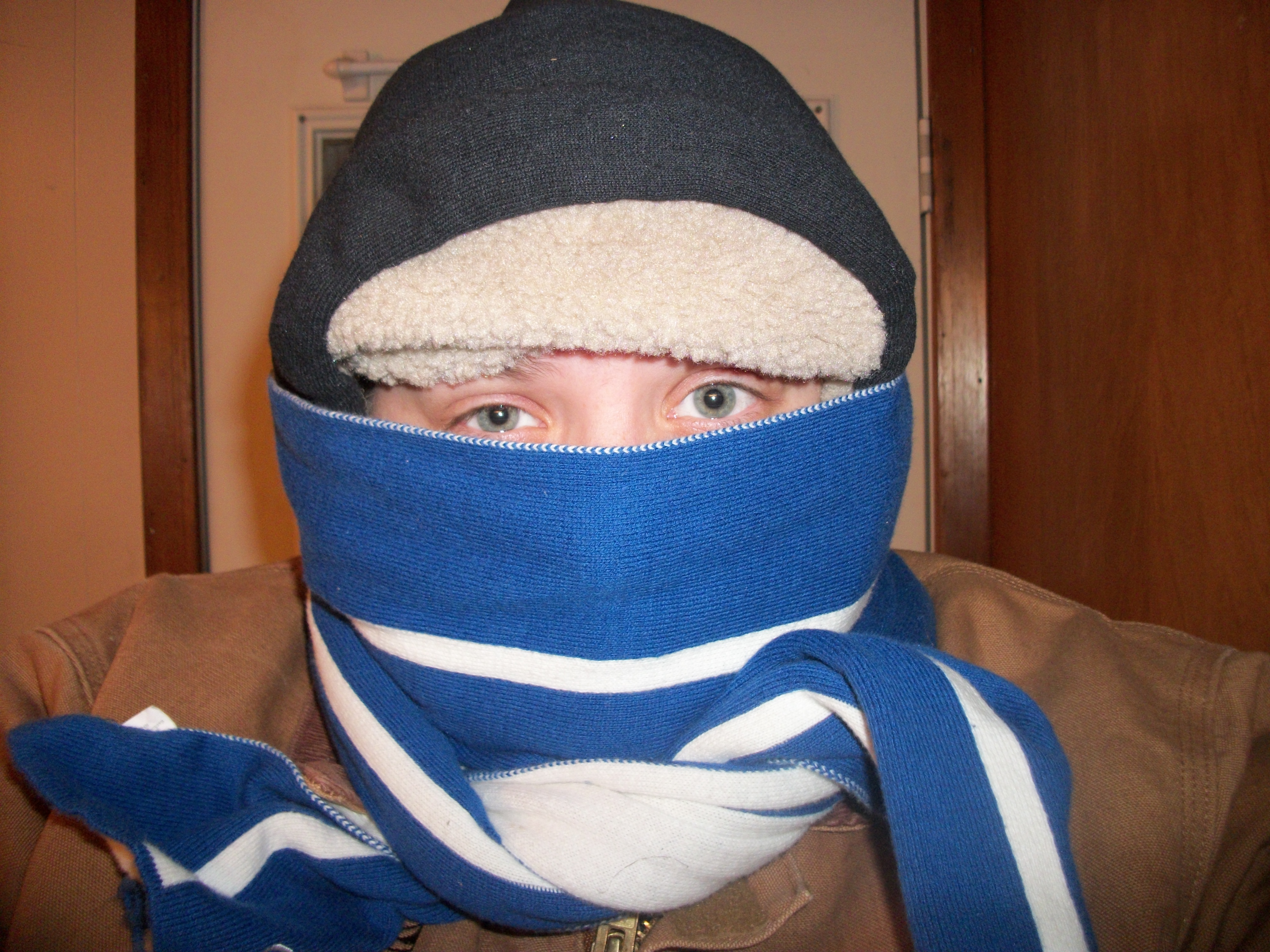
I'm on the cutting edge of blizzard fashion, I know.

Although this video isn’t the best, you can still hear the wind whipping through our trees. But rest assured, if the conditions weren’t improving, the cattle wouldn’t be out eating and they wouldn’t have been starting to move around.

They know WAY more than a meteorologist! 🙂

Yeah, they call me Grace

Uh oh. I think I’ve really done a number now. Yeah, I went almost all winter without a problem. In fact, I think the last time I saw a doctor was my check-up after George was born. But I’m guessing I’ll be heading in soon.

I can’t lift my left arm. As in, it hurts to put on my jacket. Lifting George is almost impossible. Typing is OK, but only because I use my fingers, and don’t move my arm.

You see, it’s winter here in North Dakota. And with winter comes snow…and ice. With ice comes quick trips to meet the ground. But the problem was that I didn’t let myself fall gracefully. Nope, I had to go “Val” it up and make it painful. I somehow jammed my shoulder. The silver lining? It’s my left arm, not my right. (You see? There’s a silver lining in EVERY situation, you just have to look a little harder sometimes.)

I’m guessing I have some tears in there. I’m guessing it’ll be a bit before it feels better. And I’m guessing that this is going to be a long spring.

Maybe, if I’m lucky enough, I’ll fall again and knock it back to normal? Hey, a gal can dream, can’t she?

It’s time to go out again and check cows. My wishes are that 1) #70 hasn’t calved and I can actually get her to the barn this time, 2) if I DO fall, that I don’t break anything, and 3) it’s 70 degrees outside. (Hey, as long as I’m wishing here, I might as well throw in one big one, just to make the others seem more plausible.)

Good night! And if I don’t wave to you tomorrow, it’s not because I don’t want to, it’s because I can’t! 😉