Last spring I wrote about a little calf on our farm that we found had a broken jaw. In some cases, it may have been considered a lost cause, but our vets are pretty special, and most farmers that I know would do anything to alleviate pain and suffering in an animal.
The calf is still sedated, but the jaw is now aligned and secured to heal. Notice the feeding tube, so that proper nutrition can be maintained.
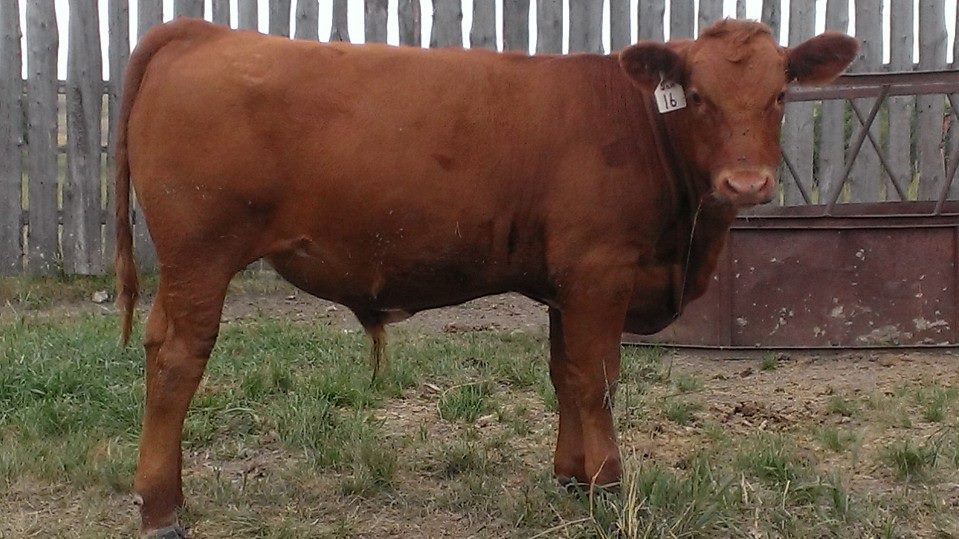
And I’m happy to say that this is “Darrel” now:
And this is the calf a few months later!
Even with a broken jaw, this calf was able to continue to get the nutrition it needed.
So why share such a story? Well, it seems so many times we hear the evils of farms and ranches that raise animals for food…and most of the times those stories are exaggerated, fabricated or taken out of complete context. But it doesn’t change the fact that our farm and farms just like ours do the best that we can, for each and every animal that we raise.
Including a small calf with a broken jaw.
Sometimes it doesn’t turn out like the fairytale we wish, sometimes the cause is lost before you even begin the fight, but as we weigh the benefits and the risks, the pros and the cons, we all have one thing in common: we want to eliminate needless suffering.
Sometimes that takes a round or two of antibiotics, sometimes it takes a call to the veterinarian and a surgery…and sometimes it means letting go and making sure that the animal is put to rest as quickly as possible.
But I will admit, I like the happy endings a lot better.
Recently I’ve had an influx of new followers on Twitter. Thanks to the wonders of modern technology, and my smart phone, I was able to be notified right away.
At first, I didn’t think much of it, but then I noticed that one had added me to a list. The list was titled “green bloggers.”
Come again?
My first response was, “Boy, are they going to be disappointed.” But then, with encouragement from some social media friends, I realized it was an amazing opportunity. How could I pass it up?
You see, “green” is another one of those terms that has been hijacked. It is defined so differently by so many, and yet, those that it means the most to (farmers), use it the least.
In fact, I was first offended to be called “green.” To me, it meant that I was more concerned about how my food got to my plate, instead of just being grateful that I could put anything there to begin with.
To me, it meant that I thought more about how creation began, and less about how it would continue to exist.
To me, it meant that I was willing to believe that God could use science to create cures for diseases and ailments, but He couldn’t possibly use science to prevent starvation and hunger for so many of His people.
But none of that is true.
Being green is an awareness, not an action. It can be, but doesn’t have to be. Being green is making decisions knowing that you’re doing what’s best for the next generation, based on what you know and your experiences. Being green is as personal as religion. Yet, being green is NOT a religion.
A lot of times farmers shout from the rooftops, that they are the original environmentalists. And although that is true, it doesn’t do us much good to keep reminding people…instead, let’s show them.
Actions speak louder than words. So let our actions speak for us.
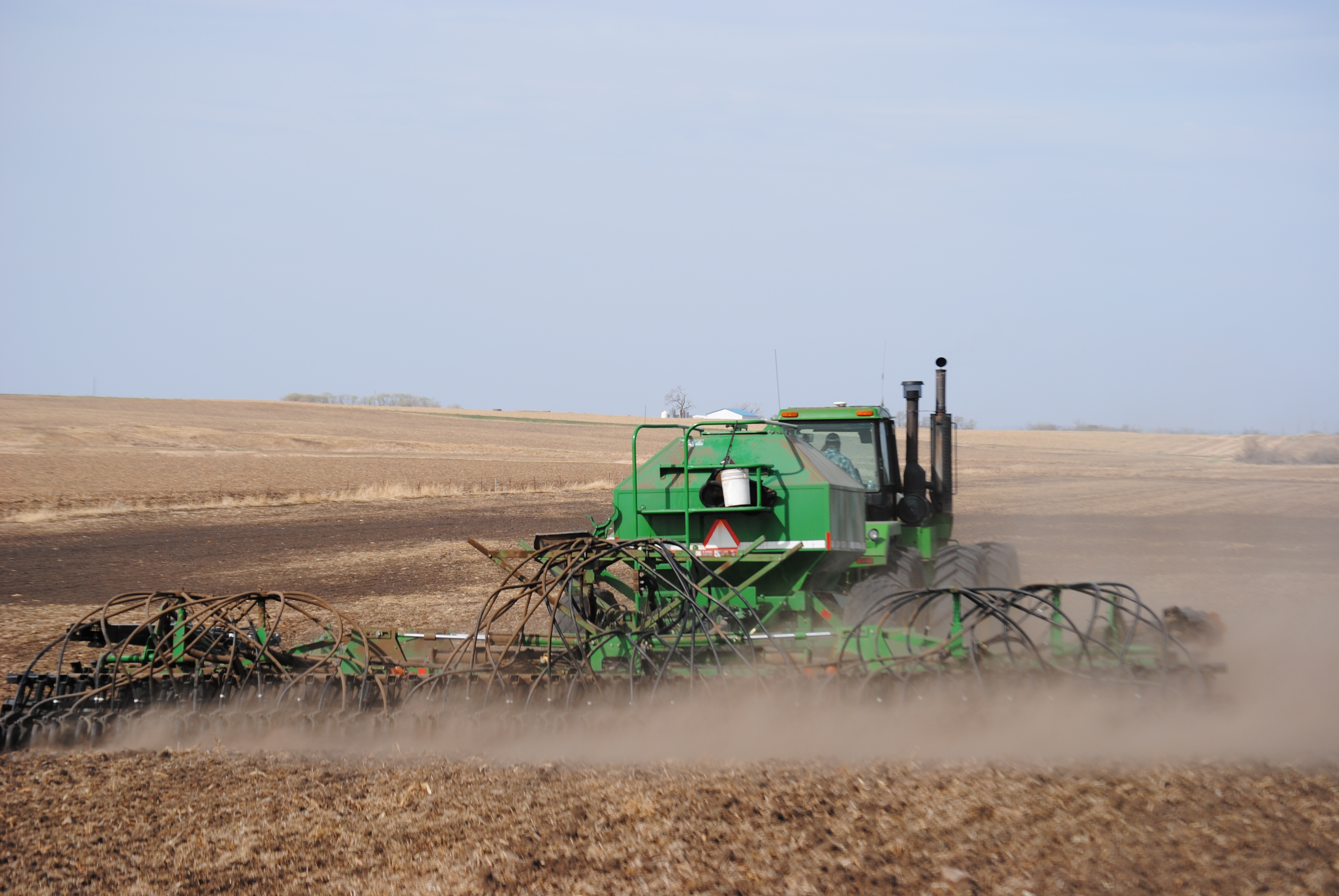
Is our equipment larger than decades ago? Yes, but that means fewer trips down the field, less fuel and greater time savings. Do our fields have company signs on them? Sure, but it’s more for our information than anything else. That way, farmers know which brand, which variety worked best for the conditions that year. Kind of like labeling your garden rows.
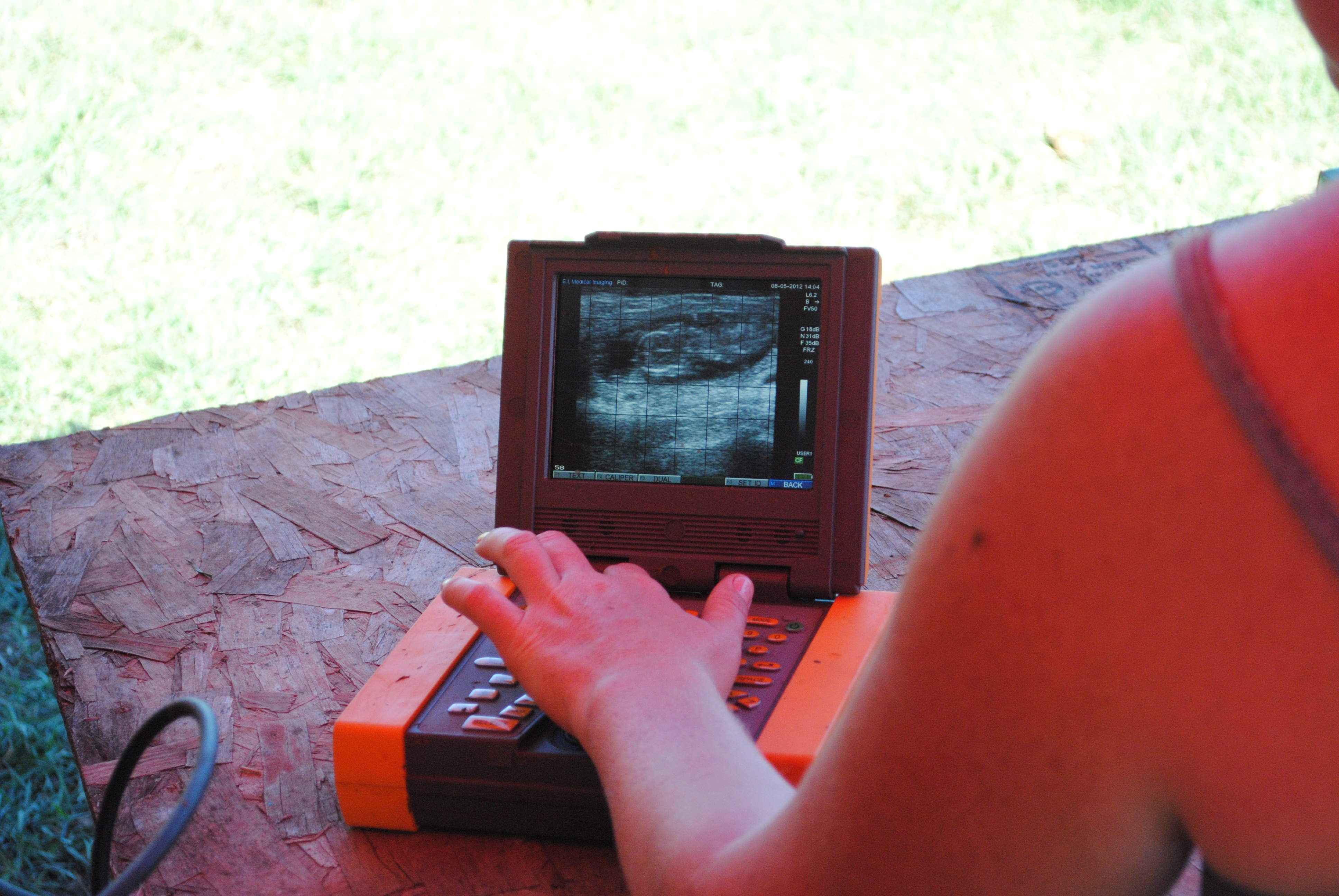
Technology can be very useful in farming, including ultrasounding for calving!
The biggest question? Is technology worth it? My simple answer is yes. Unequivocally. Technology allows us the opportunity to use state-of-the-art tools and equipment to use less fuel, less chemicals and be more aware of our impact on future generations.
But the best part of it all? The ability to choose. You can choose what does/does not work for your farm, your family, your table, your health. And that’s the most important advancement of all.
I no longer will fear the label of being “green.” Instead, I will embrace it. And perhaps, before long, my grass will be, too.
I’m tackling a few farming basics on my blog these next few weeks, for a variety of reasons: 1) spring still hasn’t showed up, delaying my ability to be outside and getting some of these very same things done, 2) search terms leading people to my blog are letting me know that there are a lot of these types of questions out there, and 3) I just so happen to have recorded some radio spots that answered these questions.
I decided to tackle our planting decisions as the first in this series. Why? Because with the late spring, our decisions may be changing rapidly. But in order for you to understand the process, I’ll start at the beginning and walk you through it all.
The next year’s season begins as we’re taking the crop off. (Actually, the plans are in the works for years before, but harvest kicks off the next planting cycle.) Boss Man has a general idea of what he would like to plant, where he plans on planting it, and what the soil conditions will need to be like in order to be successful.
EJ, watching his Dad and Grandfather harvest a crop a few years ago. We have since upgraded from the Massey combines to green machines!
Shortly after the crop is off the field, our crop consultant performs soil tests to see where our soil stands, as far as nutrient needs and potential for the next spring. That’s how we find out what amenities we may need to apply, for example nitrogen, phosphorous, etc. It’s pretty scientific, but we can rely on the expertise of those around us. Kind of like taking kids to the doctor to see what’s wrong, but instead of our kids, it’s our soil we test.
Many times seed companies have discounts or incentives that make it worthwhile to purchase your seed early. That way they know what types of seed may be in demand the next year, etc., and they can better prepare for the coming spring as well.
Now, let me be clear with one thing. Although different companies may offer incentives, the decision lies solely with our farm.
I know that some believe that seed companies bully farmers or push them into making different decisions, but I have yet to encounter anything of the sort. In fact, most of the seed representatives in our area are local farmers themselves.
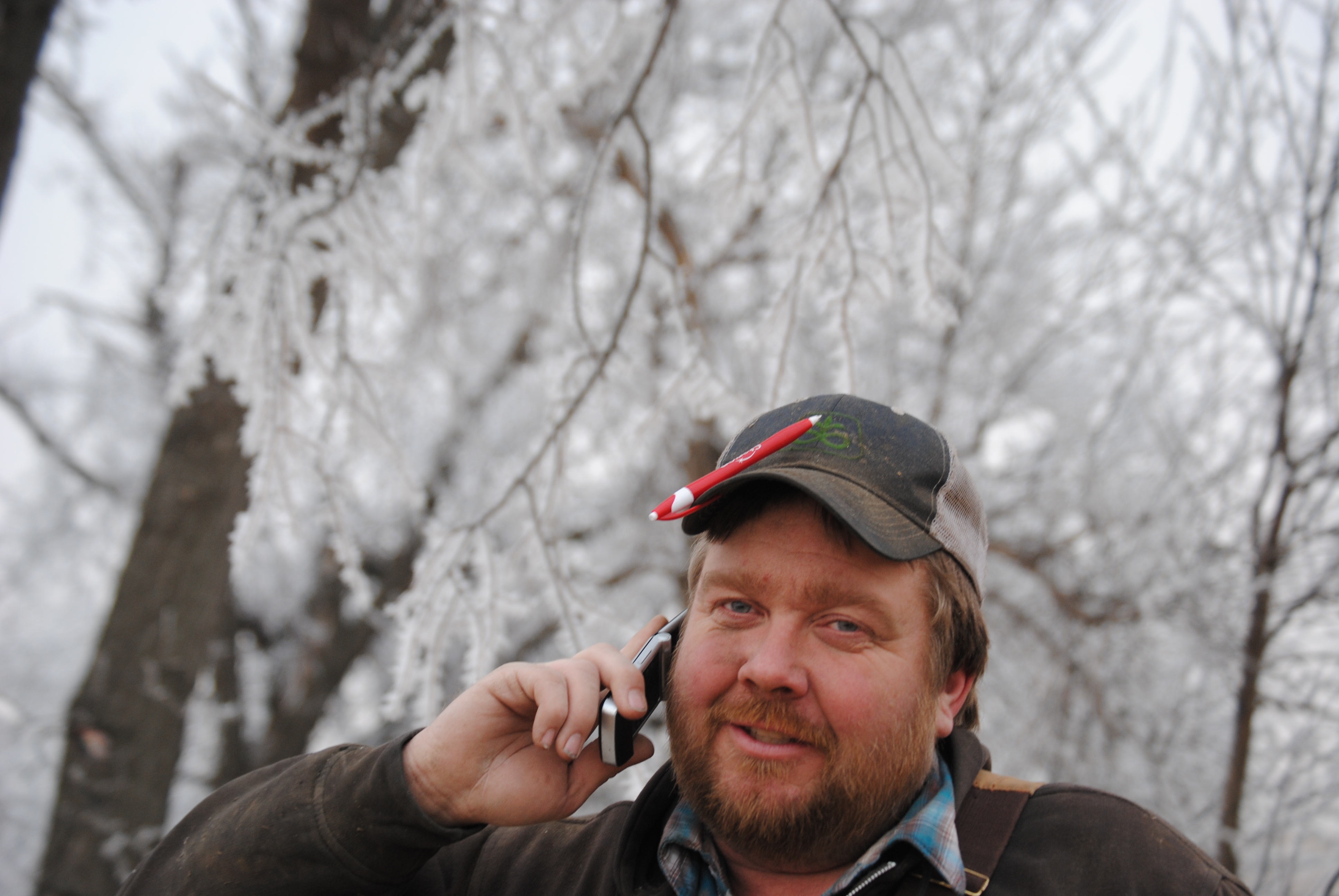
Freebies, such as the hat on Boss Man’s head, may seem like great perks…but they don’t play a role in the decisions we make.
On our farm, we diversify. We buy a variety of seed from a variety of places, and make decisions for the next year based on how the crop performed and the availability at the time that we order.
But that’s also all done in pencil…meaning it may change.
Take, for example, this spring. Here it is, the end of April. And we still have snow on the ground. The weather isn’t much above freezing. It doesn’t appear as if field work will happen any time soon. Before too long, some of the crop decisions that were made last fall, may end up being changed.
A recent storm dumped an extra 20 inches of snow on us. It’ll be a few days before we can even think about planting anything!
Why is that?
Different crops are planted at different times, ensuring that they have a long enough growing season to fully mature before harvest. It’s similar to planning a garden. You know you can plant peas throughout the season. They grow fast and mature quickly. Yet, tomatoes are more finicky about their care and need more time to produce fruit.
We do what we can to make sure our crops have the best change to produce a great crop!
The same is true for crops. Corn and wheat are planted earlier in the year. They need more time to mature. Soybeans can be planted later in the season. They grow more quickly and can perform very well with a later plant date. The same is true for all of the crops that farms grow. Each one is different, and the current conditions may change a farmer’s whole plan for the year.
So the next time you hear that one company or another controls a farmer’s decision on what they plant, you can let people know that you know that’s not true. The ultimate decision lies with the farm.
Well, actually, it’s a much higher power than that, but the farmer is the one whose name is on the dotted line.
Today is April 22, 2013…Earth Day. A lot of people talk about how important today is, but I believe that it’s important to consider the earth and its resources every day.
So how does our farm celebrate Earth Day? Well, to tell you the truth, we don’t. No, today is not a special day. We continue to use our resources as wisely as we can, making decisions based on what our land needs, what we have available and what is best for the future…just as we do every day.
But what does that entail? Let me show you.
We try to limit the number of passes we make on a field with equipment. Notice the residue on the field? That’s the crop left over from last year. It breaks down and gives nutrients back to the soil. With our late spring, we won’t be in the field any time soon.
We spend a lot of time going over information that’s been collected through soil samples, analysis and watching forecasts. We work closely with our crop consultant to make decisions that are best for our farm and its future.
All safe and warm inside, no matter what’s going on outside, thanks in part to the wheat straw used for bedding! It’s a farm version of recycling!
Our heating system on our farm is also a great way that we save resources and limit our impact on the environment. The water from our well heats our house, our shop and also waters our cattle! Read more about it here.
Right now spring has yet to show up here in North Dakota, so we’re working on getting our equipment ready for planting. By making sure our equipment is ready, we’re able to use less fuel, make fewer stops, leave our tractors running less often and are able to use our time the most efficiently. But sometimes you have to call in some outside help:
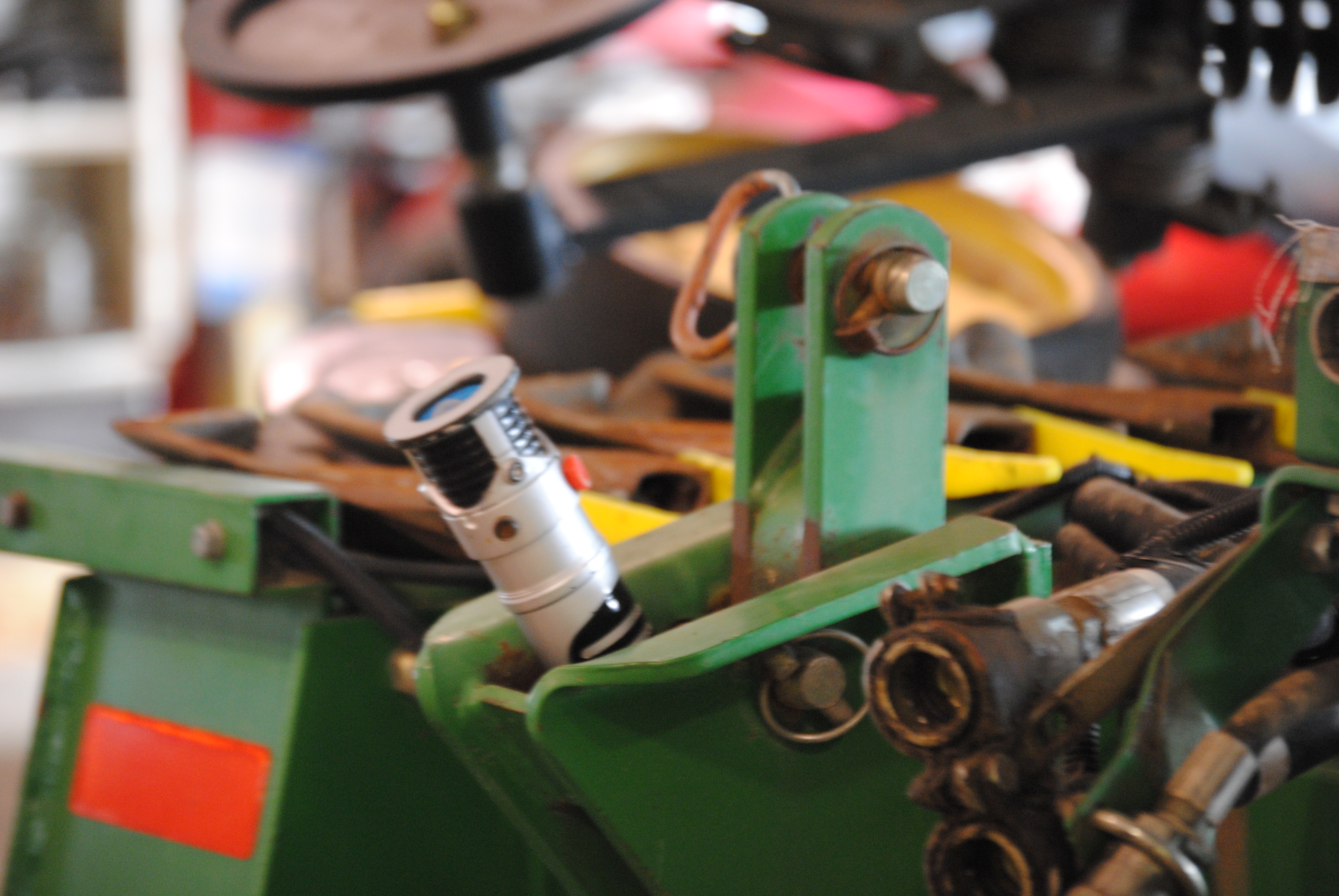
EJ thought that the planter needed a little extra guidance last year.
Yes, the force was with us.
I guess it’s never too early for the next generation to start adding in their ideas for modifications! 🙂
These are just a few of the steps we take to make sure that we’re doing our part to conserve resources. We know that we need to take care of our land, so that the future of our farm is secure. Happy Earth Day, everyone!
Someone once told me that our farm could easily have enough fodder for a show. I’ve tried to deny that allegation a time or two, but this week did nothing but encourage sitcom-like situations.
For example? Well, imagine a situation unfolding like this:
Skunk in barn. Farmer shoots skunk. Farmer has sick calf. Doesn’t think about skunk. Farmer does whatever he can to save calf, including putting hand in his mouth. Calf dies. Dawns on farmer that calf may have been exposed to rabies through skunk. Heads of both animals are sent for testing. Farmer waits to see if he gets a few weeks of shots.
Yeah, just a typical week around here.
On top of that, the stomach bug went through our house this week, landing at my feet this morning at 2 a.m. – but don’t worry, Boss Man helped me out by taking the big boys to church, and leaving me to fend with the 3-year-old. That was helpful. Kinda. 😉
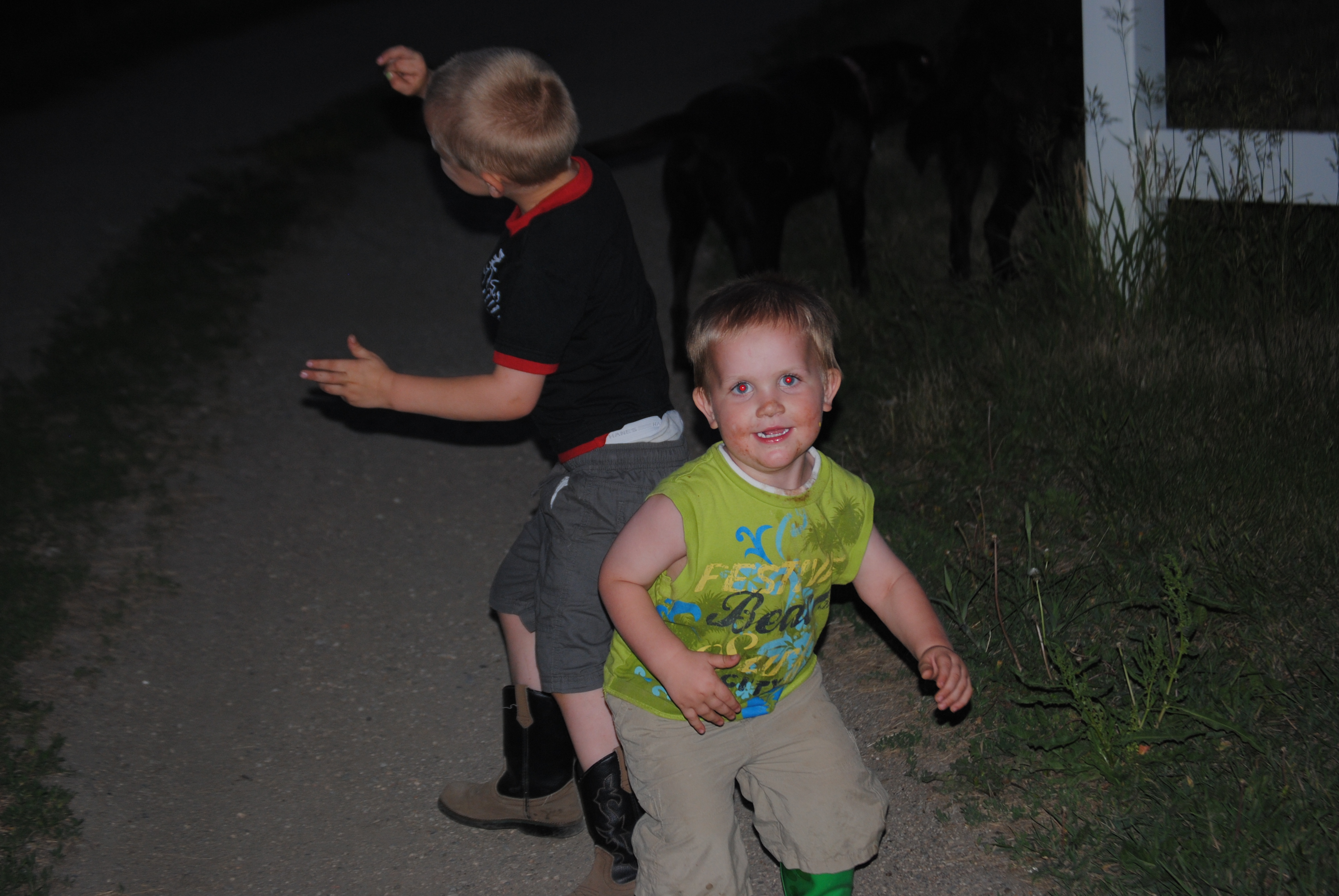
The little dude in green and I were left at home today. It’s a good thing he’s NEVER any trouble. Ever. Right? I mean, if I say it enough, it’ll be true. Oh, and I want this type of weather back. Soon, please.
Just kidding. His heart was in the right place, and as a bonus, he did remember to bring the Sprite that I requested. Well, not really, they all remembered partway home. BUT they were smart enough to go back and get it, so that’s all that counts!
And now, to tackle the tough part of the week. I’ll be gone for a few days. Going to meet my mother at her macular degeneration appointment and then taking her back down to stay with my Dad.You see, Dad had to have the upper lobe of his right lung removed, due to a very aggressive cancer. I guess that’s what smoking for 60 years will get you.
I could talk about that for weeks, but I won’t.
I need to stay positive. Need to look forward, and help him recover…then kick his butt for putting us in this situation! (Just kidding, again. Apparently lack of sleep and sub-par nutrition makes me snarky. Or it’s just my personality. Whatevs.)
I’ll keep you posted on the progress, and if you could do me a teensy, eensy, weensy little favor and say a little prayer for the man that is responsible for half my DNA, I’d appreciate it.
And maybe just one for my sanity…or what’s left of it.
March 22 is World Water Day, and I thought it would be fitting to explain how the water on our farm works…it took me a long time to understand just how amazing our system is, and I am excited to try to explain it to all of you.
First of all, let me start with a disclaimer: I don’t really know the proper terms for what I’m trying to explain, so although my wording may be off, just hang with me. I’m not an expert, by any stretch of the imagination. I’m simply a farmer, a farm wife, a mom, trying to share a really cool piece of information. If you have questions, I certainly can attempt to answer, or better yet, find someone who can answer them!
Digging out the pipe to fix a leak…it’s not really that far down.
That being said, let me tell you about the water that provides for our family, heats our home, heats our shop AND waters our cattle…all at the same time.
We are fortunate to have a third-flow artesian well. That means that our water comes from deep within the ground. It is very hard water, but it’s an amazing source. We have done all that we can to ensure that our resource is not wasted, so we use it for many, many things.
This is our home…all supplied with an amazing source of water.
When the well brings up the water, the first thing that many people comment on is that the water is warm. It comes out of the ground at about 72* F. No, I’m not kidding. When my kids have water fights in the summer, it’s almost like having a water fight with bath water. The biggest problem? You will never get a cold glass of water out of the tap. Ever.
Our well water actually heats our home. If you understand the wonders of heating systems, we have a heat pump (if you’re really interested in learning more, you can read about it from Wikipedia here). Basically, the heat from the water is transferred and forced through our house in the heating system. It’s a wonderful source of heat, and we never have to worry about propane, fuel oil, etc. The only downfall is that occasionally the system can be overtaxed, and can’t keep up (imagine when it’s -30* outside and 40 mph winds). We do have an emergency electrical backup heating system, but rarely need to use it.
The water not only is used to quench our thirst and heat our home, but then it makes it way to our shop floor, running through the coils in the cement, heating the shop to a balmy 42* in the dead of winter. It may not seem like much, but it’s an amazing improvement from the cold temps outside. Boss Man did put in a small furnace, to help keep the place warm when the big doors need to be opened several times a day.
So where does it go once it’s heated the shop? Well, we’re not done quite yet. The water then is piped down to our barn area, where it fills our water tanks and keeps our cattle satisfied. And remember the temperature that the water comes out of the ground at? Guess whose water tanks rarely ever freeze up? The continual flow of water keeps things running smoothly…well, most of the time.
And at the end? The water goes to a series of tanks, and eventually returns back to the earth…in the same condition it began.
An amazing cycle, indeed. And every day I am so very grateful for such an amazing gift!
Last weekend I was helping out Boss Man by checking cows. It’s become one area of the farm that I’ve been able to get more involved in, and I love it!
During these cold winter months, we check the cows that are due to calve at least every two hours. We do this to try to guarantee that calves are born inside the barn, where it’s warm and protected, not outside in the cold. Another reason to check on the cows frequently is to be able to step in when there’s a problem…and on this particular day, there was one.
One of the things that I look for when checking cows is the presentation of the calf being born. As I talked about a few days ago, sometimes calves can present in ways that jeopardize their chances of being born safely, much like when a woman is pregnant and the baby is breech, transverse, etc.
When a calf is presenting in the best way possible, they come out feet first, headlong…kind of like they’re diving out of the birth canal. You look for the feet to be toes down, or the hoof to be pointing down towards the ground.
If you look under the tail, you can see that this calf is being born with its toes pointed down. By catching the cow at this stage, she was able to walk to the barn and safely have the calf indoors.
Unfortunately, when I noticed that this particular cow was calving, the toes were pointing up, indicating that the calf was coming backwards. In this case, the calf needs to be born quickly, so that it’s chance of survival is greatest.
This is a diagram of what a calf being born backwards looks like. A quick delivery is the best way to guarantee that the calf has its greatest chance of survival.
I let Boss Man know what I had found, and he was able to assist the cow in having the calf quickly by attaching pulling chains to the back feet, and pulling the calf out at the same time that the cow is pushing. Together they quickly delivered a healthy calf.
It’s great to know that your hard work and dedication can pay off, especially when sleep is short and the list of things to do gets long.
Have any other questions about calving? Be sure to ask, and I’ll explain what I can (and look up what I can’t!).
I was watching George paint the other day. It was entertaining, to say the least. He would take his paint brush, and dip it into all the colors, then get mad when the picture didn’t turn out like he had imagined.
And he expected me to fix it.
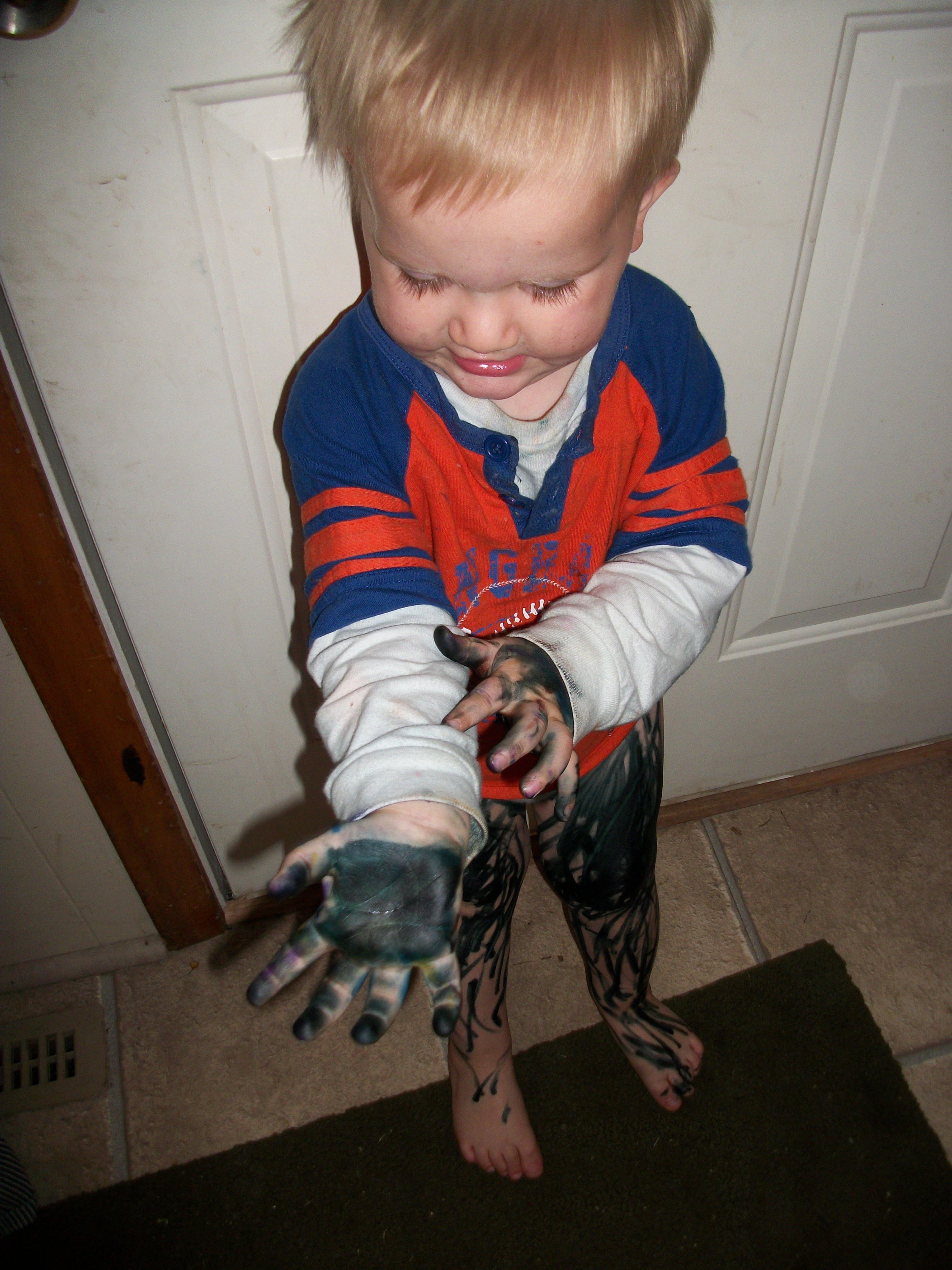
This little artist gets frustrated when his “masterpieces” don’t turn out as he had planned. Sometimes instead of being a beautiful piece of work, it’s just a mess.
He couldn’t understand that the problem had nothing to do with the paper, or the colors, or me, but with the brush he was using and how he was using it. And it reminded me of a conversation that occurred online just a few days ago.
Someone had asked for anyone that calves this time of year to explain why they were doing it, or what benefit they perceived that they received from calving during winter months. I simply replied that with our operation and our location, calving now was what made sense for us. It’s easier for us to deal with snow and ice, rather than mud and muck.
It’s not always fun making sure the cattle stay protected in the winter, but the snow and ice are easier to deal with than…
…the mud and muck of spring.
The responses that were received from people who also raise cattle was surprising, to say the least. One claimed that “winter calvers” are not profitable. Another claimed that some people were too willing to work too hard to make less money.
At first I was somewhat offended. And then I found a little humor in the situation. But it wasn’t until watching my son getting frustrated with his paintbrush, that I realized the lesson that could be learned from it all.
The humor? Well, if winter calving operations aren’t profitable…then there’s a check or two that I’d like to cancel. Mainly to the Internal Revenue Service. In fact, Boss Man will be relieved to hear that our days of paying taxes are over, now that we’re a non-profit livestock operation. Whew! What a relief that is! (Yes, my dear reader, that is sarcasm. At its finest.)
The lesson? When you’re working to make a better picture, using a broad brush will get you nowhere. Neither will dipping your brush in all the colors, expecting for everything to work out.
The same is true in agriculture…or any industry, actually. What makes our way of life great is the reds, the blues, the greens and yellows. All the different colors, all the different sizes, shapes and methods of operating. Together, agriculture makes a wonderful picture. But if you try to shoehorn us all into what you perceive to be the “only way” to farm or ranch? Well, you end up with a big old ugly mess.
We all have the same end result in mind. A great, abundant, affordable food supply for anyone looking for it. And the beauty is, in the great country we live in, the choices are there for you to make. You can decide the types of food you want, the way you want it raised and the price you want to pay for it…there’s always a decision, even if it’s take it or leave it.
Making sure that our calves are healthy and happy…that’s our main objective, same as most anyone raising livestock.
And we have choices, too. We decide our methods and what works for our operation – whether it’s calving now or in the fall, using no-till or conventional methods, growing organic crops or using biotechnology. It’s one of the main principles our country is built on.
I was upset by the insinuation that our operation was sub-par because of the decisions we made, but after the lesson my son taught me, I’ve taken something valuable away from what could have been a disappointing situation.
I’m short on words today. Well, actually, more like out of breath and can’t talk, but same difference.
This morning, Boss Man called and needed help getting a cow in. She wasn’t supposed to calve yet, so she was out with the rest of the herd. We bring them in as their due dates arrive, so that we can carefully watch those that are close, and still give lots of exercise and space to those that are further out. This cow ended up giving birth to a dead calf. What was the problem? We’ll never really know, but since our herd has a high percentage of twin calves born, Boss Man thought that she may have a second calf, so we needed to bring her in.
Problem was, she didn’t want to come in.
In fact, she rather preferred being out where she was.
And so she kept returning.
And returning.
And after chasing her through knee-deep snow for 45 minutes, her and four of her best bussie buddies decided to come into the yard…as if it were their own idea.
Needless to say, it was a really great, intense cardio workout. And I would have appreciated it more, had I not just finished 20 minutes on the elliptical. Seriously. The scale better show some excellent progress tomorrow.
That being said, I have to give props to my boot purchase from last summer. I picked up a pair of Bogs on clearance at a nearby Scheels store. (Nearby being 2 1/2 hours from here. Distance is relative, I guess.)
I love my new boots! Comfy, warm, and they stay on my feet! (And just so happen to be cute!)
I always wore Muck boots, but they would make the backs of my ankles sore after walking in the snow for any length of time. These fit like a glove, keep my feet warm and dry, and I don’t have to worry about Boss Man slipping them on accidentally! (Or any of the boys, either!)
Nap time, here I come…
No one gave me these boots, I paid for them with my own money…or it may have been a gift card…or something. Point is, neither company know that I exist, and all the thoughts above are my own – as scattered as they may be.
Yesterday was a day to mark down on our calendars – literally. We had two heifers calve, which means that calving season has officially begun. Unfortunately, one calf was born dead, which is always a hard situation to take.
So what went wrong? Well, somehow, during the birthing process, the calf ended up having a foot back. You see, a calf should be born like this:
But instead, it looked something like this:
And Boss Man did what he could to bring the foot forward, so the calf could be born safely, but sometimes it doesn’t work out…and this was one of those cases. We do our best not to intervene unless we have to, but you never know what Mother Nature has in store for you.
This morning I was fortunate to go out right at sunrise. And with the new day:
At first light, I noticed something on the straw.
The sun was just kissing the sky as I went out.
Comes new beginnings:
This heifer is a good mama.
The only problem with the calf being born on the straw, is that it’s only 19 degrees outside. Not ideal for a wet, warm calf fresh to the world. So I called Boss Man down and let him know what was going on. New mothers aren’t always predictable, can be feisty and mean, and really don’t appreciate their calves being messed with…so I let my hubby deal with the logistics of getting the calf someplace warmer. (It’s kind of like him doing laundry, I’m not happy, he’s not happy, so it’s just best if I do it myself.)
Boss Man uses the calf sled to bring the calf to the barn. Mama is close behind, making sure her calf is safe and doesn’t get too far from her!
The last 12 hours have had its highs and lows, but I know that we are where we’re supposed to be…and days like today make it all worthwhile.
No man needs sympathy because he has to work . . . Far and away the best prize that life offers is the chance to work hard at work worth doing.









 Wag'n Tales