Farmer Friday – Planting Wheat

With the way he left the house this morning, you would think that Boss Man was six weeks behind in field work, but the truth is, things are pretty far ahead of schedule. But as the saying goes, “Make hay when the sun shines.”

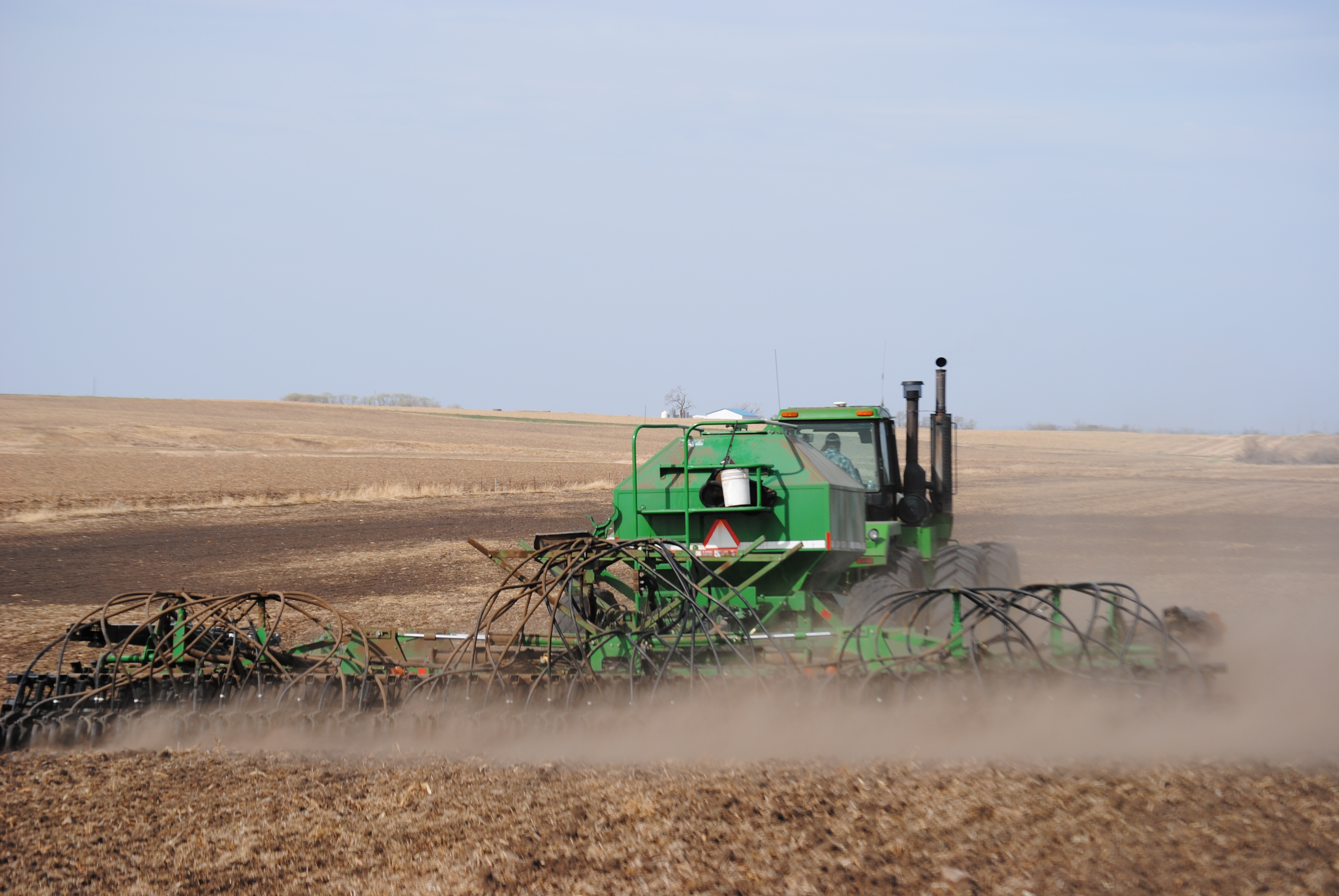
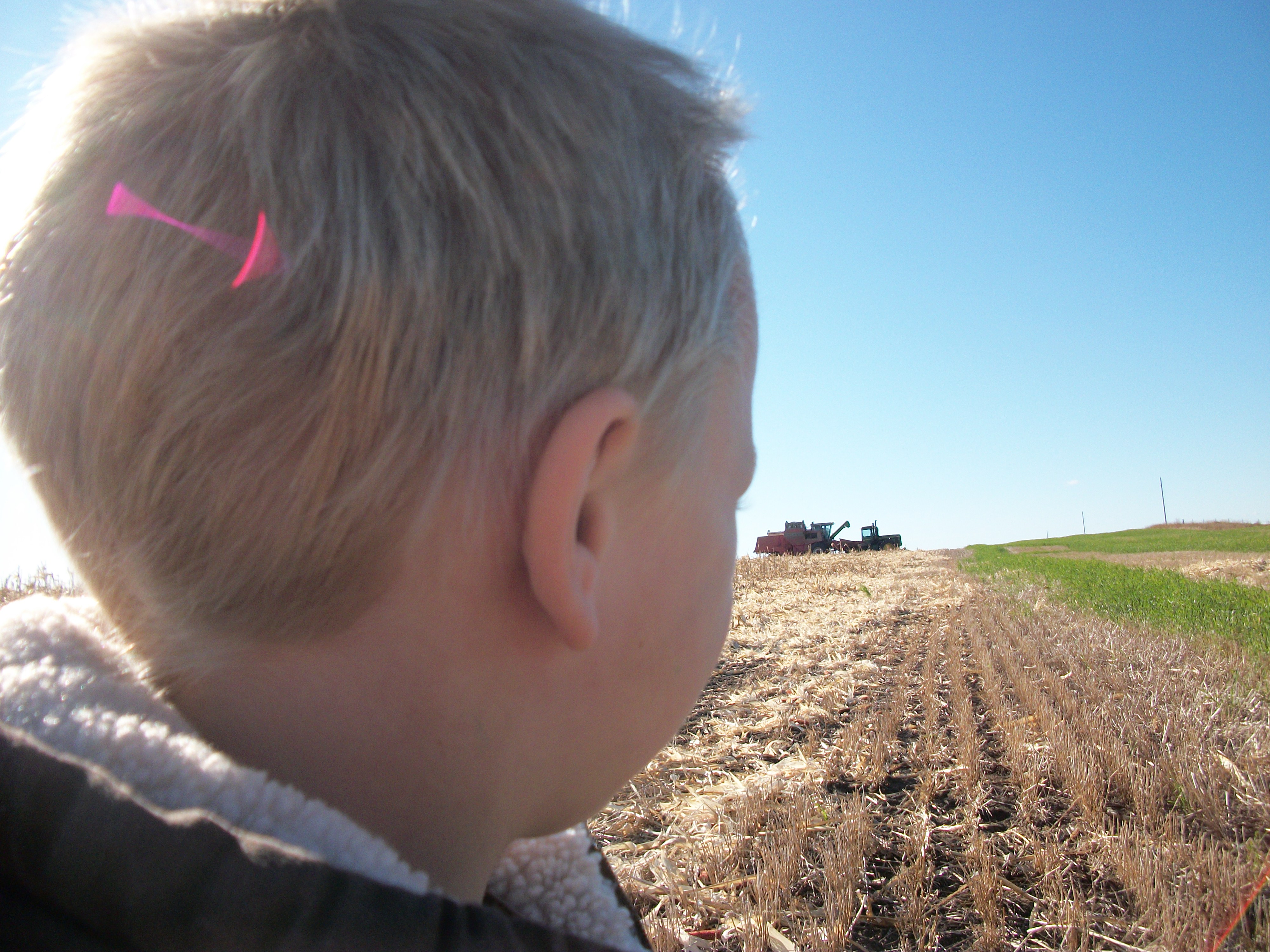
So on this Good Friday, as I keep a close eye on George, Boss Man is out seeding wheat. After a quick repair this morning, he’s back at it again…check it out:

Repairs - sometimes it seems like a never-ending job, but Boss Man fixed this up lickety-split!

On his way again! The wind was a bit of a challenge this morning.

It's amazing to see where technology has taken us!

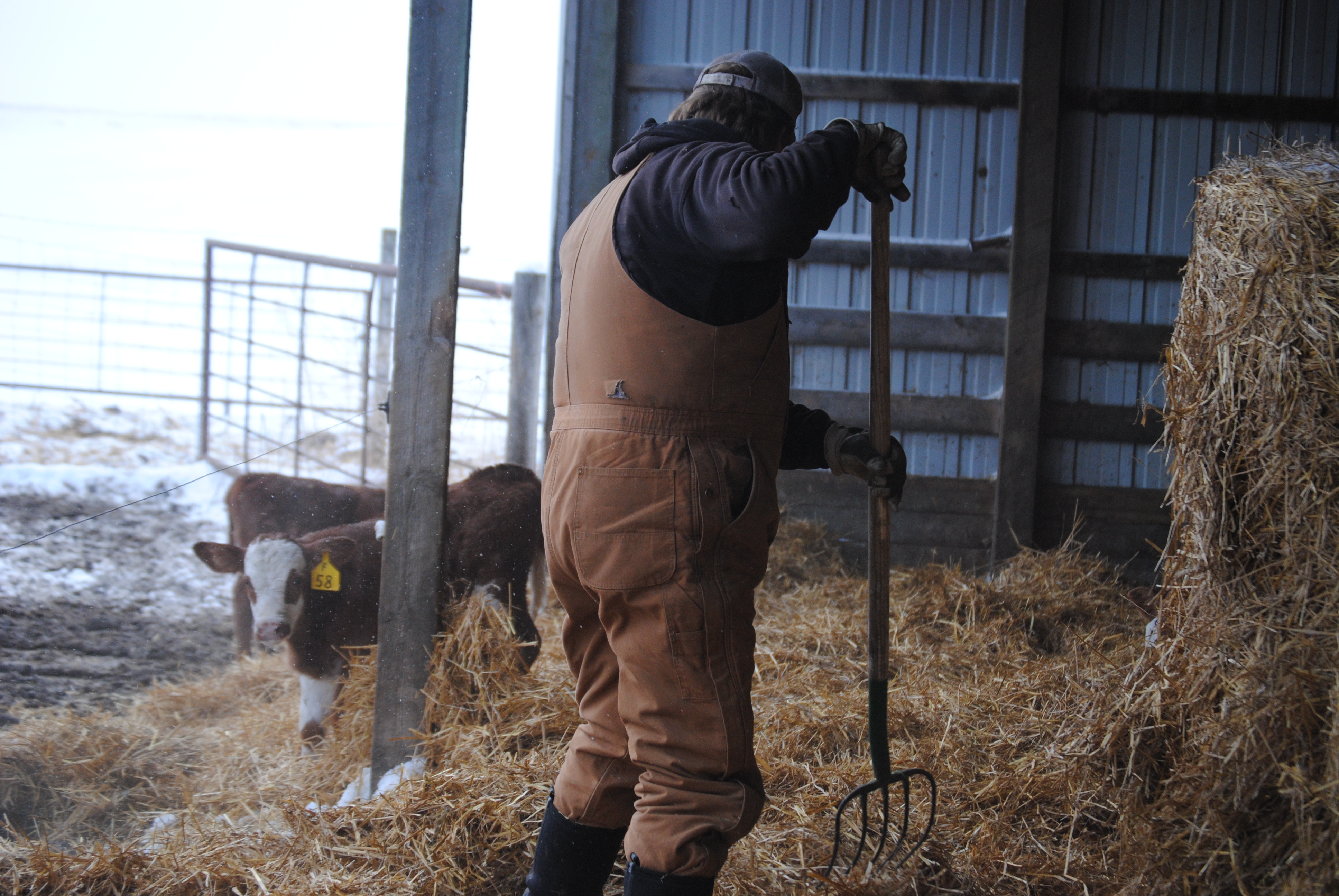
In a day where corn and soybeans seem to be king in this area, we still find wheat a very important crop in our rotation. Not only does it make improvements to our overall soil health, but the straw is an important part of our cattle operation. We use it as bedding for our calf area and in our barn during calving.

All safe and warm inside, no matter what's going on outside, thanks in part to the wheat straw used for bedding!

Up close and personal, that's wheat being seeded!

Now that planting (or seeding, as it may be) has begun, it’s Mother Nature’s turn to do her stuff. The next few weeks and months will be determined by the amount of rain we receive, when we receive it and what other weather patterns we encounter.

On this Good Friday, as so many reflect and express their faith, I still feel that a farmer’s faith is some of the strongest faith you will find.

Blessings to you today. And a Happy Easter to all!

My Future of Ag

Recently I wrote a blog for a contest. I wasn’t sure if I should, but the topic was one that hit so close to home that I couldn’t help myself. As I sat to type, it was if the words were already there…I just had to put them on paper.

You can read the post here (and vote for it, of course!), on the Alltech page.

I won’t reprint the whole thing here, but I don’t think the topic will surprise anyone. It’s about my boys. And they’re the whole reason I started this journey.

You see, about 2 years ago I attended a conference hosted by the AgChat Foundation. (AgChat and the foundation are celebrating their 3rd and 2nd birthdays…Happy Birthday to them!) Side note: AgChat is an event that occurs on Twitter on Tuesday nights from 7-9 p.m. CST…it’s a great time for consumers and producers to connect and to learn from each other.

At the conference in Chicago, I participated in a round-table discussion, where you could ask any questions you wanted from different people with experience in different areas. I sat at a table with a woman who was soon to become a fast friend in real life, not just online.

She was answering questions about blogs…and I had a bunch! I wasn’t sure if blogging would be for me, but I wanted to give it a shot. I just didn’t know if I had enough of a story to tell, or if it would be of interest to anyone, or if it was different enough to make a difference.

I felt a little bad about monopolizing a little block of her time, but I was hungry to know more. And she was willing to fill me in.

And so it began.

A few weeks later, in September of 2010, Wag’n Tales was born…and the rest, as they say, is history.

Happy Birthday, AgChat! Happy Birthday, AgChat Foundation! And thank you, Janice, for giving me a push (OK, more like a two-handed shove!) into blogging. Your encouragement and support has meant the world to me.

Calf in a cast

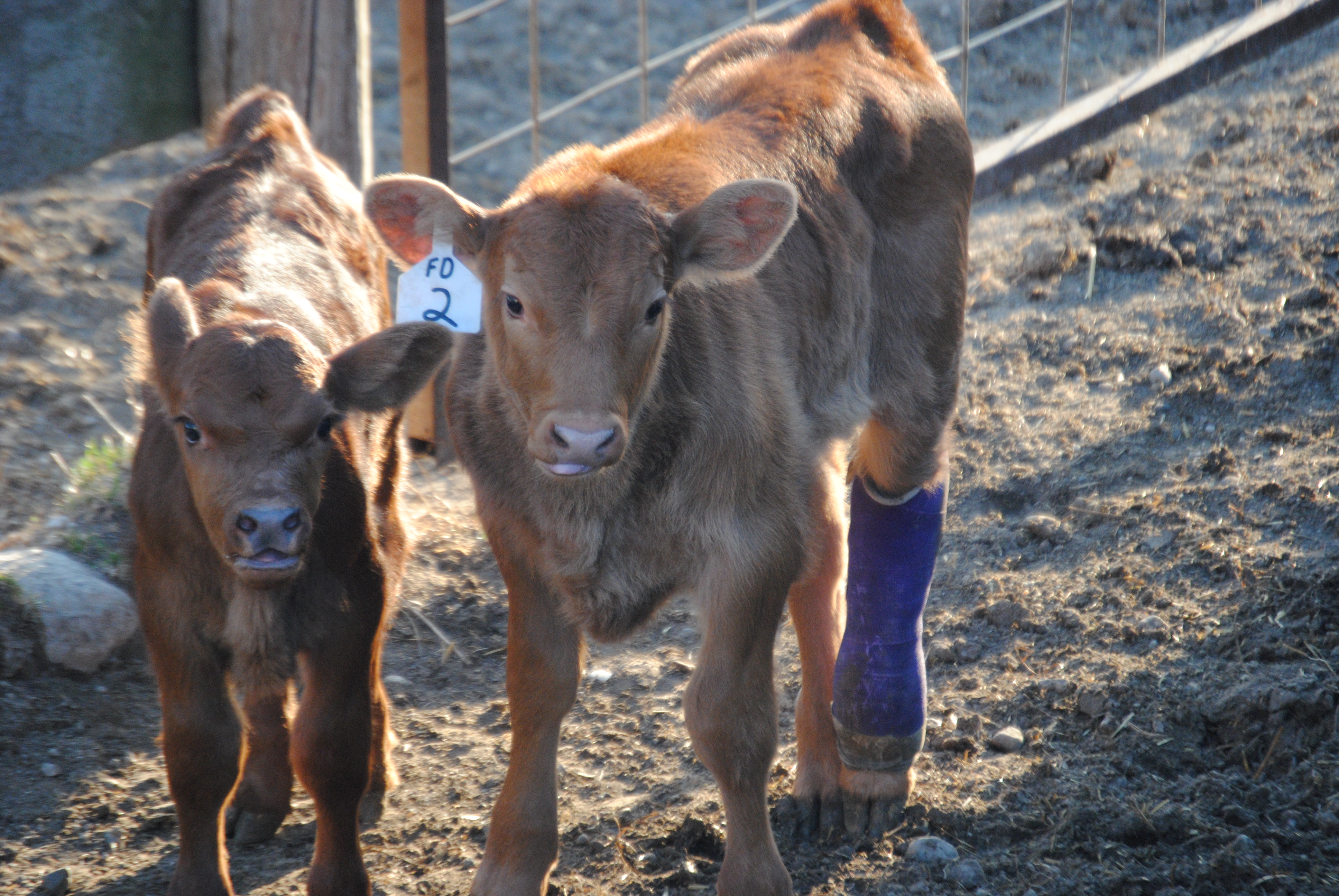
What happens when a 1200-pound-plus cow steps on its newborn calf? Well, lets just say that the calf isn’t usually a winner. But in this case, the vet was called in and so far, things are looking good.

He may be wearing a cast, but it's not slowing him down!

That’s right, we have a calf in a cast. He’ll keep the cast on until the first week of April or so…and while he has his cast on, he’ll be treated to a special pen in the yard, and will spend his nights next to his mother in the barn.

Broken legs don’t happen often on the farm, but when they do, it’s important to have them heal as best as they can, so the calf can walk normally and be able to stand and regain use of the limb. And so far, this little guy seems to be doing great.

Walking around, checking out his surroundings.

So what does it cost to have a cast put on a calf? Our vet bill was right at $200. Plus a little extra time for a few weeks.

And it was a great teaching moment for the boys.

And those moments are priceless.


Not a laughing matter

A few days ago, a close friend of mine sent me a message on Facebook, directing me to a conversation that was taking place on a specialized sheep page. The message was shocking, and laughed in the face of all we’ve been doing to educate and show consumers where their food comes from…but it was far from funny:

You are a Joke! a Fraud! you can not sell meat! What you are selling is wrong! Meat comes from the grocery store meat departments where they grow it for us to eat. You are one sick individual who says you will sell lamb meat from those cute fuzzy animals! you are gross! Milk comes in a powder that the grocery stores mix with water! Why are you lying to people! you are a sick person who claims to sell meat, milk and cheese that comes from poor helpless lambs!

And no, I can’t make stuff like that up.

So why does it matter? It’s just one loon out there, shouting lies and slinging mud at whomever will listen, right?

Wrong.

One of the reasons that agriculture is being slayed in the media the way it is, is that for too long we figured that people would “get it.” That they would understand what we’re doing, why we’re doing it and just leave us alone to get the job done.

That’s not the case any more, and I don’t think it ever will be…and shouldn’t. We want people to have a connection to their plate, we want people to understand the power of their input at the grocery store. But they also need to understand that farms are businesses, we provide a product, we need to make a profit and we prepare for the future as well.

There must be a middle ground, a place where we don’t raise our voices, don’t shake our fists and don’t make it personal…I just don’t think we’re there yet. I read a comment recently that stated that farmers need to remember that they are more than just a farm, they are people, too.

Our barn is dated from when it was built. That's a history we can't forget.

But I have to say, from a farmer’s perspective, that’s pretty hard to do. It’s not just a building and some animals, this is our heritage and our family name. It’s the work of previous generations, resting on our shoulders to see it through to the next generation. And it’s up to us to be the communicators to protect not only the future, but the history of our farms as well.

The way I see it, the fact that we’re getting responses such as the loon above, and the other slew of media backlash, must mean we’re heading the right direction.

And if we’re willing to be talking, we better be willing to listen as well.

Protecting their future

I never used to be a political person…well, at least not much. I had general ideas about where I thought our country stood, and felt that there were so many better-educated, passionate folks that could speak for me better than I could.

I was wrong.

I’m learning rather quickly that if I don’t speak up for what my family needs, then no one else will. And I will do everything I can to make sure that my children’s future is not jeopardized by an organization that attacks our livelihood, without taking the time to understand it.

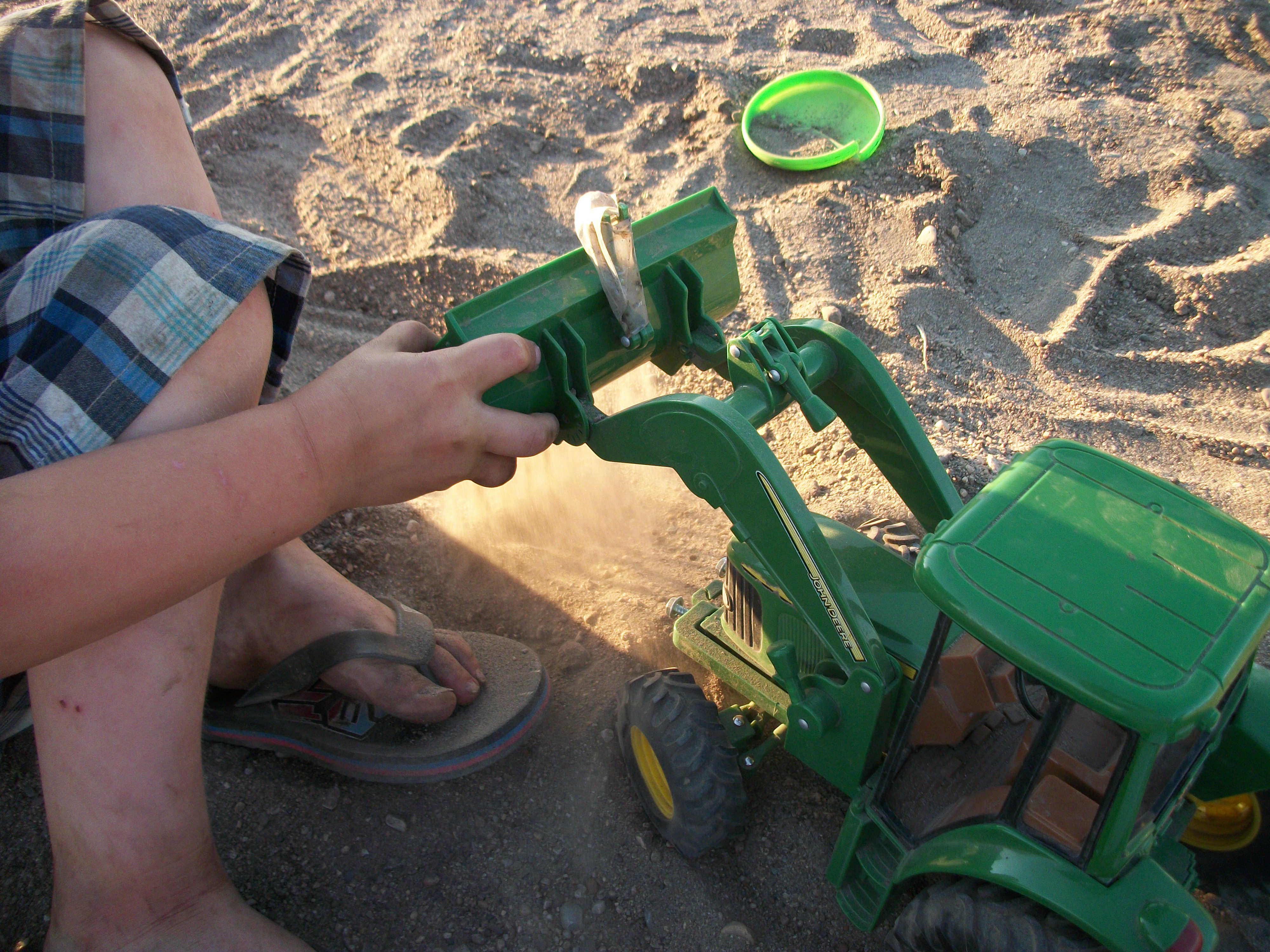
Right now, EJ plays in the dirt...but I hope that someday he'll be able to farm with his dad. I'm doing my part to guarantee that. Will you?


What am I talking about? There is a group of individuals that have started a petition drive to collect signatures in support of a constitutional amendment that will safeguard farming and ranching in North Dakota. This amendment will guarantee that groups such as PETA and HSUS will not be able to manipulate the ballot initiative system in North Dakota and pass laws that will jeopardize our economy, our way of life and the future of our state.

The amendment simply states, “The right of farmers and ranchers to engage in modern farming and ranching practices shall be forever guaranteed in this state. No law shall be enacted which abridges the right of farmers and ranchers to employ agricultural technology, modern livestock production and ranching practices.

It’s straight, to-the-point and flexible enough to stand the test of time.

When asked about what this amendment would do, perhaps it would be easier to tell you what it isn’t…this isn’t about size of farm, types of farming, or allowing animal abuses to take place. It won’t supersede federal laws, criminal complaints or compromise zoning-type issues. It has nothing to do with farming systems, and everything to do with farming practices.

But North Dakota is an agricultural state. We would never do anything to harm our biggest industry. Right?

Did you know that ballot initiatives are already planned for our state by HSUS? We’re not talking about a far-distant, hard-to-imagine future. We’re talking about here and now.

Do you have questions? Ask and I’ll answer them or check out this link and see if your questions have already been answered. If I can’t answer, I have a whole slug of people who can (and I’m not afraid to use them!). Do you want to know how to find a petition to sign? Email me at wagntales@gmail.com and I’ll connect you to someone near you that has a petition. (You need to have been a North Dakota resident for 30 days, at least 18 years old and have a residential address…oh, and a US citizen.)

Instead of playing catch up, it’s time to take a stand and support those that make North Dakota the great state that it is.

Thank you to North Dakota Farm Bureau, North Dakota Stockmen’s Association and all other organizations in the state of North Dakota that support this effort. My boys thank you, too.

Thankful Thursday – Shelter

Our blizzard turned out to be not so much a snow event, as it was a wind event…but it still made me so very grateful. And after the storms in Illinois and elsewhere, I thought it would be appropriate today to give my thanks for shelter.

I'm thankful for shelter for our calves...and a Boss Man that cares for them!


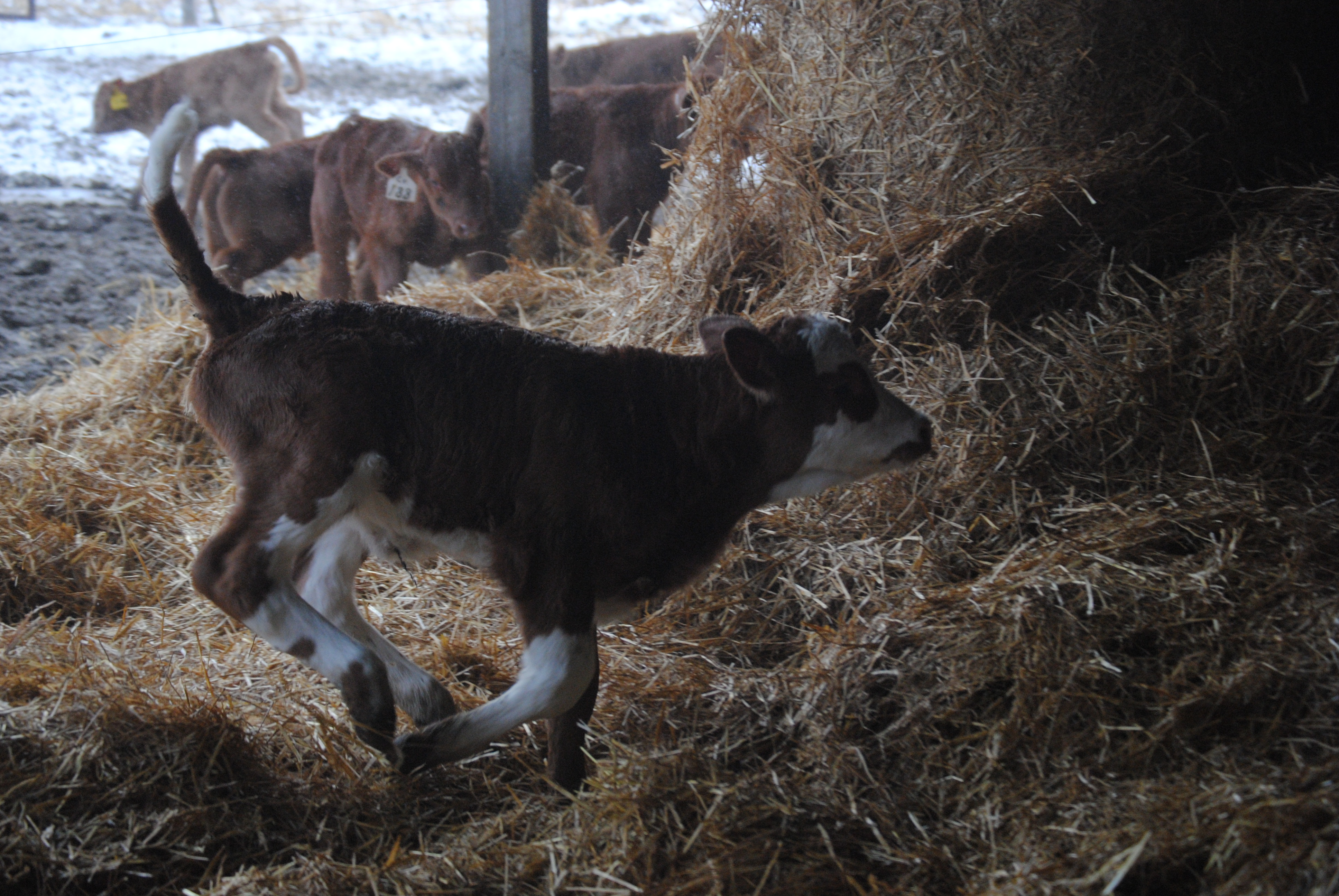
The calves love playing in the fresh straw.


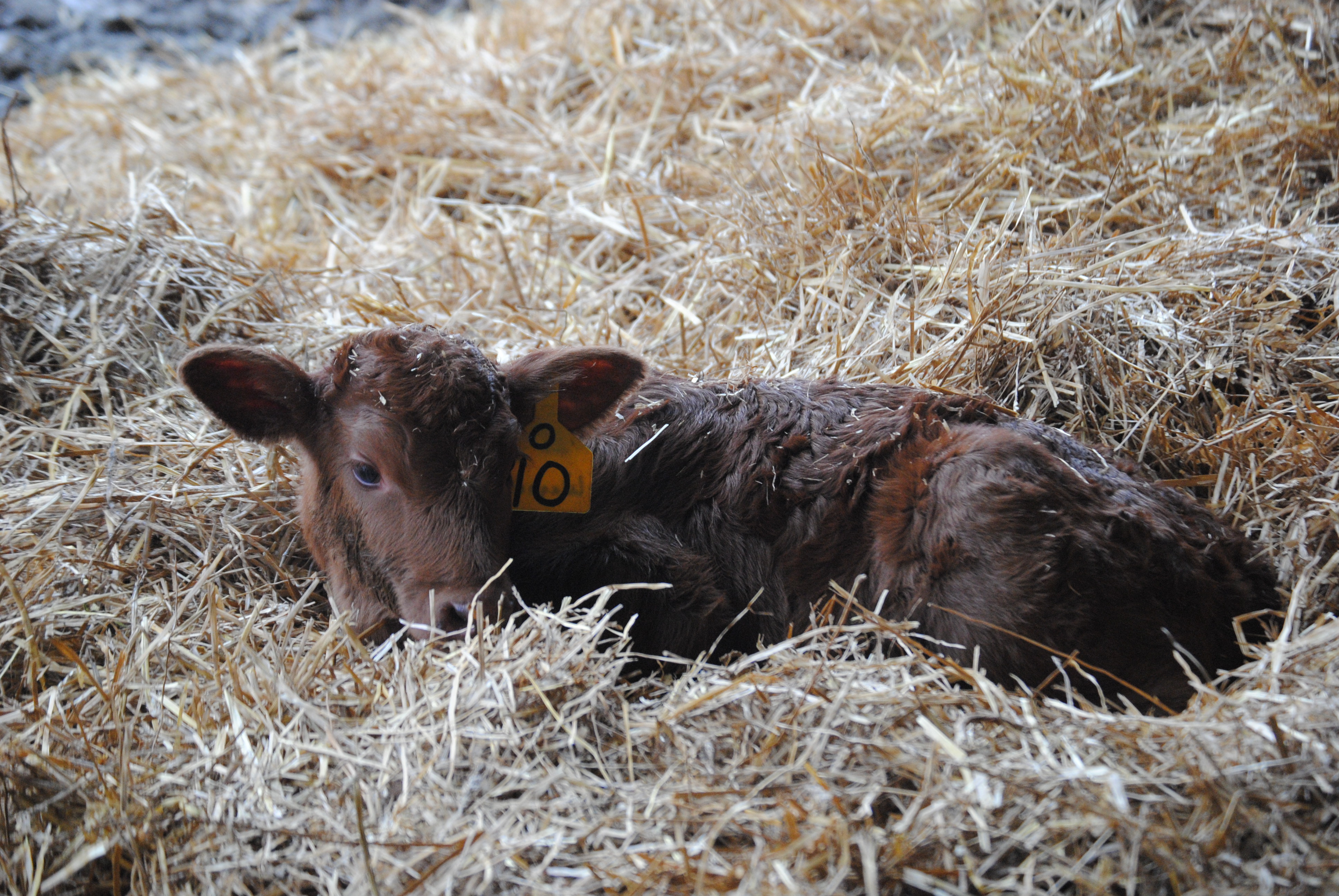
Snug as a bug in a rug.


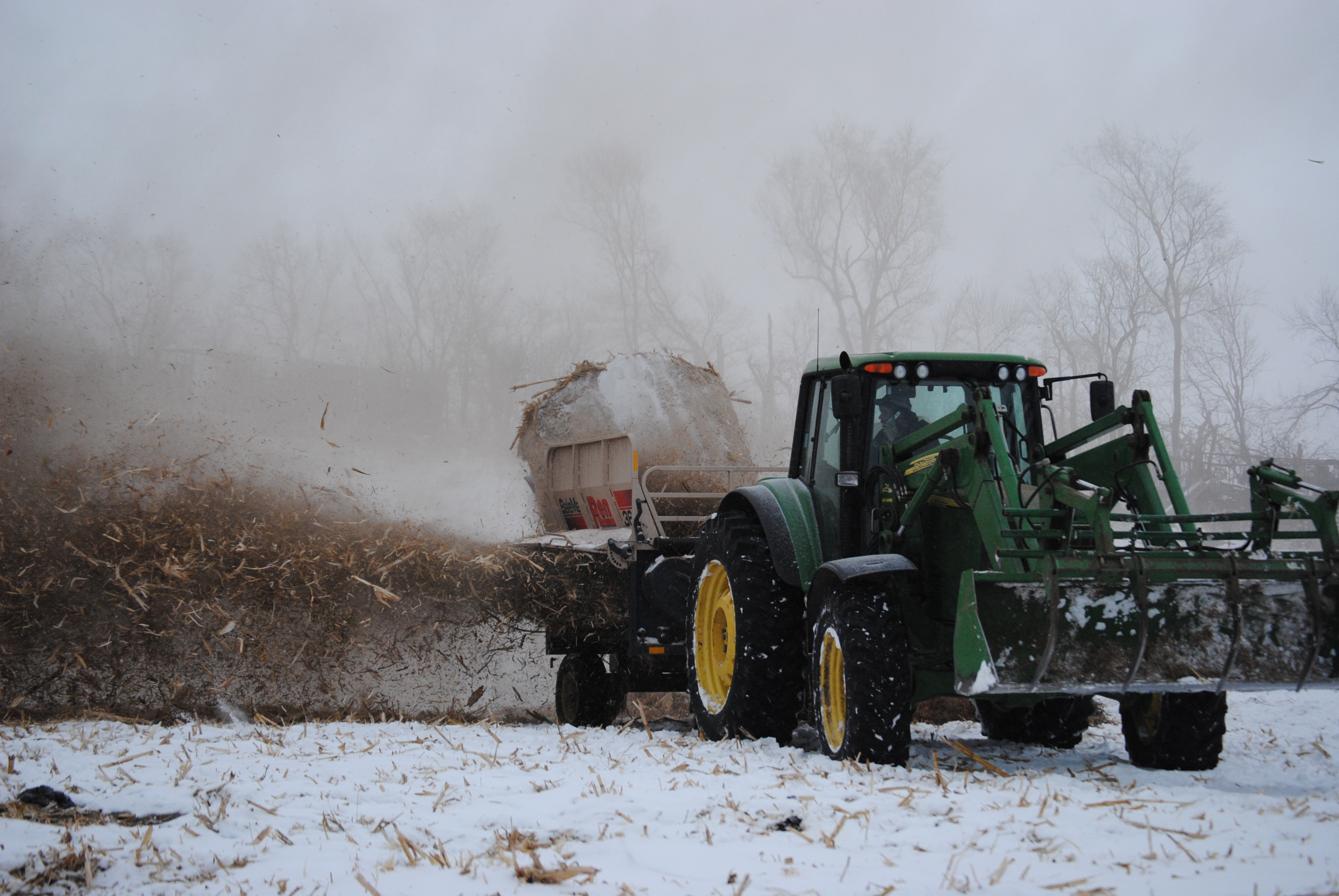
I'm thankful for the equipment and technology that allows us to care for our animals, like this bale processor.


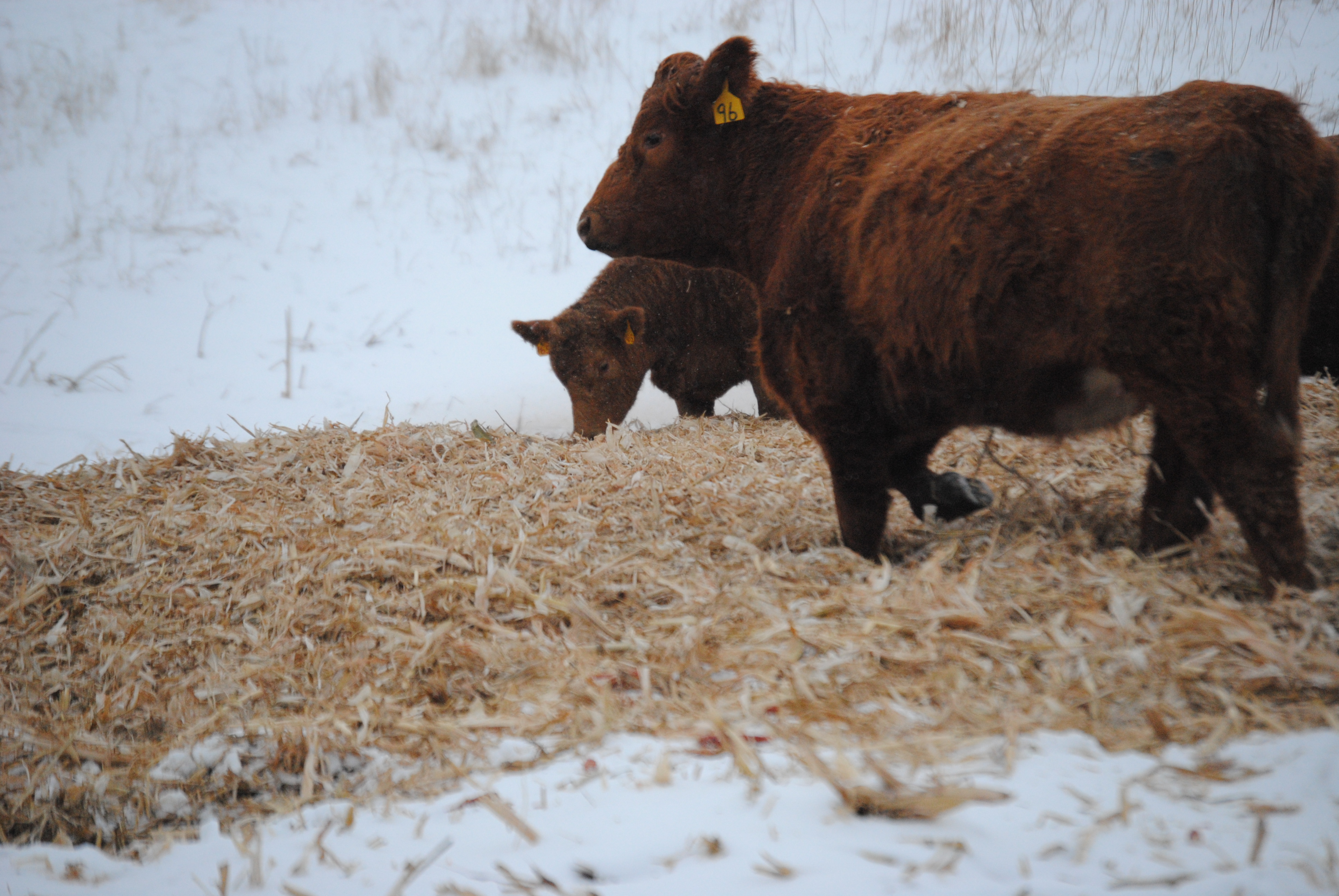
The bale processor (above) grinds up the corn stubble (left over corn stalks) that our farm baled at the end of harvest last year. It provides great bedding for our cows, as well as a treat or two, as they find leftover corn cobs and other goodies in the bedding.

It's kind of like an Easter egg hunt, in your bed.


And I’m grateful for our home, and for all of those that make it possible for us to provide shelter for our animals, our children and ourselves.

And as I give thanks for the shelter that we have, I offer prayers and condolences to those that lost their homes and their lives during this week’s storms.

Meet the Corporate Head of our Factory Farm

Yesterday, I heard a lot of talk about the #OccupyOurFoodSupply movement. I read a lot of articles on the downfall of our modern agriculture practices, the need to “get back to the basics,” and the need to reconnect to our food supply.

So I thought that instead of blaming some unknown enemy for placing my farm in a bad light, or blaming consumers for not taking the initiative to actually visit where their food comes from, I would show you, just as I have for the last year and a half.

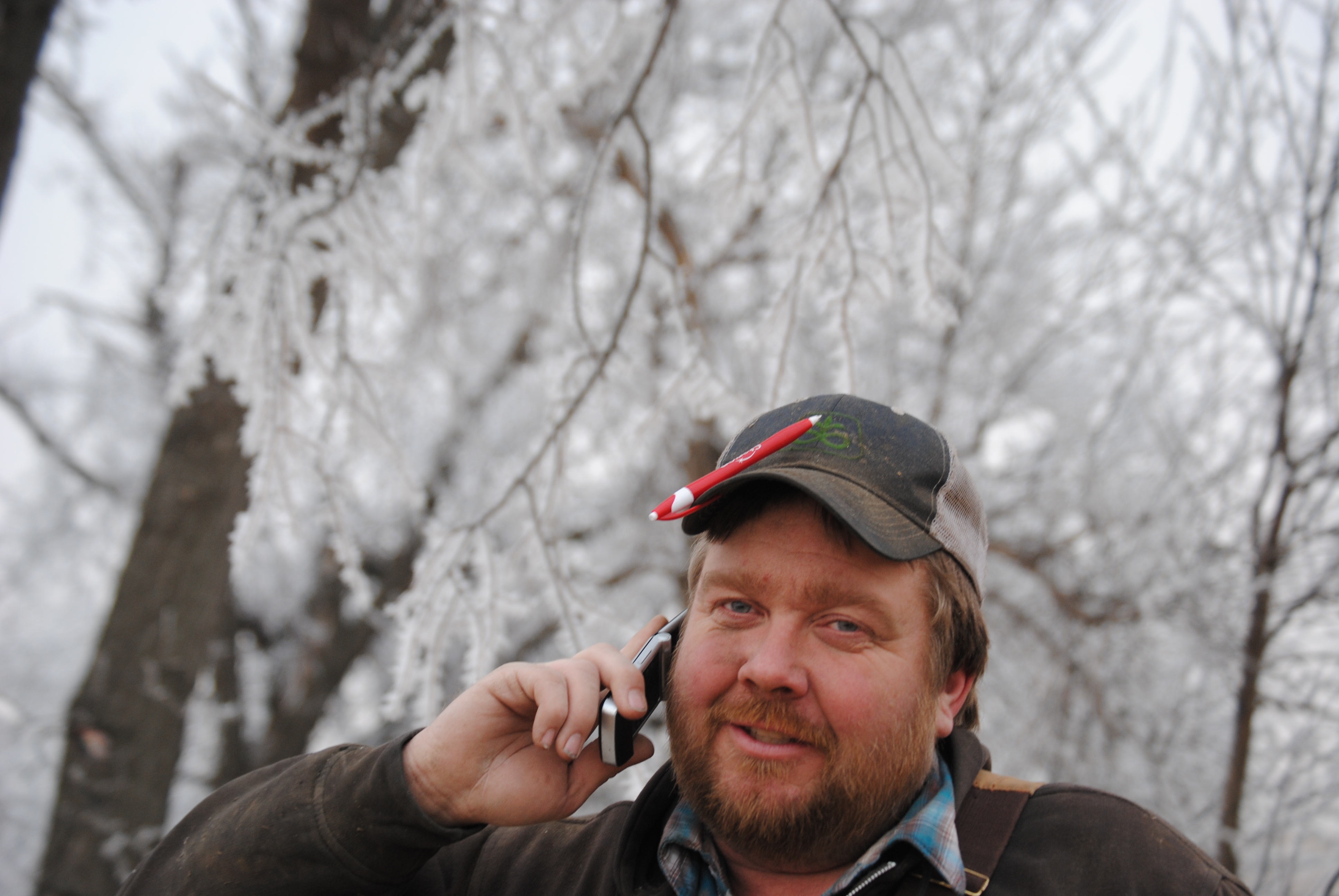
Meet the corporate head:

Ooh, he's using technology, too!

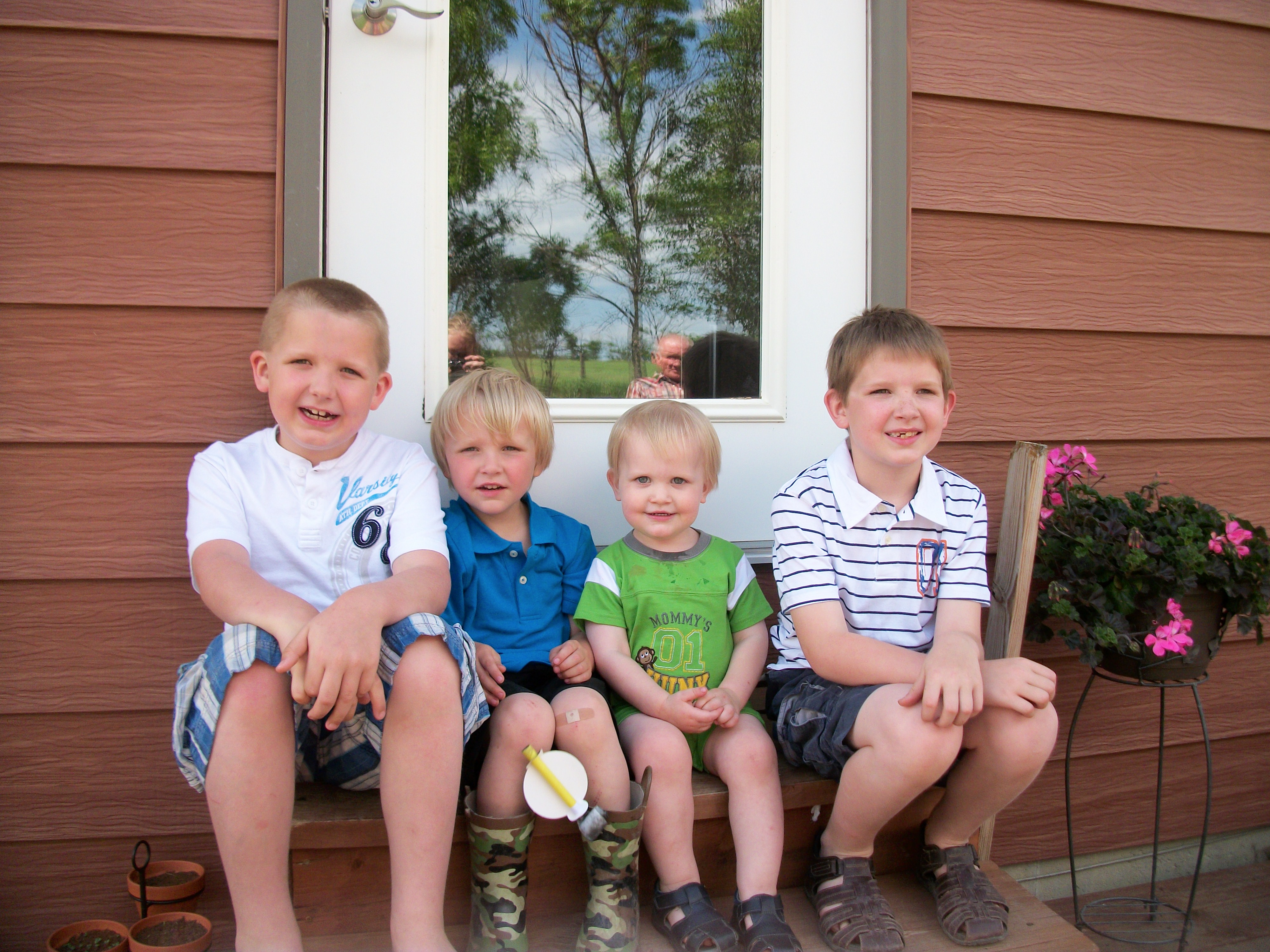
His name is Mark…and we’ve been married just about 11 years. He eats, sleeps and breathes this farm and this land. There is not a thing that he would ever do that would jeopardize it for the future. Not for his satisfaction, though. No, he has a contract with a group that has his number…and he doesn’t like the consequences of messing that up. Here, meet them:

Our boys...and the future of this farm.

A pretty rough looking bunch, eh?

But the real nasty one to work with is the one in charge of our seed selection, the one that forces what we plant, when, where and how…the one that determines whether or not we can farm next year. I’d like for you to meet:

Mother Nature

That’s right, Mother Nature.

You see, there isn’t a corporation, a seed company, a conglomerate of some epic proportions that determines how we farm. That decision lies solely with us. But, unfortunately, we’re not alone in the game. No matter what we decide, Mother Nature can always turn the tables, and we’ll need to react.

You could ask Mark today what his plans are for this spring, what he intends to plant where, and when he plans to start…and his answer will be, “I’m not sure.” You see, spring is not here yet, winter is not over, and Mother Nature can change a lot between now and then.

Do we have seed ordered? You bet. If you don’t order ahead, you risk not having what you need available, when you need it. Does any company tell us what to plant? No. That decision lies solely with this farm, but we do ask and receive recommendations from several different sources. Including our crop consultant, who tests our soil, tells Mark exactly what is needed, and what his recommendations are for each field.

Our farm is exactly that…it’s our farm. And I’m trying to let the public know that we raise their food on our farm. But we also are raising our farm’s future. And we would never jeopardize either for the sake of the other.

So, go ahead and #occupyourfoodsupply, but please don’t mind if it’s a full room…our farmers are already there.

*Added: Want to learn more about what others are saying? Check out these links:

Facts on Farming

A few weeks ago, a question was asked on Facebook by a local news station regarding farmers and government payments. Don’t worry, I won’t go into my feelings about that topic right here…but I do want to try to explain something to those that aren’t involved in agriculture.

It seems as if there is a misconception about farmers. (Not shocking, I know.) But the comment that was made online really struck a chord with me…and it should for you, too. You can read about my reaction here.

But I thought maybe we should have some numbers, so that people can understand what really goes into farming.

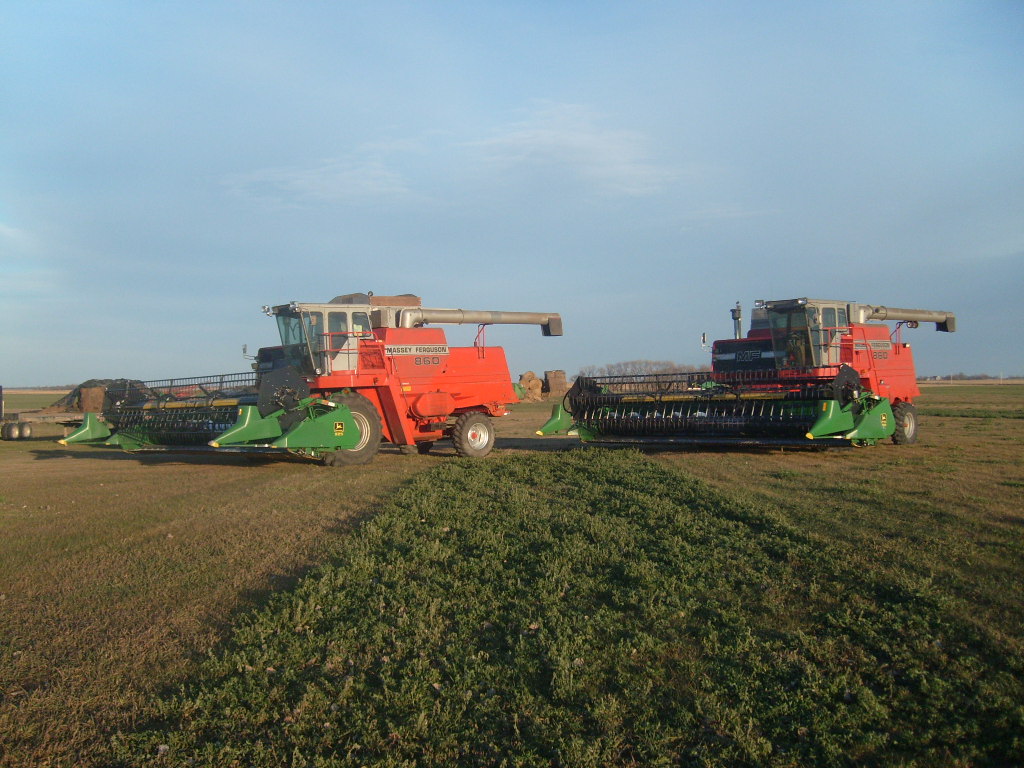
These are our "fleet" to bring in the crop. Far from new, but they get the job done.

Now, to be honest with you, I’m using numbers for my area, so things can be markedly different where you’re at…but in the end, it should all pencil out about the same.

Let’s start with the basics. Crops are figured by the acre (which is roughly half a soccer field). So most of the items you purchase to put the crops in and take them off are calculated based on how much it costs per acre. Crops that I will use in these examples are spring wheat, corn and soybeans…some of the more common crops in my area.

Check this out:

Example 1: Spring Wheat

The average yield (crop that they harvest) per acre for spring wheat is 49 bushels/acre in my area. The average market price is estimated at $7.54 per bushel. If you multiply that out, you would come up with an average income of $369.46 per acre. Not too bad, eh?

Well, that just doesn’t happen by itself. Let’s look at what it took to get there. The average direct costs associated with planting, pest management (taking care of bugs), nutrient management (taking care of soil), insurance, fuel, repairs, etc. is $192.92 per acre. Indirect costs, such as overhead, machinery depreciation, purchasing new machinery (usually just new to you, not new-new) and land charges, run about $117.52 per acre. The costs total $310.44 per acre. Hmmm…a little too close to that first number, right?

So, in an average year, planting spring wheat, a farmer can expect to make roughly $59 per acre. And that’s with fuel costs averaged at $3.40/gallon for gas and $3.20/gallon for diesel. We all know what is forecasted for those numbers, right?

I’ll spare you all the rundowns of the other two crops, and just give you the final numbers: Soybeans would average about $103 per acre and corn (for grain) would average about $150 per acre.

So what’s the average farm size in Dickey County (where I live)? It’s 1,100 acres. So let’s say we planted our whole farm to corn, and we had 1,100 acres, we would (according to these numbers) roughly make $165,000. (Also remember, that would be if you planted every acre and were able to harvest it. Most of the time, there are significant areas of drowned-out crops, etc.) And if we planted our whole farm to wheat? $65,000. (And let me tell you, we would never, ever dream to plant our whole farm to one crop. You remember that saying about all your eggs in one basket, right?)

But seriously, folks, that’s not how it works. Those are the numbers we shoot for and strive to reach…and like most professions, very little goes as planned.

For example (and these hit a little too close to home): imagine having to harvest all your wheat in one direction, doubling your fuel costs. Or having a pest move in, doubling your pest management inputs. Or having a wet spring, dry summer, late fall, whatever have you may, lowering your yields substantially.

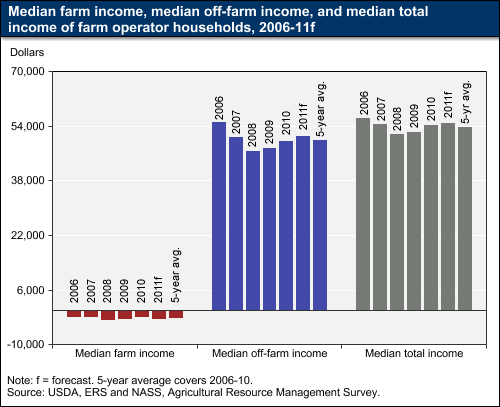
No, to be honest, farmers on a national average follow this graphic a little more closely:

And that would be why so many farmers, and/or their partners, seek off-farm employment.

But we will plant a crop this spring, in hopes that we’ll meet or exceed our goal yields, while trimming as much off the expenses as we can…just like any good business person would do.

And that’s a fact.

P.S. I would especially like to thank Kacey Holm, our county extension agent, for his assistance in getting me these numbers. Extension ROCKS!

Organic Romance

To buy or not to buy organic? That is the question.

But why does it have to be?

I thought about this question alot, while preparing this post. In fact, most of my posts are written in a very short amount of time, usually 10 minutes or less. Sometimes it’s as if the words were already there, I just needed to type them out. But not today.

As a farmer, I am proud of almost every aspect of agriculture. I truly value the organic movement, because anything we can do to continue to provide food is important. We NEED every farmer, every type, every size, to continue providing food for our world.

Over the weekend, a slideshow by WebMD was brought to my attention. At first, I was kind of excited about it…hoping it was going to put to rest some of the myths and misconceptions surrounding conventional and organic foods. But it didn’t. In fact, it went a step or two further than most articles. And I feel the need to set some “facts” straight.

1) It was stated in the slide show, that fruit and vegetables such as apples and peaches should be bought organic whenever possible, to reduce the exposure risks of pesticides.  The site said, “If you can’t afford to buy organic apples, scrubbing their skins under running water can help reduce pesticide residues, too.”

Well, to tell you the truth people, no matter where you get your apples, you should ALWAYS wash them. Period. The same is true for organic, just as it is conventionally grown fruit and veggies.

2) Directly quoted from WebMD, “According to the Organic Trade Association, livestock on an organic farm cannot be given antibiotics or growth hormones unnecessarily — a common practice in conventional agriculture. Some experts think using antibiotics this way may contribute to the rise of superbugs. And although the risk to humans isn’t clear, added hormones do show up in supermarket beef.”

Let me shed some light on what happens on our farm (since I can’t speak for everyone, but know that most follow the same type of protocol). We give antibiotics only when necessary, such as when an animal is showing sign of being sick. We would never consider giving all of our animals antibiotics on a set schedule for many reasons, including: a) cost, b) time and feasibility and c) we need those antibiotics to work when we truly need them. To say that most conventional ranchers use antibiotics unneccessarily is simply not true.

And on the hormone subject…let me break down the actual facts for you:

4 oz. beef from steer given hormones: 1.6 nanograms of estrogen

4 oz. beef from untreated steer: 1.2 nanograms of estrogen

4 oz. beef from non-pregnant heifer: 1.5 nanograms of estrogen

4 oz. raw cabbage: 2700 ng estrogen

4 oz. raw peas: 454 ng estrogen.

3 oz. soy oil: 168,000 nanograms of estrogen

3.5 oz. of soy protein concentrate: 102,000 nanograms of estrogen.

3 oz. of milk from cow given rBST: 11 nanograms of estrogen

3 oz. of milk from untreated (non-BST) cow: 11 nanograms of estrogen

Data from Foodstuffs Foodlink

Hmmm…so those extra hormones are a problem, but raw peas have 400% more estrogen in them. Perhaps we need to lay off the peas? I’m kidding, of course. That would be obsurd. Right?

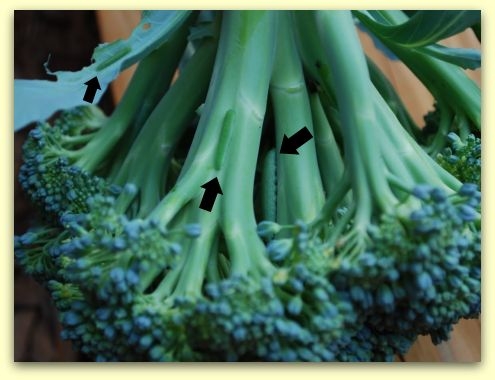
3) This one I found funny. Broccoli. Yep, you should grow your own organic broccoli. Have any of you grown broccoli? I have no problem with growing your own food, even broccoli. I just appreciate the ability to choose not to. I don’t like the extra protein.

Mmmm...worms.

 
Well, those are just a few of the examples in the slide show…there are 29 slides to go through, all with varying degrees of ridiculousness. What’s funny to me is that it wraps it all up with this advice, “One thing the experts agree on: Regardless of whether you choose locally grown, organic, or conventional foods, the important thing is to eat plenty of produce. The health benefits of such a diet far outweigh any potential risks from pesticide exposure.” Oh, so the first 28 slides are supposed to make you terrified of all food not organic, and the last one says, “Eh, the risks aren’t that great, just eat.” Whew. I was worried for a minute.
 
Let’s cut to the chase. When it comes down to it: eat. Eat what you want, eat sensibly and get it from whatever source you have available. Supermarket, farmer’s market, online…just eat. If you have the desire and time to grow your own, do it. If you have the desire and time to shop farmer’s markets, do it. If you are a busy person with limited time and whatever is at the one-stop-shop is what you can grab, do it.
 
It’s time we stop making parents feel guilty for what we eat and just relish in the fact that we can feed our children. And by that, I mean HEALTHY foods, not just fast food.
 
That all being said, I respect organic farmers and see a true need for their products. There isn’t a single method of agriculture that isn’t needed for our future. I have not one problem with their product. Not one.
 
Organic farmers: thank you for all you do and the food you provide. Conventional farmers: thank you for all you do and the food you provide. WebMD: quit making me scared of the people that feed me, they’re nice.
 
I know, because I am one.

Thankful Thursday – Children on the Farm

Normally I don’t discuss a lot of political stuff and government-type news. We get enough of that every day, I feel. But this latest proposal hits close to home…in fact, it hits our family directly, and possibly yours, too.

The US Department of Labor has submitted proposed new “rules” regarding children under the age of 18 working agricultural and non-agricultural jobs. Some of them make sense, and seem almost silly that we need to have a law for it. (Who truly believes that a 16-year-old should be allowed to work with dynamite?) Yet others would severely affect our farm…and many farms across the country.

The proposed laws would eliminate children from the farm-labor work force, or at least not without proper training and certification. Sounds great, right? I’m all for more safety on the farm. But upon closer inspection, these rules do very little to ensure safety and do a lot to infringe upon farm families.

For instance, a child would no longer be able to pick up sticks and branches around the yard while Mom or Dad is using a chainsaw, or some other mechanical method to bring down trees and shrubs. (Actually, the child couldn’t be using ANY power tool…that would include battery-operated drills, screwdrivers, etc.) The only exemption would be if Mom and Dad own the farm wholly on their own (not in cooperation with someone else, including family). I know that not everyone is aware of this, but many farms incorporate and set up business structures, so that success can be shared throughout the family equally, same as expenses.

Is this the closest he'll get?

Another portion of the proposed rules states that a child under the age of 16 could not work “on a farm in a yard, pen or stall occupied by a bull, boar, stud horse maintained for breeding purposes, sow with suckling pigs, or cow with newborn calf (with umbilical cord present).”

Trust me, as a mother of four young children, our house already has laws and rules in place regarding what our kids can and cannot do, including not being anywhere near the bulls, staying out of the yard when the cows are calving, etc. But now would we be open to fines if our children were to go into the barn to feed the cats while cows were in the barn with their calves? (And just to clarify, there are pens that keep each cow/calf separate and out of the main part of the barn.)

EJ, keeping me company while waiting for the silage cutter to be fixed.

And yet one more silly section would make it against the rules for anyone under the age of 18 to even ride IN a tractor with someone who is working, or in the process of working.

How in the world are we supposed to educate and involve the next generation? What about those that don’t have farm backgrounds, but are interested in becoming involved in agriculture? How do we tell the next generation that we don’t want their help, until they’re adults? One thing I have learned quickly, raising four boys, is that the more involved I get them earlier on, the more they enjoy and want to learn about the farm. If you leave them out, where will farming be in 40-50 years?

Waiting his turn...his dad is in the tractor, his grandpa is in the combine. Is his future in jeopardy?

And what about 4-H?

The answer is not clear. Would children be able to show their animals if their parents weren’t direct owners of their operations? Would they be able to sell their livestock and receive the money for college funds, as so many kids in 4-H do?

My oldest two have found excitement and education in 4-H. Is that in jeopardy as well?

I understand the need to update regulations…the present set hasn’t been updated since 1970. Yet, can common sense come into play, please? They rattle off statistics of children that are injured or killed in farm accidents, but if you look closely, some of those statistics are misleading.

One such example they give is a 17-year-old who was illegally employed and was a fatality in an accident. The way I look at it, if the child was already illegally employed, then changing the laws would do nothing to ensure that child’s safety. Laws only protect those that follow them.

Yes, I’m all for protecting our children, especially those that live on or near farms, but we cannot protect our children while making their home off-limits and telling them that they’re not wanted, or needed, on the farm. That’s a disservice to all.

Comments on the proposed changes are being accepted through TODAY, please make your voice heard. Visit www.regulations.gov, it’s RIN 1245-AA06.

Today is Thankful Thursday. Today I am thankful that my children can be raised on our farm, in a safe and loving home. I’m thankful that I, as a parent, can teach and instill in my children the love and respect for the farm that it deserves. But it’s MY job to be a parent…not my government’s.