What size of brush are you painting with?

I was watching George paint the other day. It was entertaining, to say the least. He would take his paint brush, and dip it into all the colors, then get mad when the picture didn’t turn out like he had imagined.

And he expected me to fix it.
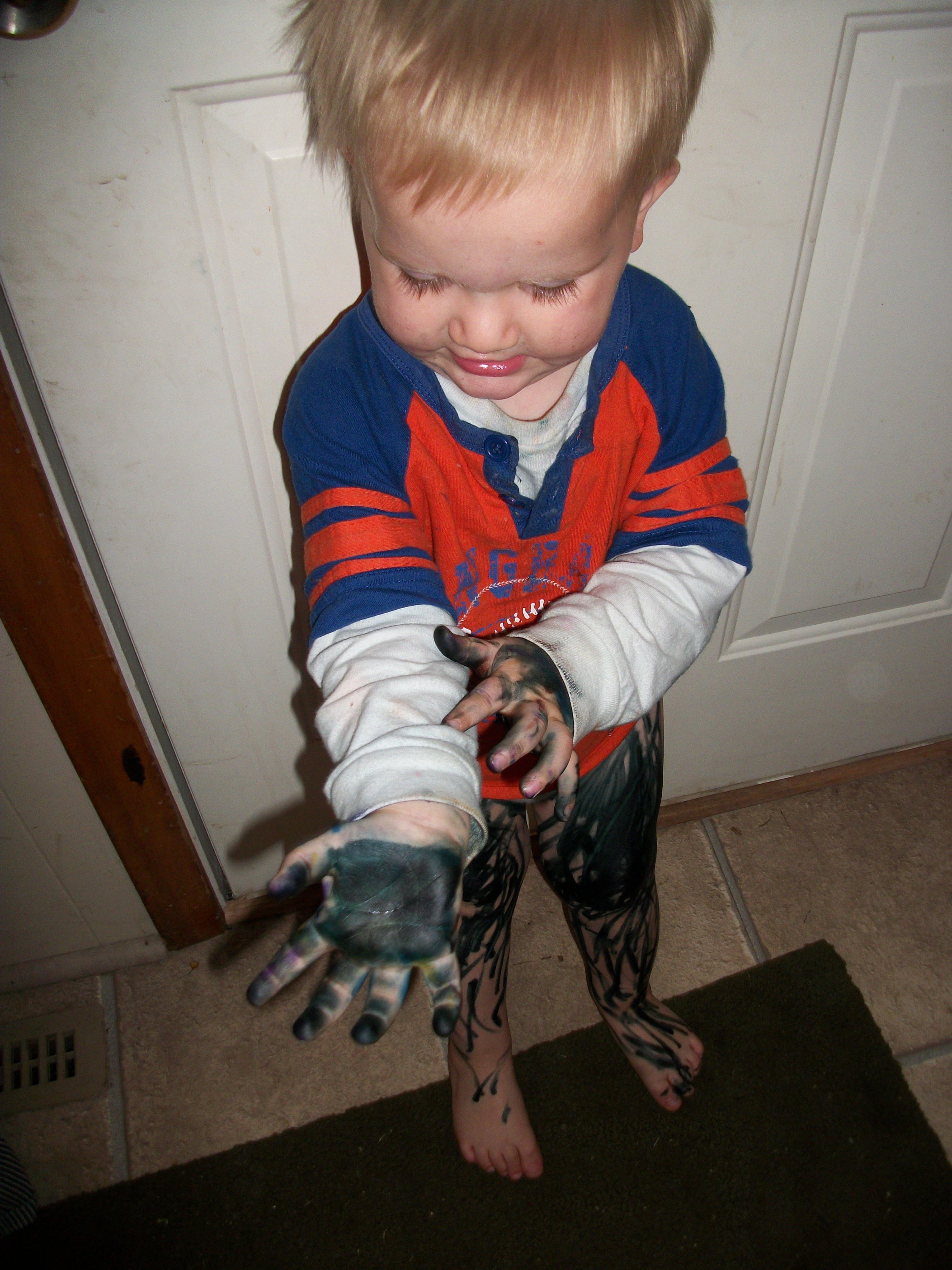
This little artist gets frustrated when his "masterpieces" don't turn out as he had planned. Sometimes instead of being a beautiful piece of work, it's just a mess.

This little artist gets frustrated when his “masterpieces” don’t turn out as he had planned. Sometimes instead of being a beautiful piece of work, it’s just a mess.

He couldn’t understand that the problem had nothing to do with the paper, or the colors, or me, but with the brush he was using and how he was using it. And it reminded me of a conversation that occurred online just a few days ago.

Someone had asked for anyone that calves this time of year to explain why they were doing it, or what benefit they perceived that they received from calving during winter months. I simply replied that with our operation and our location, calving now was what made sense for us. It’s easier for us to deal with snow and ice, rather than mud and muck.

It's not always fun making sure the cattle stay protected in the winter, but the snow and ice are easier to deal with than...

It’s not always fun making sure the cattle stay protected in the winter, but the snow and ice are easier to deal with than…

...the mud and muck of spring.

…the mud and muck of spring.

The responses that were received from people who also raise cattle was surprising, to say the least. One claimed that “winter calvers” are not profitable. Another claimed that some people were too willing to work too hard to make less money.

At first I was somewhat offended. And then I found a little humor in the situation. But it wasn’t until watching my son getting frustrated with his paintbrush, that I realized the lesson that could be learned from it all.

The humor? Well, if winter calving operations aren’t profitable…then there’s a check or two that I’d like to cancel. Mainly to the Internal Revenue Service. In fact, Boss Man will be relieved to hear that our days of paying taxes are over, now that we’re a non-profit livestock operation. Whew! What a relief that is! (Yes, my dear reader, that is sarcasm. At its finest.)

The lesson? When you’re working to make a better picture, using a broad brush will get you nowhere. Neither will dipping your brush in all the colors, expecting for everything to work out.

The same is true in agriculture…or any industry, actually. What makes our way of life great is the reds, the blues, the greens and yellows. All the different colors, all the different sizes, shapes and methods of operating. Together, agriculture makes a wonderful picture. But if you try to shoehorn us all into what you perceive to be the “only way” to farm or ranch? Well, you end up with a big old ugly mess.

We all have the same end result in mind. A great, abundant, affordable food supply for anyone looking for it. And the beauty is, in the great country we live in, the choices are there for you to make. You can decide the types of food you want, the way you want it raised and the price you want to pay for it…there’s always a decision, even if it’s take it or leave it.

Making sure that our calves are healthy and happy...that's our main objective, same as most anyone raising livestock.

Making sure that our calves are healthy and happy…that’s our main objective, same as most anyone raising livestock.

And we have choices, too. We decide our methods and what works for our operation – whether it’s calving now or in the fall, using no-till or conventional methods, growing organic crops or using biotechnology. It’s one of the main principles our country is built on.

I was upset by the insinuation that our operation was sub-par because of the decisions we made, but after the lesson my son taught me, I’ve taken something valuable away from what could have been a disappointing situation.

And that was my choice, too.

Calving season has started

Yesterday was a day to mark down on our calendars – literally. We had two heifers calve, which means that calving season has officially begun. Unfortunately, one calf was born dead, which is always a hard situation to take.

So what went wrong? Well, somehow, during the birthing process, the calf ended up having a foot back. You see, a calf should be born like this:

But instead, it looked something like this:

And Boss Man did what he could to bring the foot forward, so the calf could be born safely, but sometimes it doesn’t work out…and this was one of those cases. We do our best not to intervene unless we have to, but you never know what Mother Nature has in store for you.

This morning I was fortunate to go out right at sunrise. And with the new day:

At first light, I noticed something on the straw.

At first light, I noticed something on the straw.

The sun was just kissing the sky as I went out.

Comes new beginnings:

This heifer is a good mama.

The only problem with the calf being born on the straw, is that it’s only 19 degrees outside. Not ideal for a wet, warm calf fresh to the world. So I called Boss Man down and let him know what was going on. New mothers aren’t always predictable, can be feisty and mean, and really don’t appreciate their calves being messed with…so I let my hubby deal with the logistics of getting the calf someplace warmer. (It’s kind of like him doing laundry, I’m not happy, he’s not happy, so it’s just best if I do it myself.)

Boss Man uses the calf sled to bring the calf to the barn. Mama is close behind, making sure her calf is safe and doesn’t get too far from her!

The last 12 hours have had its highs and lows, but I know that we are where we’re supposed to be…and days like today make it all worthwhile.

No man needs sympathy because he has to work . . . Far and away the best prize that life offers is the chance to work hard at work worth doing.

– Theodore Roosevelt

Flat Aggie visits our farm

We had a visitor at our farm this week. He didn’t eat much, didn’t take up much room, but wanted to learn about what we do. His name is Flat Aggie, and he’s a project that was started by a teacher in California.

Many people are aware of Flat Stanley, the popular children’s book that follows the adventures of a paper man. This project is very similar, except the teacher sends Flat Aggie to farms across the country, hoping to learn through Flat Aggie’s travels all about what happens on the farm.

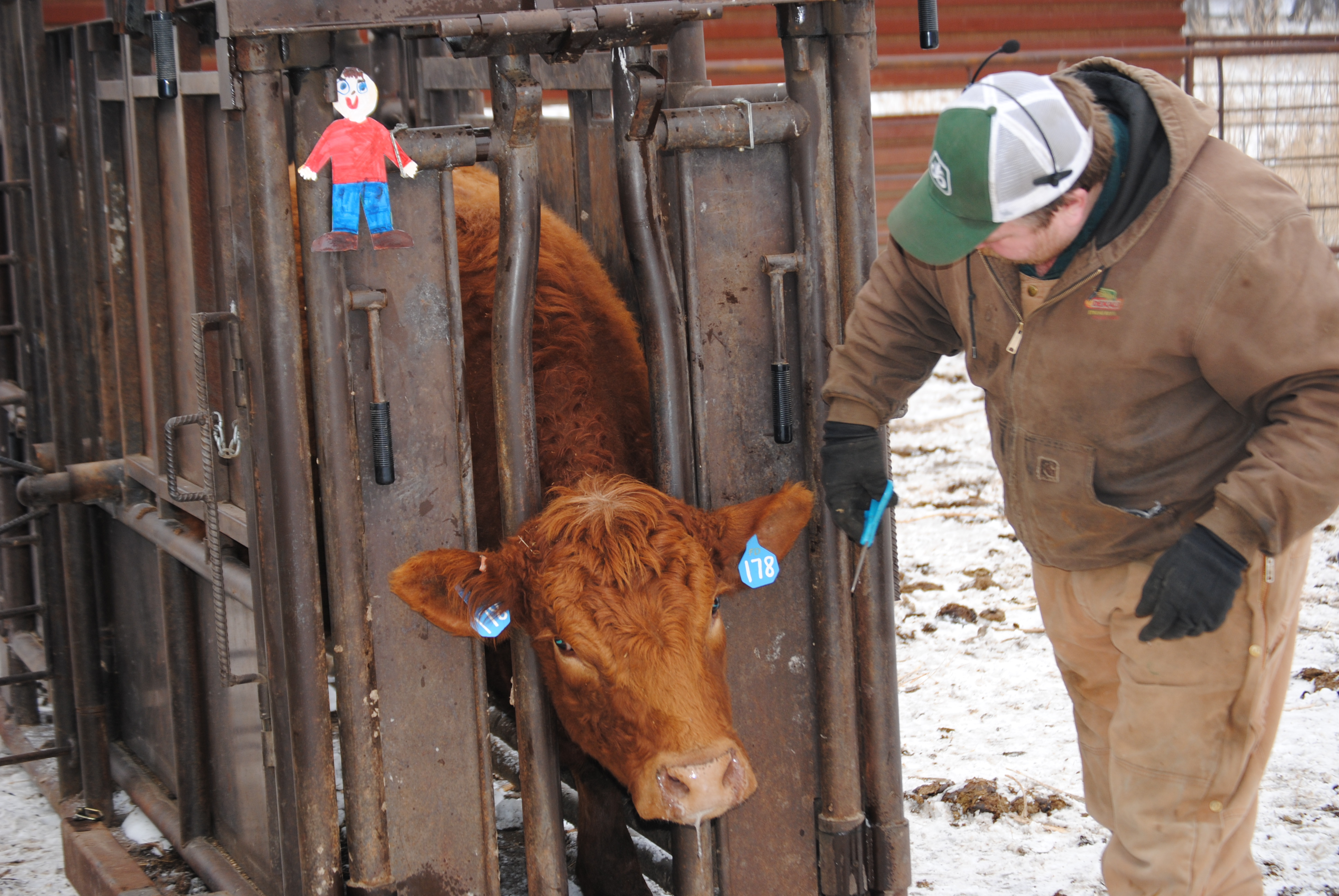
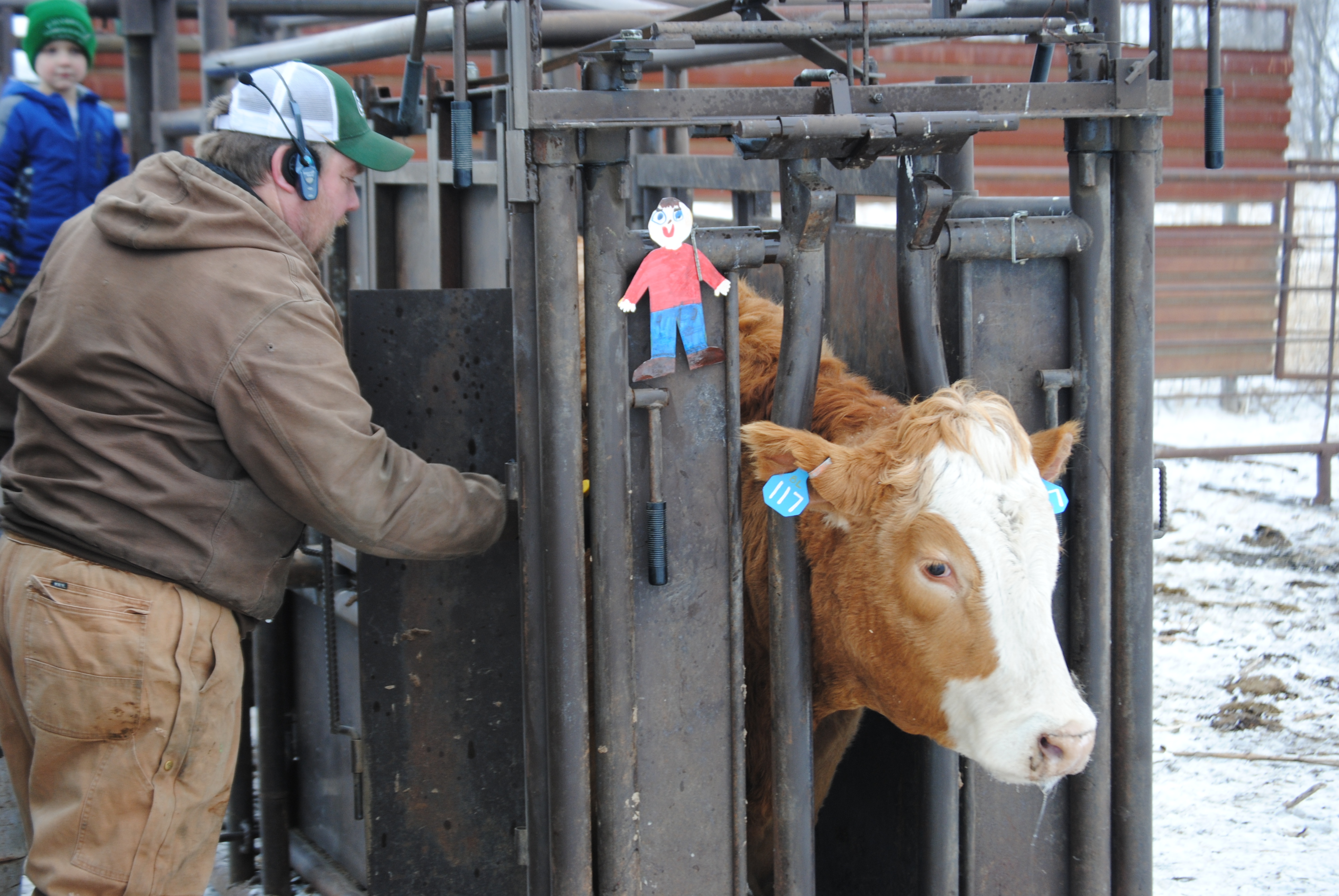
So what did Flat Aggie learn about on our farm? He helped with tagging our heifers with their cow tags. (To learn more about what the cow tags mean, such as their color, read more here.) For our heifers, that’s kind of like being adopted. When we switch out their calf tag with a cow tag, we’re including them in our herd.

A simple hair cut around the ears helps us see the cow tag better. Notice how the number on the left is much easier to see than the number on the right? Thanks, Flat Aggie, for the help!

A simple hair cut around the ears helps us see the cow tag better. Notice how the number on the left is much easier to see than the number on the right? Thanks, Flat Aggie, for the help!

While we were tagging the heifers, Flat Aggie also helped us trim the hair growing in the cattle’s ears. This makes it easier to see the tag numbers when we are working with the cattle. It’s important that we’re able to know which cow we’re dealing with from a distance, so that we can keep track of health, calving progress, etc.

This heifer (meaning she's going to have her first calf soon) is trading her yellow calf tag in for a blue cow tag!

This heifer (meaning she’s going to have her first calf soon) is trading her yellow calf tag in for a blue cow tag!

The last thing Flat Aggie helped us with was giving pre-calving vaccinations. For our cattle, this is very important for the health of the unborn calf. Think of it as a pregnant woman getting a flu shot. The risk of being ill while pregnant, or immediately after the baby is born is greater than the minimal risk of the vaccination. In cattle, even more so.

Before she goes back to eating her breakfast, this heifer gets a shot that will help protect her unborn calf from illness.

Before she goes back to eating her breakfast, this heifer gets a shot that will help protect her unborn calf from illness.

The best part of having Flat Aggie visit our farm? Being able to see things from another perspective. Having to figure out how to explain what we do so that a student could understand was a real eye-opening experience. And it’s great to connect to others across the country that are interested in what we do, but really have no way of finding out, other than through activities like this.

Did it take a little time? Of course. Was it worth it? Without a doubt.

Flat Aggie will be moving on to his next farm, learning his next lesson, sharing his next story. But you don’t need to have a piece of paper to encourage you to share your story. You can do it all on your own.

Trust me, people are wanting to hear what you have to say…you just have to take the step to share it.

What makes a constitutional amendment?

As I’ve made perfectly clear in the past, I am in favor of Measure 3, the North Dakota Constitutional amendment that would protect farming and ranching and modern practices employed by farmers and ranchers.

I want to address one of the concerns that is being brought up by the only vocal agricultural group in opposition to this measure…the North Dakota Farmer’s Union.

First of all, as a member of Farmer’s Union (I’m a member of Farm Bureau as well), let me tell you that I’m extremely disappointed and concerned regarding the stance they have on this measure. It’s becoming more of a school-ground bullying match than fact-sharing, and it’s not what being in agriculture is all about.

Enough about that, let’s get to the issue. Opponents of the measure keep declaring that the constitutional amendment is too vague. Practices aren’t specified and there are no restrictions for negligence.

Why did I highlight constitutional amendment? Because that’s what this is…a change to our state constitution, that would protect the heritage that makes North Dakota the great state that it is, that provides food, fiber and fuel for the world.

The amendment needs to be broad enough to stand the test of time, allowing society to advance and our state constitution to stay current, even when we can’t imagine what the next century may bring.

Let’s take a look at another constitutional amendment:

A well regulated militia being necessary to the security of a free state, the right of the people to keep and bear arms shall not be infringed.


Wait a minute…how could that amendment have been passed? It doesn’t state that you can’t use weapons negligently. It doesn’t state that you are limited to muskets and cannons only. So, surely, it must have been voted down and didn’t stand the test of time, right?

How about another one:

Congress shall make no law respecting an establishment of religion, or prohibiting the free exercise thereof; or abridging the freedom of speech, or of the press; or the right of the people peaceably to assemble, and to petition the Government for a redress of grievances.


Geez, that one didn’t pass either, did it? I mean, it doesn’t specifically state that I can’t call someone a few choice words in a newspaper ad that runs across the country. Oh, wait…but I can’t, can I? Not without the other person having legal recourse.

No, constitutional amendments are NOT about specifying exactly what it is you can or cannot do, it’s about upholding the wishes of the people of the state, for generations to come. It allows flexibility for growth and changes that are made by society, yet it protects the basic rights that we should be entitled to…and that includes our agricultural heritage.

With these rights come expectations, regulations and limitations, it does not, nor will it ever, trample on the rights and freedoms of others. It allows for the legal protection of our way of life and direction for those that are making the laws that will govern our future societies.

Please, do not tell me that Measure 3 is too vague in its wording, and needs to have specifics put in place.

Although, all I can do is ask, because there’s already an amendment that allows you that right.

Yes on North Dakota Measure 3

Did you know that America’s farmers and ranchers produce 16 percent of the total world food production on just 10 percent of the world’s land?

Agriculture and related industries provide jobs for more than 21 million Americans. That’s 15 percent of the total U.S. workforce.

In 1940, each U.S. farmer annually fed approximately 19 people in the U.S. and abroad. In 1960, each farmer feed about 46 people. In 1980, 115. In 2000, 139. Today, each U.S. farmer feeds approximately 154 people here and abroad. And they are doing it with fewer inputs, and on fewer acres.

Farming and agriculture is the backbone of our country, but more importantly, it’s the number one industry in North Dakota. Long after the oil boom has come and gone, farming will still be growing our economy and providing for our state and our country.


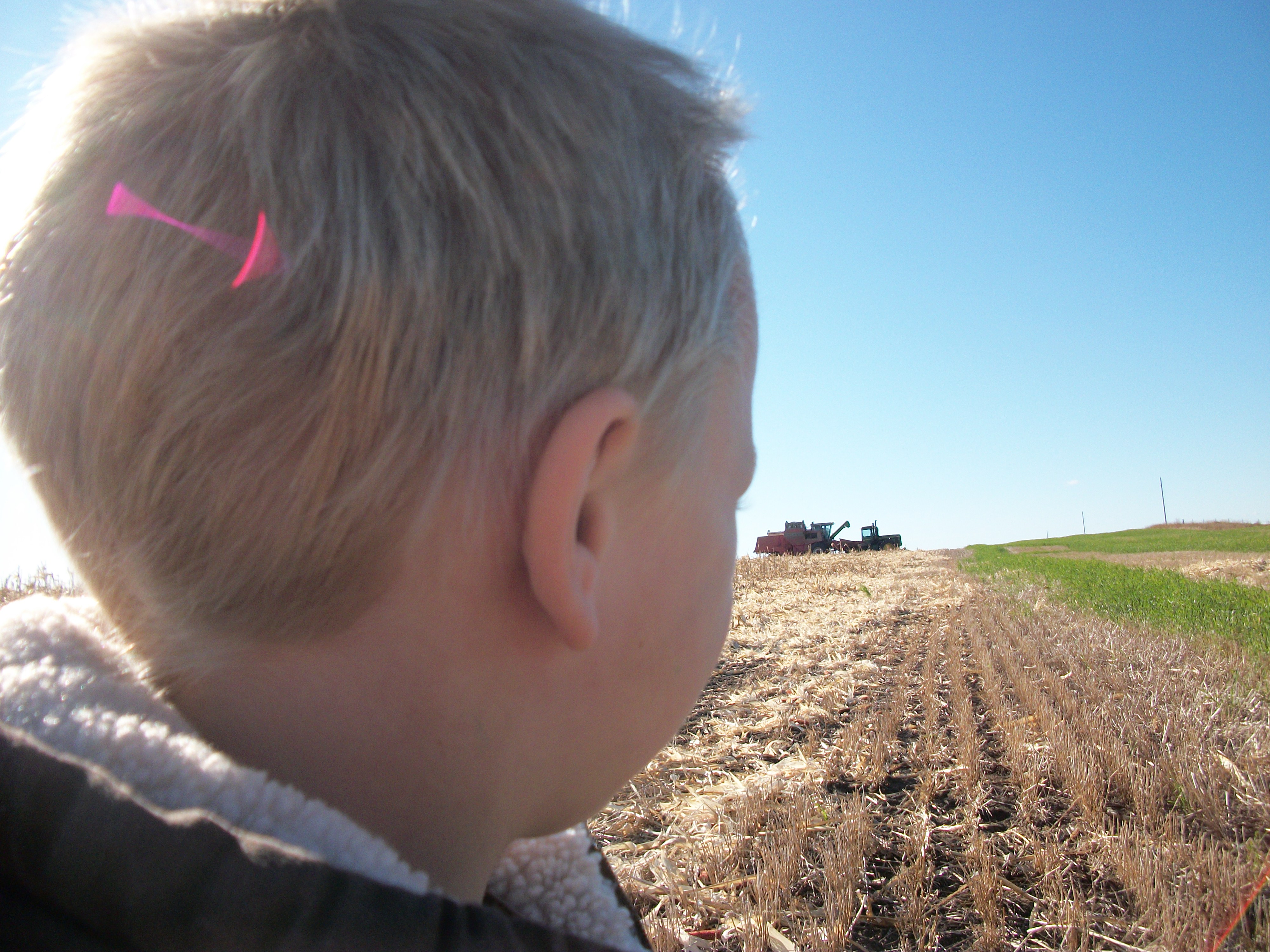
Waiting his turn…his dad is in the tractor, his grandpa is in the combine. Is his future in jeopardy?


Measure 3 is a constitutional amendment that will ensure that out-of-state interests and activist groups will not be able to pass ballot initiatives that would jeopardize our heritage of agriculture. This measure would protect the way of life that has made North Dakota a great state and a great place to raise a family.

But there are misconceptions about what this measure is about, and we’d like to clear those up. This measure is NOT about farming systems, it doesn’t pit organic versus conventional or large versus small. This measure would ensure that if you wanted to use GPS and auto steer in your tractor, that would be allowed. You would be allowed to raise livestock of your choosing without worrying that some out-of-state feel-good group is going to tell you that your buildings or fences are abusive to the animal. You would also be allowed to make your own individual seed and chemincal choices on your farm, including heirlooms, biotechnology, organic or conventional. A law could not be passed determining what is right for all farms in North Dakota, those decisions would be left to each farm to make.

The measure is NOT about removing local control. It would not limit local zoning ordinances, nor would it remove the power from local and state governments for regulations.

Measure 3 IS about allowing farmer’s markets and other niche consumer activities to continue to grow and prosper, it’s about giving people choices and protecting our past, present and future. The constitutional amendment is intentionally broad enough to stand the test of time, yet focused enough to protect what North Dakota holds dear.

For those that would question whether regulations would still be allowed, we give you an example of another constitutional right. We have the right to bear arms, but with that right also comes limitations, responsibilities and regulations. The same is true for agriculture.

We just want the right to farm, without risk of having someone else from out of state taking that right away.

Is there a calf in there?

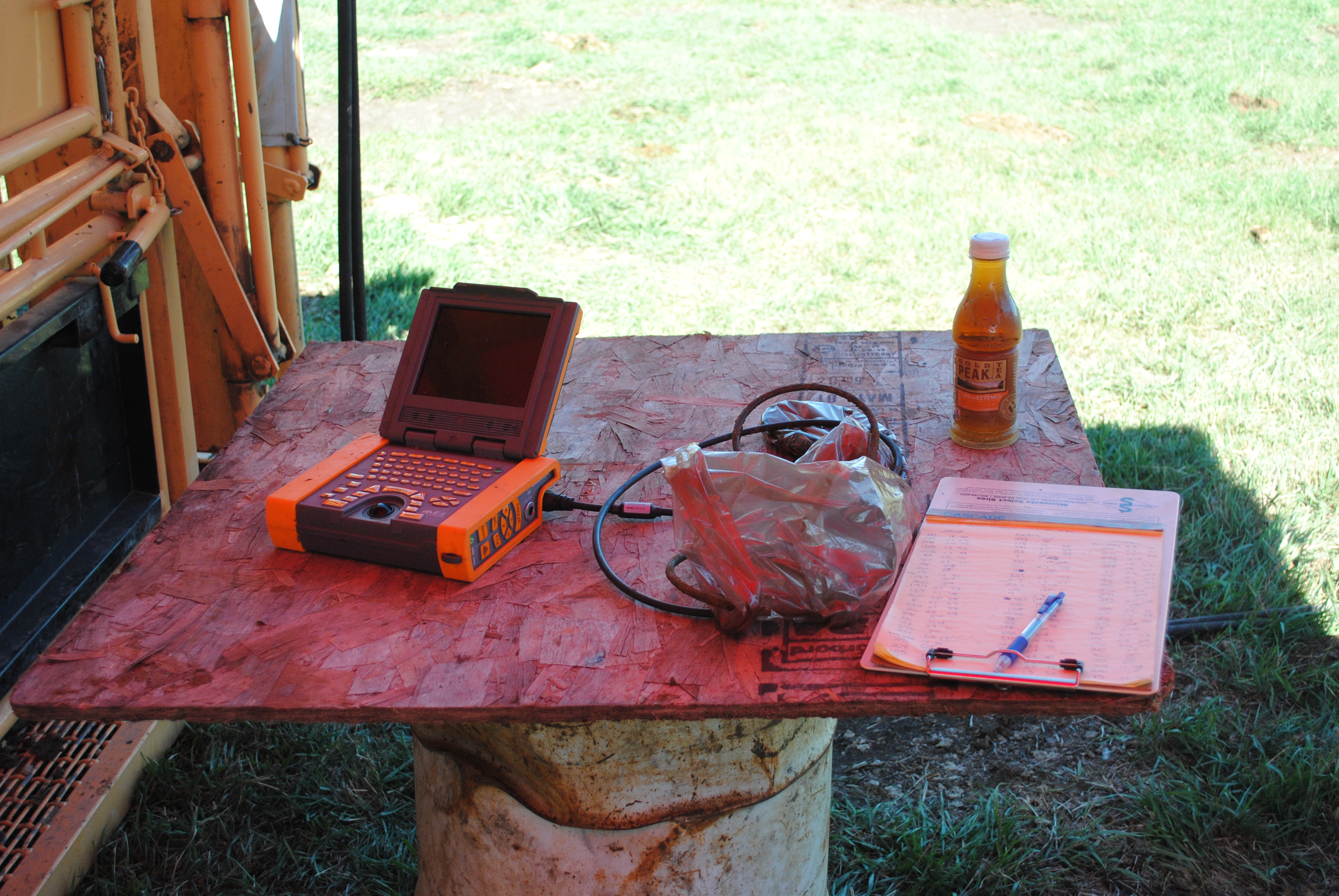
A few weeks ago, we had a crew of people out in our pastures. Although the set up and take down took a little time, the reason behind all the work was definitely important. You see, we were ultrasounding our cows, to find out which ones were going to have calves and when they would be having them.

Just like at the OB’s office!

That’s right, we used an ultrasound machine…much like the one that is used every day by obstetricians when they are looking for a baby’s heartbeat, measuring the size of the baby or checking for any other problems.

Why would using a machine like this be important for our cows? One reason is where we live. Since we start calving in February in North Dakota, it’s important to know which cows should be calving and approximately when. That way we can make sure that they are closer to the barn, so they can hopefully have their calves inside, where it’s warm and protected from the elements.

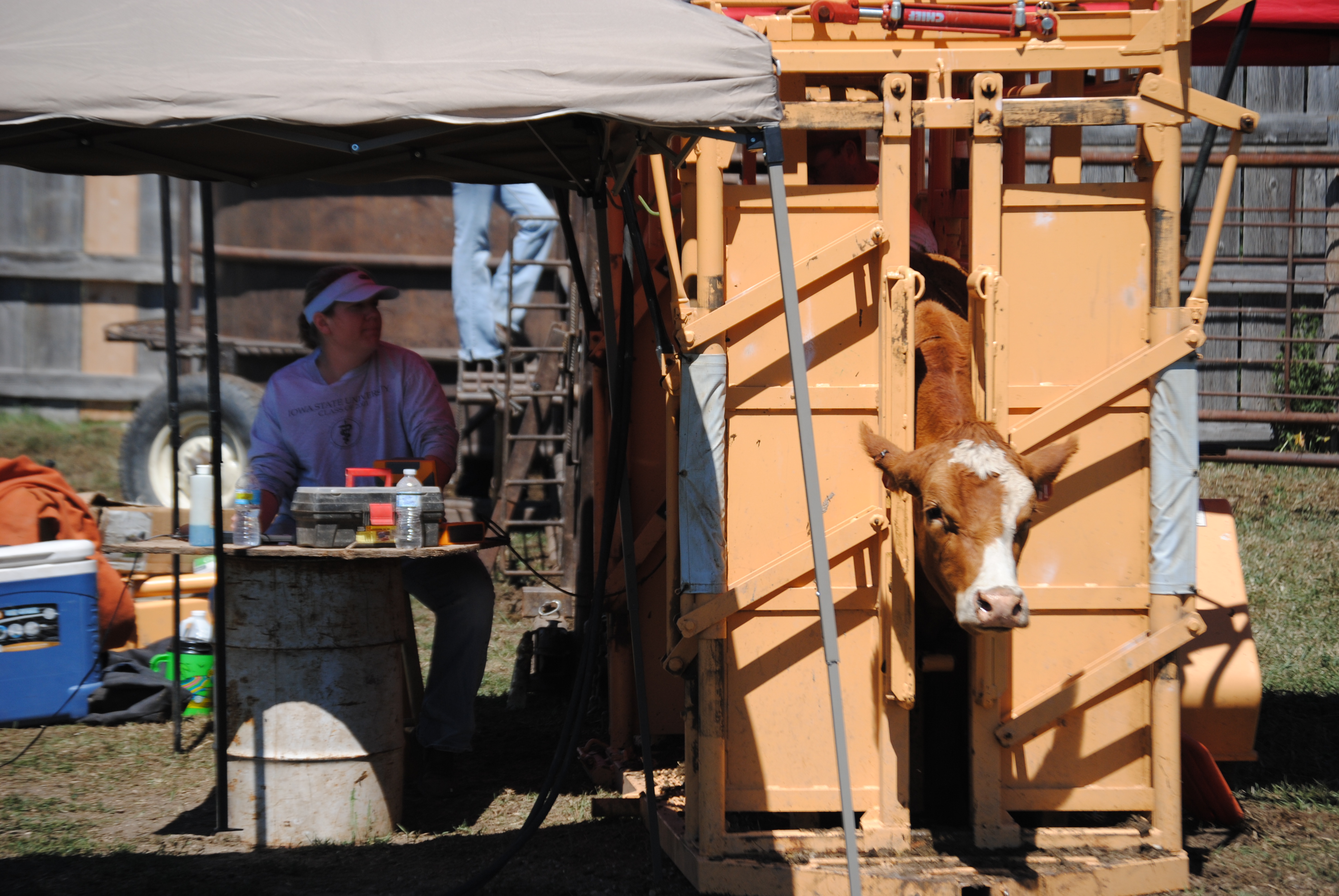
The head gate makes sure that the cow stands still and doesn’t hurt itself.

Another reason we use ultrasounding is so that we can more accurately determine those cows that are definitely having a calf, and those cows that are not having a calf (we call them “open”). It’s expensive to raise cattle, even more so right now. We only keep the cows that are bred and the ones that are “open” are sold. Many times our open cows go to other farms that have a different calving cycle then we do, allowing them the chance to become bred later.

The girls, waiting their turn!

The ultrasound technique is very similar to the same used in a doctor’s office…well, in general theory anyway. 😉

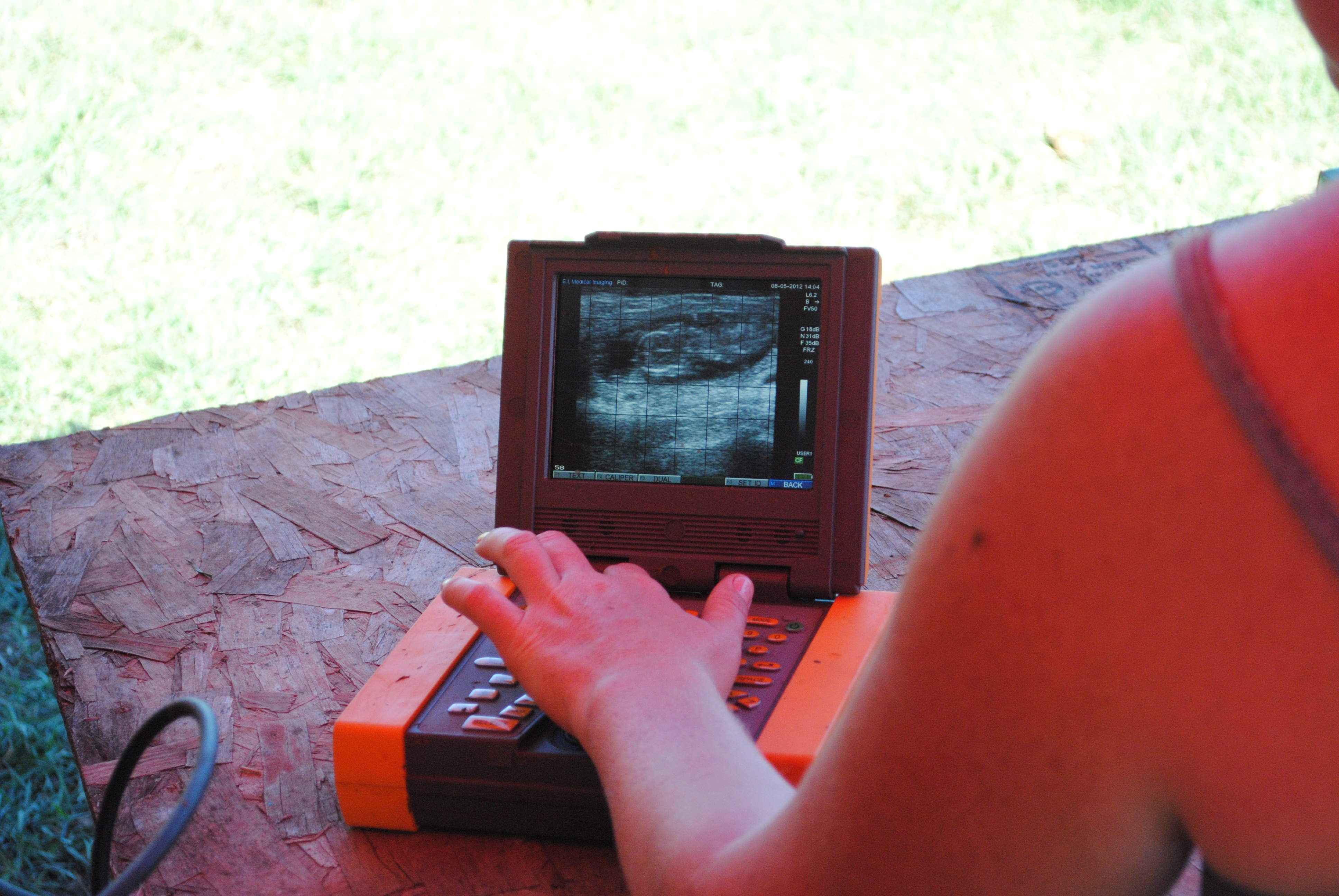
Once the probe is in the cow and an image is on the screen, a measurement can be taken, just like how the technicians measure the length of a baby’s bone to estimate it’s gestational age. On a calf, the measurement is taken of the space between the eye sockets on the head. The number of centimeters between correlates between the number of days the calf has been in the uterus, giving us an estimated “due” date.

The calf’s age can be measured on the screen!

Of course, these numbers are just estimates, but every bit of information that we can use to ensure our herd is taken care of and healthy is definitely a step up from before!

A Needed Rain

It’s Friday, it’s July 6 and we finally have some moisture on the ground. An inch to be exact. And we are so very, very thankful for it.

Our crops were starting to suffer, but this is a good start. It’ll buy us time and hopefully we’ll have more moisture soon.

This is the part of farming that I don’t enjoy. This is the part of farming that keeps men and women up at nights and makes them wonder if it’s worth it. Imagine building a $250,000 house and watching someone pour gasoline throughout, then play with a match around it. Yes, you have house insurance, but it doesn’t take into account the blood, sweat and tears that it took to get it to that point. Imagine.

Yet, we do it every year, time after time, knowing that Mother Nature can turn her back on you at any given moment. Why? Good question. Some say if we don’t like it, we can just get a job in town somewhere. But once you’re a farmer, it’s in your blood and it’s hard to stay away. Feeling the dirt beneath your feet, watching the sun rise and set each day, being able to breathe clean, fresh air from your office…well, that’s not easy to find.

So we head back out, watching the skies, paying attention to nature’s queues, waiting for the moisture that we need, the sun that we need, the right mixture of heat/wind/etc. If that’s not faith at it’s finest, I don’t know what is.

Today we celebrate a small victory. And I celebrate not having to water our garden…and I give thanks.

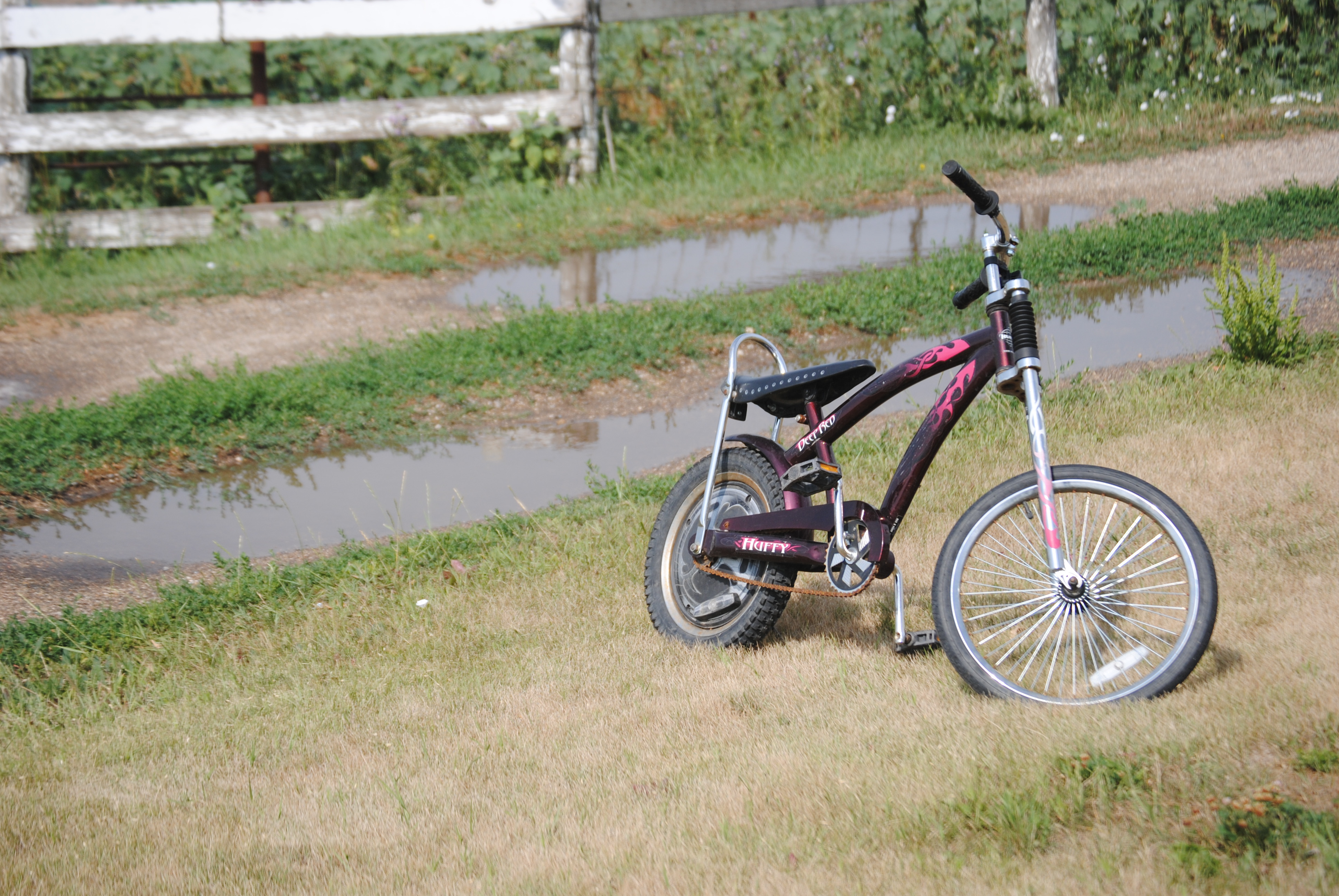
With as dry as our yard is, these puddles won’t last long!

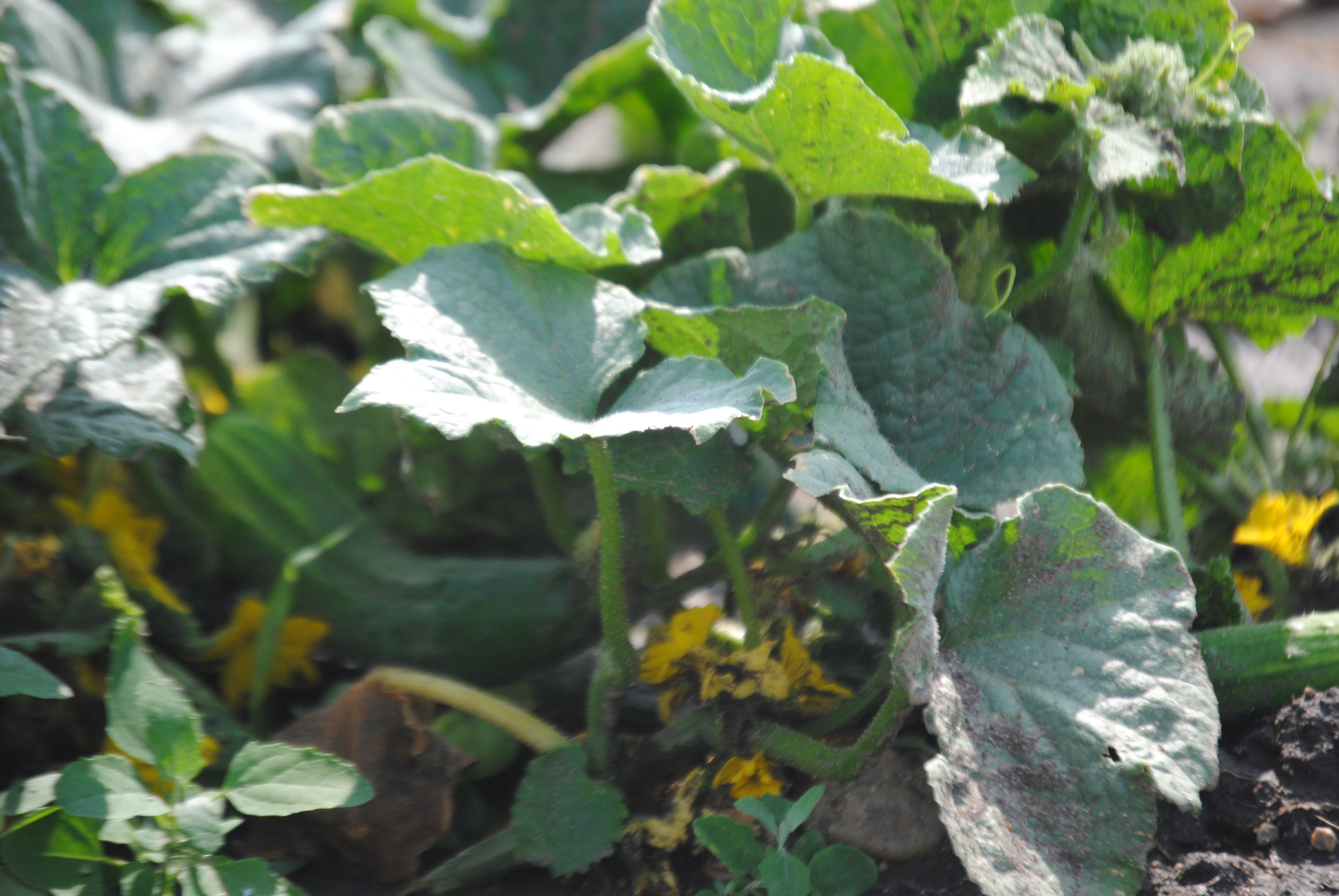
These cukes are enjoying the rain, and a reprieve from being watered!

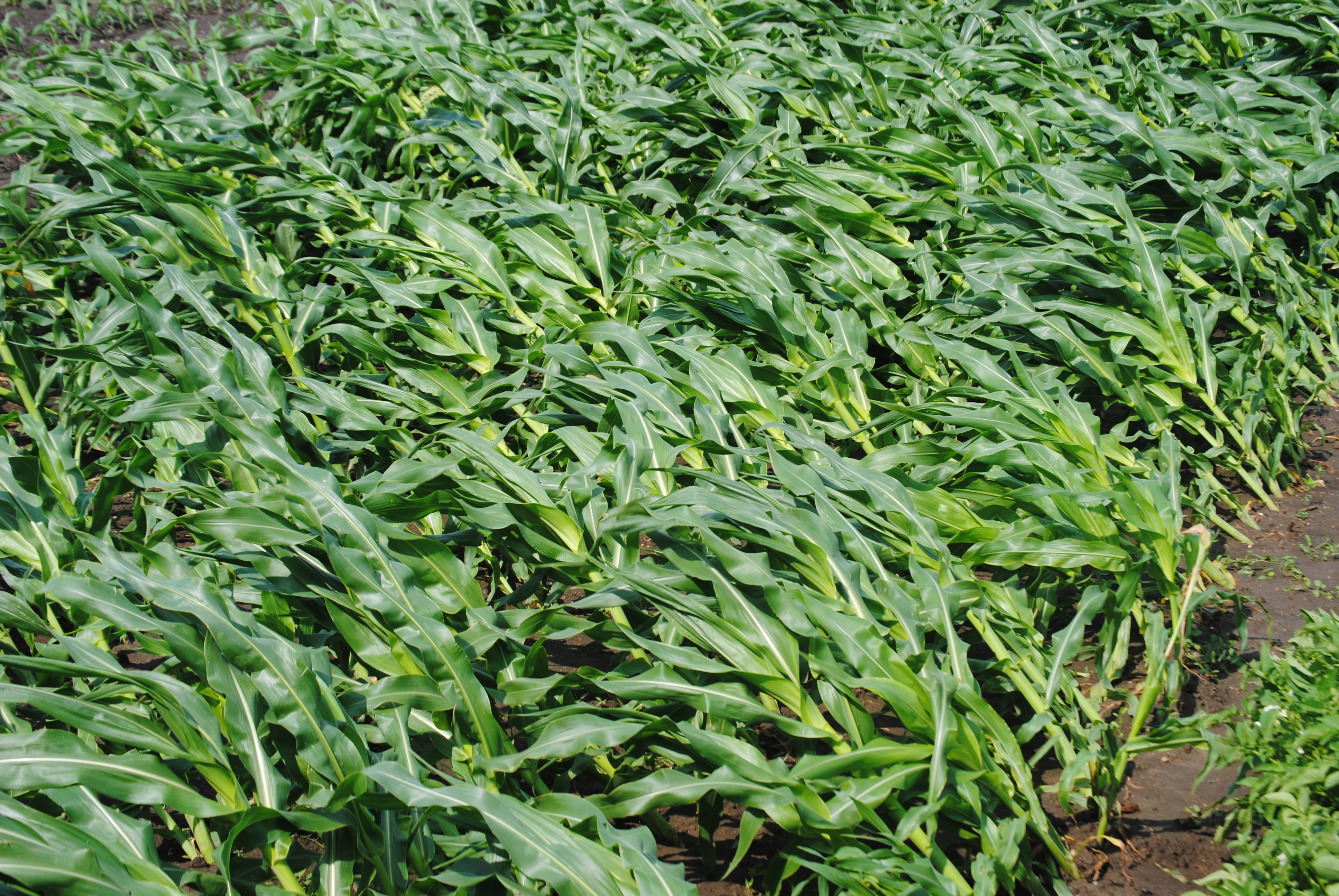
The wind combined with the rain made the sweet corn in the garden lay down, but it should stand back up with the sun now shining!

Monday promises

This will be quick, but I promise that I’m back…and I won’t be taking another blog-cation for a bit. life reared its ugly head last week and schedules took a crazy turn.

Things haven’t settled down much, but I’m on top of things a bit better this week than last…and I have so much to tell you!

But I’m off to a Spring Fling open house/education day of sorts, and hoping to bring some more people into the world of blogging, or at least introduce them to the possibilities that sharing your story presents.

And I’ll also have the petition I’ve been talking about…come visit me in Wishek! (Oh, and I might be meeting some social media friends there, like my good friend Katie, and my new friend, Jenny!)

Talk soon!

Second Take

So, yesterday I wrote about how easy it is to respond to something negatively, and how hard it is to take that extra time to calm down, rethink your words and decide what information is helpful, and which is unnecessary.

It’s not an easy task, and it’s hard to rewrite something that you feel strongly about…in fact, my husband loved the original article that I had wrote. But, I must admit, he’s a stir-the-pot kind of guy.

And so, after lots of thought, a late night Facebook conversation with a friend, and a bit of research, I scrapped a good portion of my original article and started with a fresh page. I included much of the same information, just minus the daggers. And this is what I came up with:

Pink slime. It’s an unfortunate name for a great product that took a giant hit thanks to social media and a misinformed public.


Some blame the company, some blame the marketers and others blame consumers. But the truth is, it doesn’t matter.


The fact of the matter is that beef is beef. And the product that was produced was some of the safest and cheapest beef that could be purchased.


In a world where food budgets are tight and conservation of all resources is coveted, one would think that this particular beef product would be hailed as a great thing – and it should be.


But when you refer to something as “slime,” and you throw out incorrect images and saturate the media with incorrect information, well, we’ve seen firsthand what happens.


So, why correct the photo? Because if someone were to post a picture of a tomato next to an article about the dangers of apples, wouldn’t you question their research and integrity? But if no one says a thing about it, and people aren’t aware of the difference between tomatoes and apples, they’d never know that the information they are getting is wrong.


Here’s why the picture is so important: No one is questioning the safety of the meat. Every medical and food safety organization willing to speak out has backed this beef product. No one is questioning the taste of the product. People have been consuming it for years and never tasting a difference. Simply put, beef is beef.


So, if it isn’t safety and it isn’t taste, then what is it? The only thing left is its visual. And when the wrong visual is being used, how can someone make a fair judgment?


The “meaty pink noodles” on the plate? They look just the same as any ground beef straight from the grinder. But don’t fear; they lose their noodle look the minute you make them into a patty.


Many foods are made from what was once a “waste” product. Take for instance baby carrots. We used to throw away tons of carrots that weren’t fit for supermarket shelves, whether it be from deformity or blemishes, etc. Now those carrots are whittled down and eaten at picnics by the bag. But no one called them “carrot compost.”


And Pringles even tells you on its label that they aren’t potato chips. But no one refers to them as “potato paste.”


The beef industry for years has improved upon its resources and ability to provide healthy, affordable cuts and types of meat for every consumer. New steak cuts and better use of meat is always a goal.


The saddest part of the story? By discontinuing the use of this particular beef product, it is estimated that we will need an additional 1.5 million head of cattle each year. And in a world where conservation and getting the most from every resource is necessary, that’s a loss for everyone.


Our ancestors would not be proud. But then again, they didn’t have Facebook.


So, how did I do? Is the tone better? Less defensive? What could I improve upon? And please, if you feel the urge to do so, leave a comment on the newspaper’s site, so that they can hear your thoughts and your concerns…we can only change conceptions when we’re involved in the conversation.

How Not to Share Your Thoughts

I almost made a big mistake this week…and I’m going to share it with you, wanting to get your feedback, your ideas and your tips on how to handle these situations.

You see, the paper that I write for published an article last week about “pink slime.” As I was reading, my blood pressure was climbing and that vein on my forehead was pulsing…you know what I mean, right?

I was ticked. I was confused. Actually, I think I was just a tad bit hurt. How could this have happened? And so I did what I do best…I wrote. And I wrote. And I wrote. But thankfully, I didn’t hit the send button. I stopped, took a breath, and asked a friend outside of the arena to take a look and give me some feedback. That’s when common sense kicked in and I realized that I couldn’t send what I had written. But, I’ll let you read it and then explain:

I was reading the paper on April 1, and thought for sure that someone was pulling a world-class prank on me. I read the “Slime or beef?” op-ed piece, and ended up with indigestion…which is something “pink slime” will not give you.

First of all, let’s correct one thing right off the bat. The product that has been woefully-named “pink slime” is not the result of turning “fatty bits of beef” into a usable product. The end beef product is actually much leaner than usual grocery store ground beef…which is why it’s used to lower the fat percentage.

That’s one nugget of information that could be gleaned from the articles debunking the myths – if one were to care to read them.

And when it comes down to correcting misinformation, I have to apologize for that. I was one of the guilty ones, posting a correct photo of the beef in question. Why? Because if someone were to post a picture of a tomato next to an article about the dangers of apples, wouldn’t you question their research and integrity? But if no one says a thing about it, and people aren’t aware of the difference between tomatoes and apples, they’d never know that the information they are getting is wrong.

Here’s why the picture is so important: No one is questioning the safety of the meat. Every medical and food-safety organization willing to speak out has backed this beef product. No one is questioning the taste of the product. People have been consuming it for years, and never tasting a difference. As was mentioned in the piece, recently a group of governors and other interested parties had a taste-test…and not one had a single complaint.

So, if it isn’t safety and it isn’t taste, then what is it? The only thing left is its visual. And when the wrong visual is being used, how can someone make a fair judgment?

And the “meaty pink noodles” on the plate? They look just the same as any ground beef straight from the grinder. But don’t fear, they lose their noodle look the minute you squash them into a patty.

No, the debacle that has become “pink slime” is a sad story indeed. And I’m not sure the company will ever recover, even though it’s not guilty of anything. It should be a wake-up call to everyone how powerful social media and misinformation can be.

There are many foods made from what was once a “waste” product. Take for instance baby carrots. We used to throw away tons of carrots that weren’t fit for supermarket shelves, whether it be from deformity or blemishes, etc. Now those carrots are whittled down and ate at picnics by the bag-fulls. But no one called them Carrot Compost.

And Pringles, which even tells you on their label that they aren’t potato chips. But no one refers to them as Potato Paste.

The beef industry has strove for years to improve upon its resources and ability to provide healthy, affordable cuts and types of meat for every consumer. New steak cuts and better use of meat is always a goal. Adding a big-name PR firm to handle every piece of misinformation and processing question seems like an expense that we shouldn’t have to tack on to the price of affordable protein. But, I guess that’s what we’re going to need to do.

If you want to see the exact process of how your meat gets to your plate, I have a video on YouTube of a calf being born.

And that’s as close to the beginning as you can get.

Where did I go wrong? Let me count the ways! I was defensive, I was snide, I was a tad bit rude and I was hostile. I might have had some useful information in there, somewhere, but no one was going to get that message. Nope, I sounded ticked and ready to go to battle…and I was. But that’s not how we share our message, that’s not how we educate consumers, and that’s certainly not how we win points with those on the fence.

Future Farmer

I write because of little guys like EJ. His passion for our farm reminds me why I keep on keeping on.

It’s hard to write passionately without ire, especially when a part of your industry is attacked. It’s hard to write factually without being dry. It’s harder yet to marry the two. Yet, all we can do is try. Because no matter how difficult it seems, it’s impossible to have a conversation, if no one is willing to talk.

So, how did my piece for the paper turn out? Stay tuned and I’ll post a link to it tomorrow…and let me know what you think.