Meet the Corporate Head of our Factory Farm

Yesterday, I heard a lot of talk about the #OccupyOurFoodSupply movement. I read a lot of articles on the downfall of our modern agriculture practices, the need to “get back to the basics,” and the need to reconnect to our food supply.

So I thought that instead of blaming some unknown enemy for placing my farm in a bad light, or blaming consumers for not taking the initiative to actually visit where their food comes from, I would show you, just as I have for the last year and a half.

Meet the corporate head:
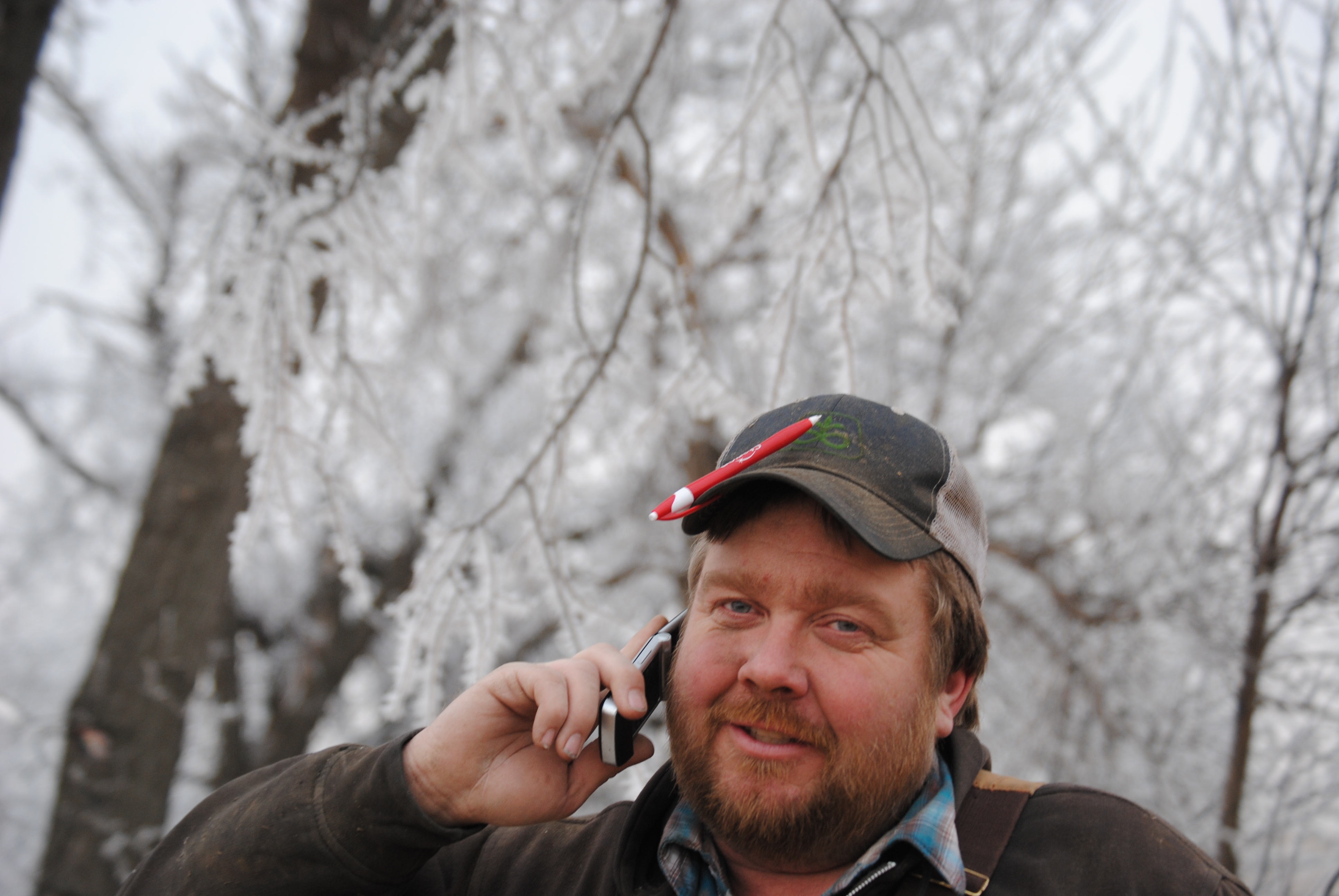
Ooh, he's using technology, too!

His name is Mark…and we’ve been married just about 11 years. He eats, sleeps and breathes this farm and this land. There is not a thing that he would ever do that would jeopardize it for the future. Not for his satisfaction, though. No, he has a contract with a group that has his number…and he doesn’t like the consequences of messing that up. Here, meet them:
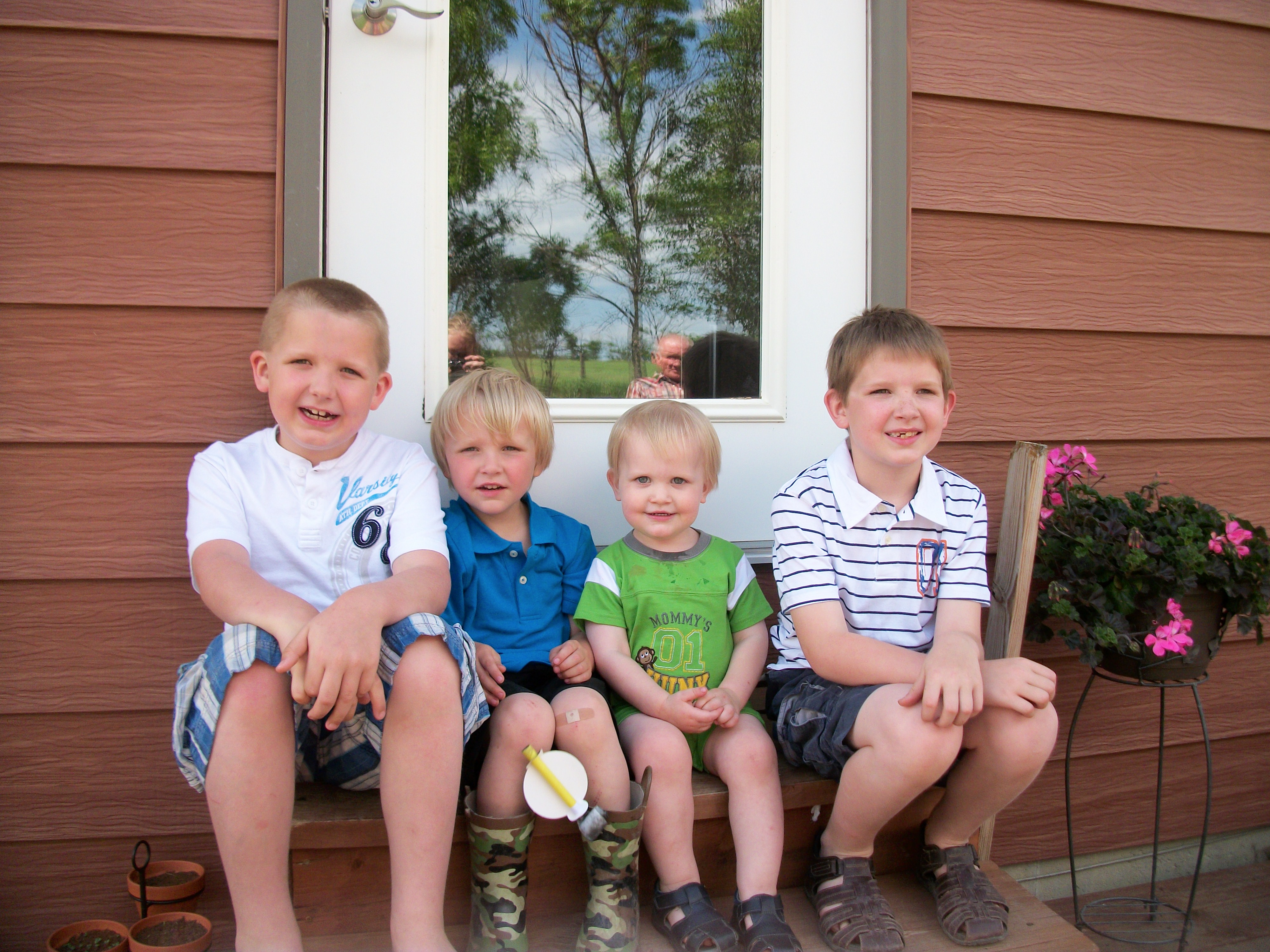
Our boys...and the future of this farm.

A pretty rough looking bunch, eh?

But the real nasty one to work with is the one in charge of our seed selection, the one that forces what we plant, when, where and how…the one that determines whether or not we can farm next year. I’d like for you to meet:

Mother Nature

That’s right, Mother Nature.

You see, there isn’t a corporation, a seed company, a conglomerate of some epic proportions that determines how we farm. That decision lies solely with us. But, unfortunately, we’re not alone in the game. No matter what we decide, Mother Nature can always turn the tables, and we’ll need to react.

You could ask Mark today what his plans are for this spring, what he intends to plant where, and when he plans to start…and his answer will be, “I’m not sure.” You see, spring is not here yet, winter is not over, and Mother Nature can change a lot between now and then.

Do we have seed ordered? You bet. If you don’t order ahead, you risk not having what you need available, when you need it. Does any company tell us what to plant? No. That decision lies solely with this farm, but we do ask and receive recommendations from several different sources. Including our crop consultant, who tests our soil, tells Mark exactly what is needed, and what his recommendations are for each field.

Our farm is exactly that…it’s our farm. And I’m trying to let the public know that we raise their food on our farm. But we also are raising our farm’s future. And we would never jeopardize either for the sake of the other.

So, go ahead and #occupyourfoodsupply, but please don’t mind if it’s a full room…our farmers are already there.

*Added: Want to learn more about what others are saying? Check out these links:
Facts on Farming

A few weeks ago, a question was asked on Facebook by a local news station regarding farmers and government payments. Don’t worry, I won’t go into my feelings about that topic right here…but I do want to try to explain something to those that aren’t involved in agriculture.

It seems as if there is a misconception about farmers. (Not shocking, I know.) But the comment that was made online really struck a chord with me…and it should for you, too. You can read about my reaction here.

But I thought maybe we should have some numbers, so that people can understand what really goes into farming.

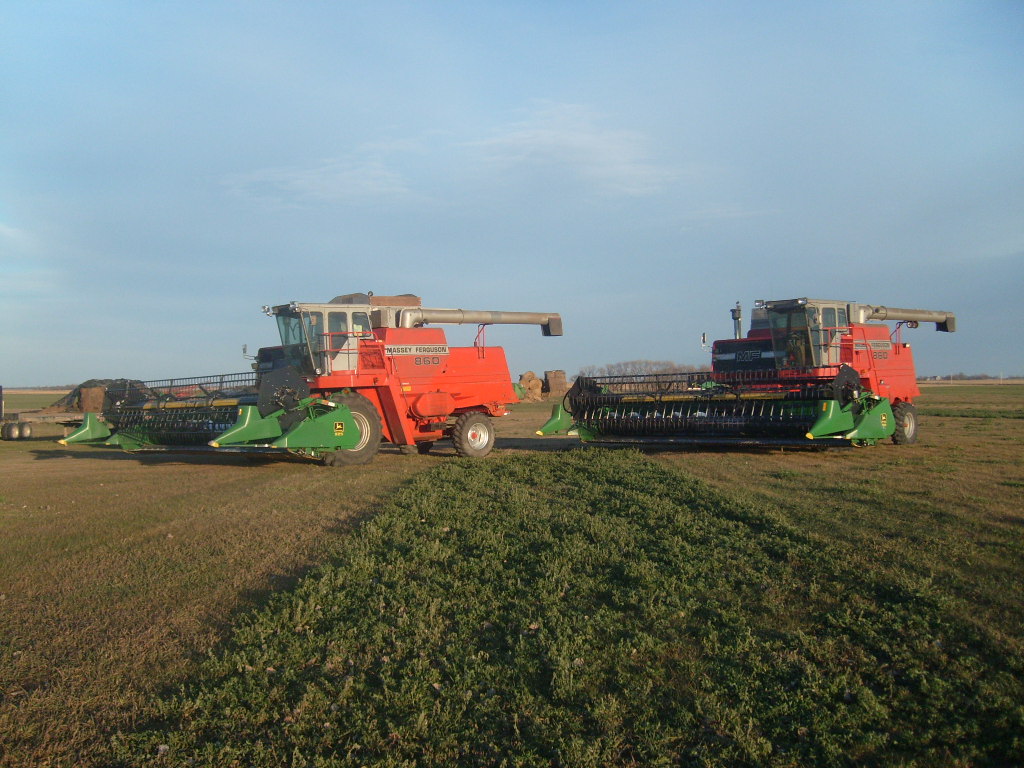
These are our "fleet" to bring in the crop. Far from new, but they get the job done.

Now, to be honest with you, I’m using numbers for my area, so things can be markedly different where you’re at…but in the end, it should all pencil out about the same.

Let’s start with the basics. Crops are figured by the acre (which is roughly half a soccer field). So most of the items you purchase to put the crops in and take them off are calculated based on how much it costs per acre. Crops that I will use in these examples are spring wheat, corn and soybeans…some of the more common crops in my area.

Check this out:

Example 1: Spring Wheat

The average yield (crop that they harvest) per acre for spring wheat is 49 bushels/acre in my area. The average market price is estimated at $7.54 per bushel. If you multiply that out, you would come up with an average income of $369.46 per acre. Not too bad, eh?

Well, that just doesn’t happen by itself. Let’s look at what it took to get there. The average direct costs associated with planting, pest management (taking care of bugs), nutrient management (taking care of soil), insurance, fuel, repairs, etc. is $192.92 per acre. Indirect costs, such as overhead, machinery depreciation, purchasing new machinery (usually just new to you, not new-new) and land charges, run about $117.52 per acre. The costs total $310.44 per acre. Hmmm…a little too close to that first number, right?

So, in an average year, planting spring wheat, a farmer can expect to make roughly $59 per acre. And that’s with fuel costs averaged at $3.40/gallon for gas and $3.20/gallon for diesel. We all know what is forecasted for those numbers, right?

I’ll spare you all the rundowns of the other two crops, and just give you the final numbers: Soybeans would average about $103 per acre and corn (for grain) would average about $150 per acre.

So what’s the average farm size in Dickey County (where I live)? It’s 1,100 acres. So let’s say we planted our whole farm to corn, and we had 1,100 acres, we would (according to these numbers) roughly make $165,000. (Also remember, that would be if you planted every acre and were able to harvest it. Most of the time, there are significant areas of drowned-out crops, etc.) And if we planted our whole farm to wheat? $65,000. (And let me tell you, we would never, ever dream to plant our whole farm to one crop. You remember that saying about all your eggs in one basket, right?)

But seriously, folks, that’s not how it works. Those are the numbers we shoot for and strive to reach…and like most professions, very little goes as planned.

For example (and these hit a little too close to home): imagine having to harvest all your wheat in one direction, doubling your fuel costs. Or having a pest move in, doubling your pest management inputs. Or having a wet spring, dry summer, late fall, whatever have you may, lowering your yields substantially.

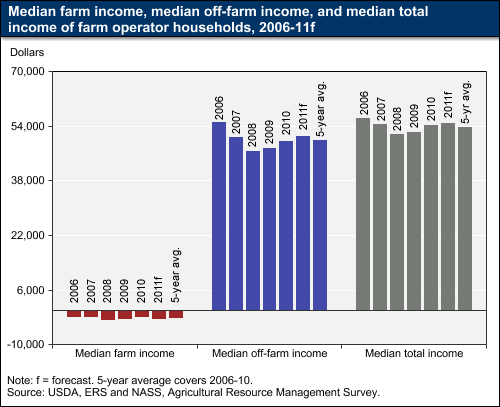
No, to be honest, farmers on a national average follow this graphic a little more closely:

And that would be why so many farmers, and/or their partners, seek off-farm employment.

But we will plant a crop this spring, in hopes that we’ll meet or exceed our goal yields, while trimming as much off the expenses as we can…just like any good business person would do.

And that’s a fact.

P.S. I would especially like to thank Kacey Holm, our county extension agent, for his assistance in getting me these numbers. Extension ROCKS!

Wordless Wednesday – Cows

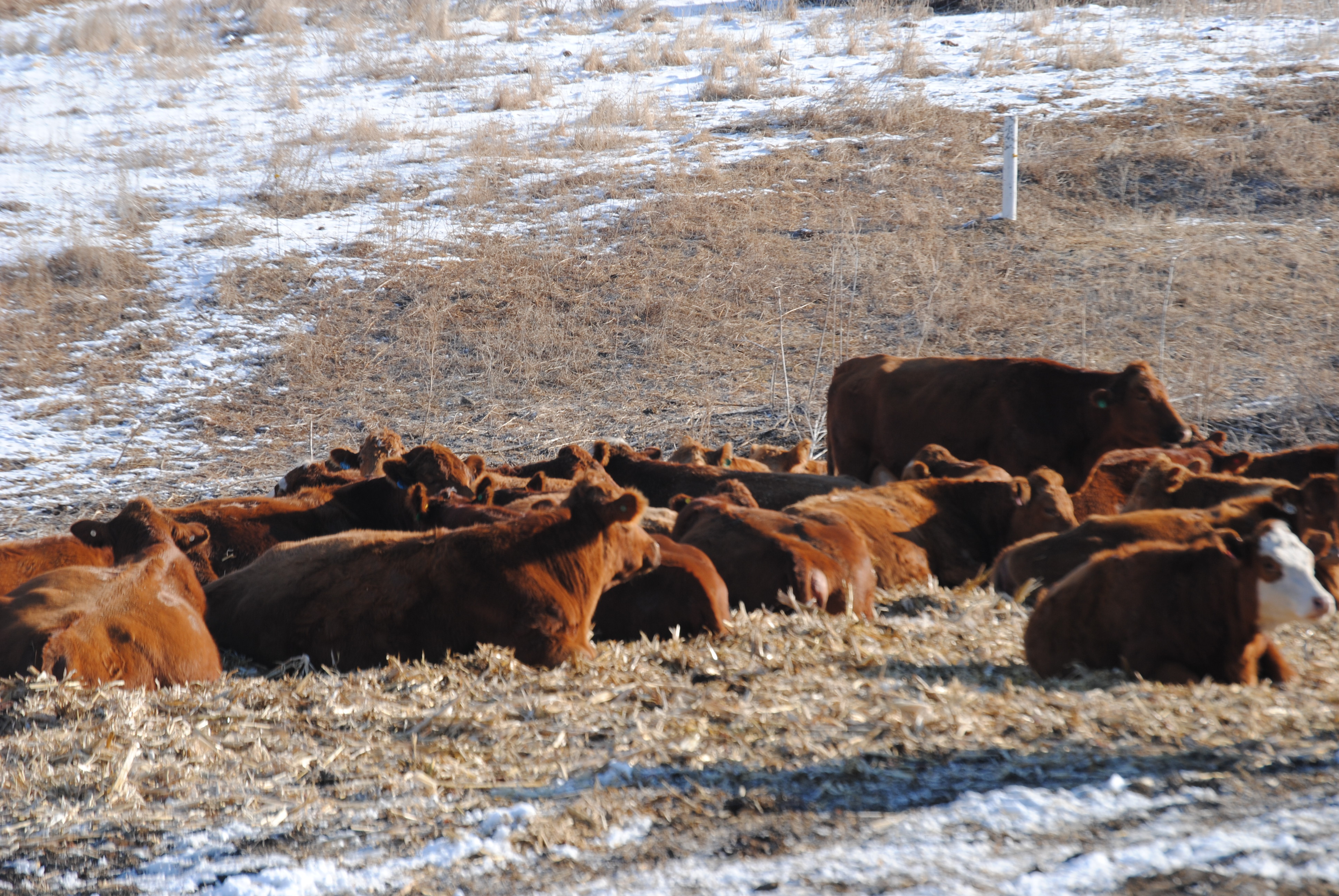
The cows, enjoying their straw bed on the fresh snow while waiting to calve.


When is it my turn?


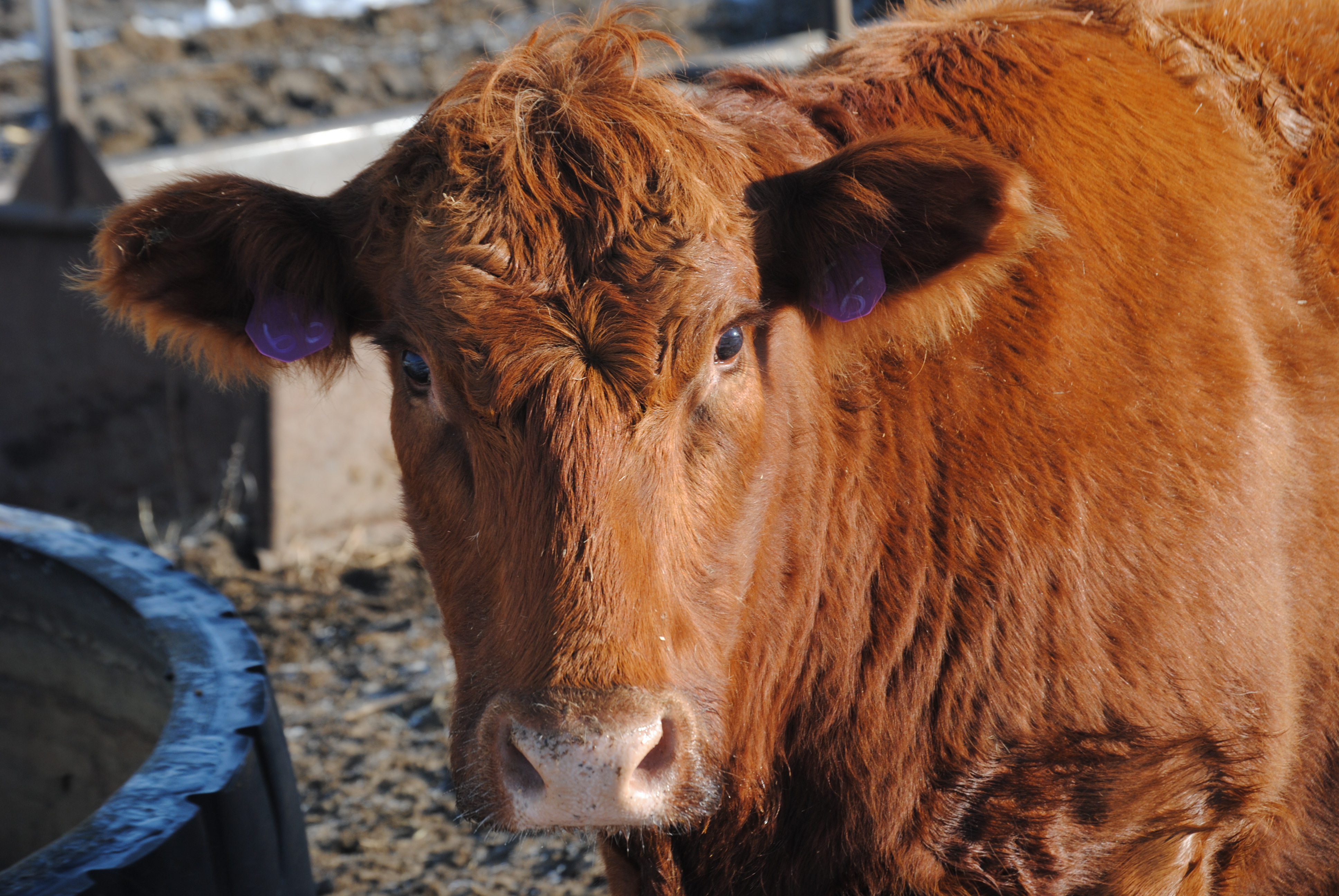
Cows are curious (and photogenic) by nature.


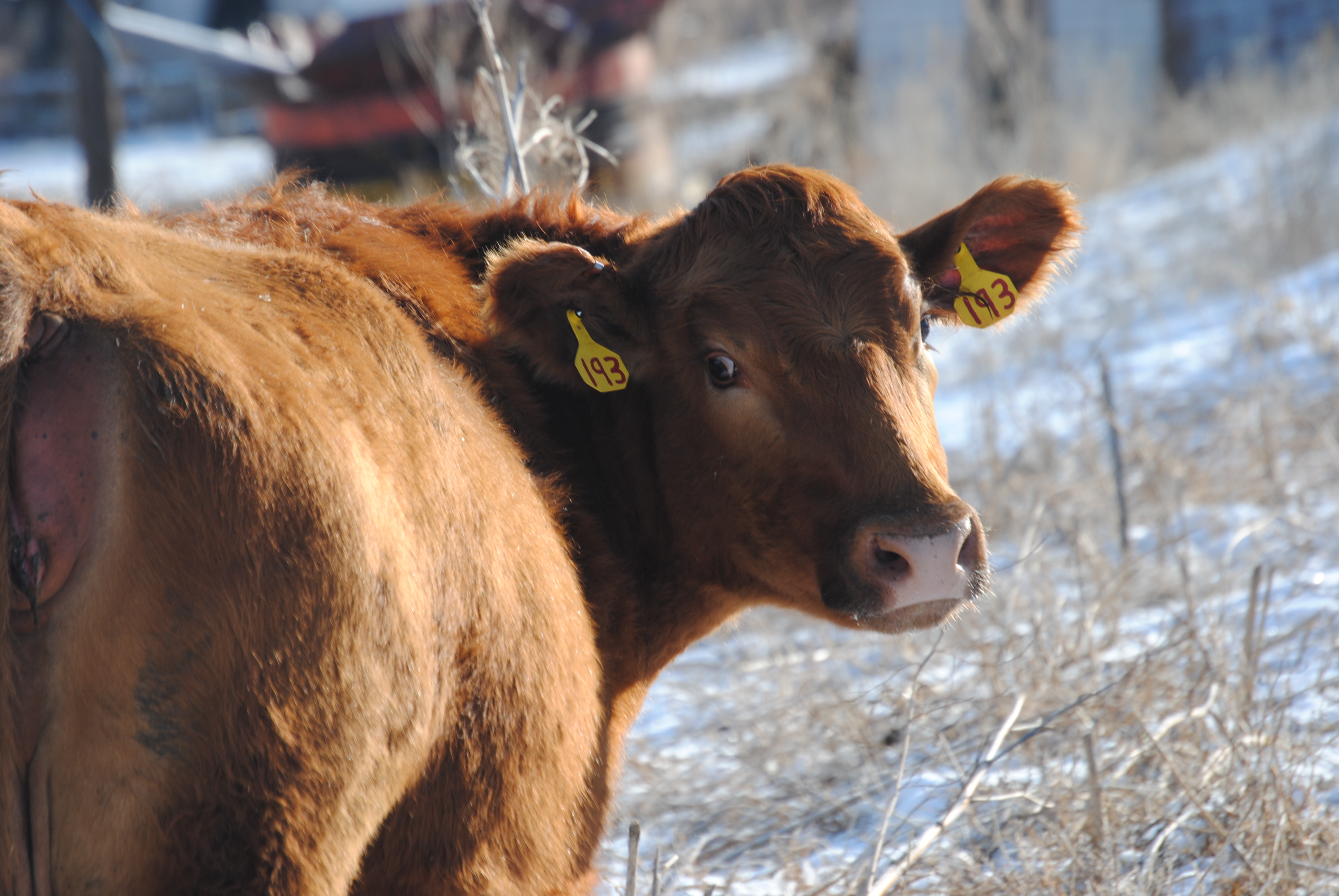
Oh, that angle makes me look fat.


You can't see me, I'm hiding behind this weed.


We’re not quite half-way through calving season, but the last few days have been very, very busy. But the weather has been wonderful, and everything is going pretty smoothly so far.

If you look back at the ear tags, you’ll notice that not one of the close-ups have the same color. Wonder why? Find out here!

Farm Friday – Calving Underway

We now have a whopping two calves on the ground. I know, I know, not much to get excited about, but we’ve been so blessed this year that I can’t help but smile.

Our lack of drastically cold temps has really helped out with feed supplies and the like. Why is that? Well, when the cattle don’t need to use up as much energy as they normally do in winter to stay warm, they eat less. And with the open winter we’ve had (meaning very little snow on the ground), the longer the cattle have been able to graze on our leftover corn stalks. It’s been a win-win all the way around.

Yesterday I grabbed a few shots of our heifers (cows that are having their first calf this spring) out behind the house. I haven’t been going out on any night checks yet, because I’ve been under the weather and hubby has been able to go out on checks and still get some rest. (We usually check the cows every 2-3 hours, around the clock. More often when it gets cold, like tonight.)

Some of the heifers, just hanging out behind the wind break, waiting.


Such pretty red things, eh?


I’m hoping to take the boys ice fishing this weekend. We went last Sunday and had a great time, even though I’ve been a bit down and out. They loved every minute of it! As soon as I get the pics uploaded from my mom’s camera, I’ll be sure to share them with you!

The Beauty of the Internet

Lately I’ve been swamped with posts and shares of information that seems mind-boggling to me. I try to tread lightly when it comes to published reports. I do my research, weigh the pros and cons and look at both sides, for the most part.

So, I’ve come up with my own personal list of things I look for when reading online information. Perhaps it will help, perhaps you think it’s hogwash…but the beauty of it all is that you get to decide on your own. And that’s a powerful tool to remember.

So here it is: How to Skim the Scum

1) Artwork – Not all sites that use artwork are full of beans, but generally speaking, if you need to paint up people as zombies and throw around Mr. Yuck stickers like they’re confetti, chances are your information isn’t necessarily scientifically true. If you’re claiming that some company is poisoning the world, and feel the need to post doctored photos, then I doubt your claims are fact-based. Emotion is a strong marketing tool, I get that. But I’d rather hear the facts and make my own decisions, thank you.

2) Don’t stat me to death – I am confident that by this day and age, there has been a study completed on just about everything. And you can find a report somewhere, paid by someone, that will prove just about everything. The key is to balance it all out. Find out what matters to you, check out reputable sources (not just what’s posted on Facebook) and make an educated decision. That means looking at the other side, not just discrediting it from the get-go.

3) Search your engine – The mystery of the search engine. It’s amazing, isn’t it? You type in anything, and the instant you hit enter, tons of information pops up. But it’s a lot to wade through…and not many people are selective in their retrieval of information. In fact, few people make it past the first page of results. But Google, or Bing, or wherever you get your search results from does not authenticate its sources, it simply provides them. Remember that.

4) You must read this now or you will die – I remember in school, one of the keys to test-taking was, “If they use the word ‘always,’ ‘never,’ ‘must,’ etc. chances are that’s not the correct answer.” Very few things in this world “always” happen. That’s the beauty of nature. Although fire and brimstone do well to sell print, and make for entertaining reads, the truth is usually somewhere complacently in the middle. And how boring is that?

5) It’s personal – Remember what you’re reading. And where it’s coming from. Is it a company blog, or a personal one? Are you reading one person’s story, or a generalization of operations at whole? If you feel compelled to comment, relate in the same way. You cannot put out a fire with gasoline, but you sure can make the sky light up! I’m sure you can think of a few recent social media nightmares that some big names have gone through.

All in all, just remember that the internet really truly is a powerful tool…and it puts facts and figures and statistics at our fingertips. But it puts it ALL there.

Organic Romance

To buy or not to buy organic? That is the question.

But why does it have to be?

I thought about this question alot, while preparing this post. In fact, most of my posts are written in a very short amount of time, usually 10 minutes or less. Sometimes it’s as if the words were already there, I just needed to type them out. But not today.

As a farmer, I am proud of almost every aspect of agriculture. I truly value the organic movement, because anything we can do to continue to provide food is important. We NEED every farmer, every type, every size, to continue providing food for our world.

Over the weekend, a slideshow by WebMD was brought to my attention. At first, I was kind of excited about it…hoping it was going to put to rest some of the myths and misconceptions surrounding conventional and organic foods. But it didn’t. In fact, it went a step or two further than most articles. And I feel the need to set some “facts” straight.

1) It was stated in the slide show, that fruit and vegetables such as apples and peaches should be bought organic whenever possible, to reduce the exposure risks of pesticides.  The site said, “If you can’t afford to buy organic apples, scrubbing their skins under running water can help reduce pesticide residues, too.”

Well, to tell you the truth people, no matter where you get your apples, you should ALWAYS wash them. Period. The same is true for organic, just as it is conventionally grown fruit and veggies.

2) Directly quoted from WebMD, “According to the Organic Trade Association, livestock on an organic farm cannot be given antibiotics or growth hormones unnecessarily — a common practice in conventional agriculture. Some experts think using antibiotics this way may contribute to the rise of superbugs. And although the risk to humans isn’t clear, added hormones do show up in supermarket beef.”

Let me shed some light on what happens on our farm (since I can’t speak for everyone, but know that most follow the same type of protocol). We give antibiotics only when necessary, such as when an animal is showing sign of being sick. We would never consider giving all of our animals antibiotics on a set schedule for many reasons, including: a) cost, b) time and feasibility and c) we need those antibiotics to work when we truly need them. To say that most conventional ranchers use antibiotics unneccessarily is simply not true.

And on the hormone subject…let me break down the actual facts for you:

4 oz. beef from steer given hormones: 1.6 nanograms of estrogen

4 oz. beef from untreated steer: 1.2 nanograms of estrogen

4 oz. beef from non-pregnant heifer: 1.5 nanograms of estrogen

4 oz. raw cabbage: 2700 ng estrogen

4 oz. raw peas: 454 ng estrogen.

3 oz. soy oil: 168,000 nanograms of estrogen

3.5 oz. of soy protein concentrate: 102,000 nanograms of estrogen.

3 oz. of milk from cow given rBST: 11 nanograms of estrogen

3 oz. of milk from untreated (non-BST) cow: 11 nanograms of estrogen

Data from Foodstuffs Foodlink

Hmmm…so those extra hormones are a problem, but raw peas have 400% more estrogen in them. Perhaps we need to lay off the peas? I’m kidding, of course. That would be obsurd. Right?

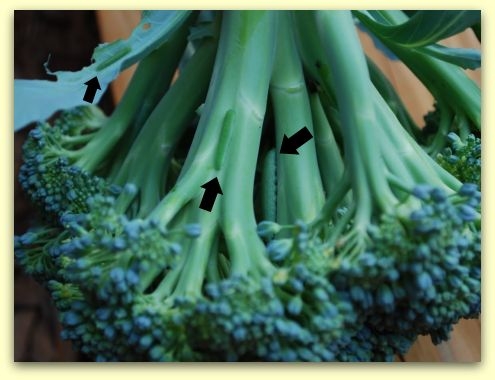
3) This one I found funny. Broccoli. Yep, you should grow your own organic broccoli. Have any of you grown broccoli? I have no problem with growing your own food, even broccoli. I just appreciate the ability to choose not to. I don’t like the extra protein.

Mmmm...worms.

 
Well, those are just a few of the examples in the slide show…there are 29 slides to go through, all with varying degrees of ridiculousness. What’s funny to me is that it wraps it all up with this advice, “One thing the experts agree on: Regardless of whether you choose locally grown, organic, or conventional foods, the important thing is to eat plenty of produce. The health benefits of such a diet far outweigh any potential risks from pesticide exposure.” Oh, so the first 28 slides are supposed to make you terrified of all food not organic, and the last one says, “Eh, the risks aren’t that great, just eat.” Whew. I was worried for a minute.
 
Let’s cut to the chase. When it comes down to it: eat. Eat what you want, eat sensibly and get it from whatever source you have available. Supermarket, farmer’s market, online…just eat. If you have the desire and time to grow your own, do it. If you have the desire and time to shop farmer’s markets, do it. If you are a busy person with limited time and whatever is at the one-stop-shop is what you can grab, do it.
 
It’s time we stop making parents feel guilty for what we eat and just relish in the fact that we can feed our children. And by that, I mean HEALTHY foods, not just fast food.
 
That all being said, I respect organic farmers and see a true need for their products. There isn’t a single method of agriculture that isn’t needed for our future. I have not one problem with their product. Not one.
 
Organic farmers: thank you for all you do and the food you provide. Conventional farmers: thank you for all you do and the food you provide. WebMD: quit making me scared of the people that feed me, they’re nice.
 
I know, because I am one.

A Matter of Fact

Last week, a question was asked by a local news station for people to comment on. I was going to let the question slide, but then some of the comments got out of hand, and I felt the strong desire to say something. Actually, I felt the strong desire to hit someone, but common sense took over and I used my brain, not my brawn.

This was the question:

If you’re receiving federal crop insurance payments or government money as a farmer, are you a hypocrite if you’re against government subsidies?

Nice one, eh?

The funny thing is, I have no problem with the conversation taking place. And I have no problem with trying to brainstorm for better solutions. But I DO have a problem with people accusing farmers of wrong-doing, when they haven’t a clue as to how the system works to begin with.

To begin with, if you aren’t familiar with crop insurance, perhaps you should check out this link and read up on it. But to give you a quick, few-word synopsis, it boils down to this: you cannot be eligible for disaster payments if you don’t have crop insurance. That’s right, they’re intermingled. One comes with another.

So, that being said, I don’t necessarily favor government payments…but I’m not stupid. We have to protect our farm and our family from disasters, because contrary to what some say, you can’t just walk away from a natural disaster and wait for the weather to get nice and start farming again. You can lose everything in an instant.

I’m sure you’re thinking, “But Val, no one would ever think that.” Wrong.

This is a direct quote from the conversation on facebook, “As a wife of a carpenter, when the weather gets bad and he can’t work he doesn’t get paid..period…sorry if the crop was ruined due to weather, but why should you get help and us nothing? We grew up in farming families also, so we know alittle of what we are talking about.” (Name withheld to protect the…well, uneducated? I guess?)

My response was a little sharp-tongued, but served the purpose:

“Dear carpenter’s wife, I believe a more appropriate analogy would be your husband building a two-story, $300,000 house. Paying all of the inputs, including electrical work, lumber and labor, and then watching as the house burns down in a fire caused by lightning and then being told that he could try again next year. We’re not talking about being out of work for a day or two, we’re talking about losing a whole year’s worth of costs…and those bills get paid, whether the crop makes it or not. There are fewer farmers feeding more people every year. Yes, there are problems with the system and we need to make changes, and yes, there are cases of abuse, just like any industry. But we need to work together, not criticize and point fingers.”

So why am I writing this? Read the last line. We need to work together, and work towards a future that makes sure that farmers can do what they do best, and lawmakers and constituents and interest groups can all work together and make sure that there is a future to be had.

Do you understand the power that you have? Do you understand the strength of your voice? Your vote?

Please, don’t misjudge how important you are…and please, don’t shrug off such serious issues as disasters and insurance without putting some thought and time into it. Our future…all of our future…is needing some change.

And don’t be mistaken. The only one who can provide that is us.

It only takes a spark…

Today has been a banner day, but not always in a good way. I’ve been happy, I’ve been sad, I’ve been frustrated and I’ve been downright ticked…and that was all before noon! Actually, today’s emotions had a lot to do with social media and perceptions.

To begin with, McD’s has launched a campaign called #MeetTheFarmers. It’s all about improving their image, after some pretty damaging stuff has been spread like wildfire throughout the internet world. Now, I don’t blame them one bit…I do have to agree that it’s about time we take responsibility for our own actions, including what we put in our mouths.

But what I don’t like is the impression that McD’s is doing something cutting edge by introducing farmers to their consumers. It’s something that’s been going on for years, and it doesn’t take a marketing genius or billion dollar budget to accomplish.

I’m all for the interaction, and welcome the conversations that are starting because of it…and I’m hoping and praying that the trend continues. But remember, these conversations have been going for quite some time now, and many have started without the big-name push.

For example:

  • A dairy farmer in Alabama…a true salt-of-the-earth type of guy, with a great family and an uncanny ability to make a song about cow poop sound catchy.
  • A Prairie Mama in North Dakota, who I had the pleasure of meeting through social media, and shudder to think of what my life would now be without her. Who tells the story of ag from a first-hand view, yet has spent enough time in the corporate world that she makes it seem so polished and effortless. She has connected Rockin’ Rural Women from across the country. Not only is she an inspiration, but her mother is as well, blogging from the farm and bringing the outside world a little closer to the field…truly connecting the farm to the plate.
  • A busy mom, with 3 Kids and Lots of Pigs, who took an idea and ran with it, and turned it into a GREAT way to connect women and introduce others to life on the farm.
  • A dairy mom, who recently had baby #3, writes a great blog and is willing to step out of the box and do unheard of things…like sell a pig on Twitter.

I could go on…the list would probably be in the hundreds. People, farmers, that I’ve met and make it a priority to share their story, and the story of agriculture, with others through social media.

And they do it without an endorsement deal, they do it without promised reimbursement and they do it out of passion and love for an industry that provides them a great way of life and a lifestyle that many could only dream about.

No, it may not be the golden arches, but I’m confident that although #MeetTheFarmer may be a trending topic on Twitter, the connections that are made will continue to grow and be built through the hard work of dedicated producers.

I’d bet a Big Mac on it.

Preparing for calving

I had been tossing around the idea of doing a post like this for a while now, but never actually wrote it out. But after a dear friend sent someone my direction today for this type of information, I decided that I better get to typing while the juices were flowing.

(Sorry if there are many typos…my desktop is in the shop, and my new keyboard for my new iPad is a tad tough to get used to!)

Anyway, I was asked what kind of things are needed to get ready for calving season, from a new farmwife, getting ready to embark on her first calving season. And since we are just about a month away from calving on our own farm, I thought this was a timely topic. So here’s my calving top 10 list (and please remember, this is a great list for my farm…each operation has their own way of doing things, but this is what works for us):

1) Figure out your schedule ahead of time. Write down appointments, meetings, etc. Make sure that you are both on the same page. That way, if you’re taking night checks (like I do), you can start getting ready for it by going to bed a little earlier. No need to go into calving season already tired and worn out. That’ll come soon enough!

2) Have a working (and effective) alarm clock! The first few nights of getting up every two hours isn’t a problem for me…but the last few weeks seem to be pretty rough. If my alarm clock isn’t obnoxious, I’ll sleep right through it, which can be bad news for a new calf born in subzero temps!

3) Get a good set of walkie-talkies. Charge them. Use them. In our area, cell phones don’t always have the best of signals, especially in the barn. Walkie-talkies can be a God-send. But only if they’re working! 😉 (It also helps if the other party has theirs on them…and on. Right dear?)

4) Have the vet’s number in your phone. And posted near the door. And have the phone readily available…and charged. Hmm…I seem to be speaking from experience, eh? Anyway, there’s nothing worse than searching for the vet’s number at a ridiculous hour…and then realizing you don’t have a phone nearby anyway!

5) Be prepared. Have your supplies on-hand ahead of time, and readily accessible. That includes: calving sleeves, lube, pulling chain, rope, warming box, milk replacer, colostrum, ear tags, ear tag marker, calving record book, baseball bat and whatever else your vet may suggest or request.


We have one of these for every calving season, since 1988.


6) Be prepared for the weather. In our area, we generally have very cold temps and snow. Although this year, we’re going into 2012 with no snow on the ground and above average temperatures! Yay! My calving wardrobe includes a set of Carhartt coveralls (purple, in fact), a pair of Muck boots and a good set of gloves, various hats and a scarf. A good pair of coveralls makes bundling up at 2 a.m. a little less painful, and a good pair of boots make sure my feet stay dry and toasty. Both are very important to me!

7) Have some meals ready ahead of time. Freeze lasagna, have some pizzas on stand-by, whatever is appealing to you. Soups, chili, snacks…and hide some, so when you think you’re out, you have an emergency stash. Unless your husband takes that as some kind of personal challenge to find your hidden treasures, then you’ll go into your stash and come up with empty wrappers. Kids are good for that, too.

8) Don’t forget to pay bills. Set them up on auto-pay, set your cell phone to send you a reminder, whatever may be. Sometimes calving season can seem a little crazy and hectic, and sometimes the days kind of meld into one another. You’ll look at the calendar and realize that a week has gone by…and perhaps you should shower. (Just kidding!)

9) Don’t forget to take time for yourself. Yes, it’s a crazy time, but it’s amazing to watch the new calves playing, watch a heifer loving up on her first-born calf, and experience all the craziness that comes with calving. But you can’t forget to spend a moment or two snuggled on the couch, watching the news before you both fall asleep; enjoy a warm meal together, even if it’s something as simple as warmed-up pizza; and take a moment whenever you can, to thank God for all you’ve been given. I’m going to double up on that last one this year…I couldn’t thank Him enough for the gifts of 2011.

Our cows are normally red...not snow covered!


10) Don’t forget to pack your patience. It’ll be tested. When everyone is tired, no one is getting a good nights sleep and tempers are running hot, even the silliest of missteps can set off some fireworks. But just remember, this too shall pass. And before you know it, life will be back to “normal.” Whatever “normal” is.

Watching out for #BSLabels

So, what’s a #BSLabel? Well, it’s one of those things that make a REAL great marketing plan…but don’t have much fact behind it. Or maybe it’s something so elementary that it isn’t needed on a label.

Like boneless bananas.

Or perhaps gluten-free fruit.

You will find these labels everywhere. And unsuspecting consumers fall for them. A lot.

Today I’m going to shed some light on one I found in my own grocery store. And it’s pretty comical…in a what-won’t-you-say-to-try-to-make-a-buck sort of way.

Check it out:

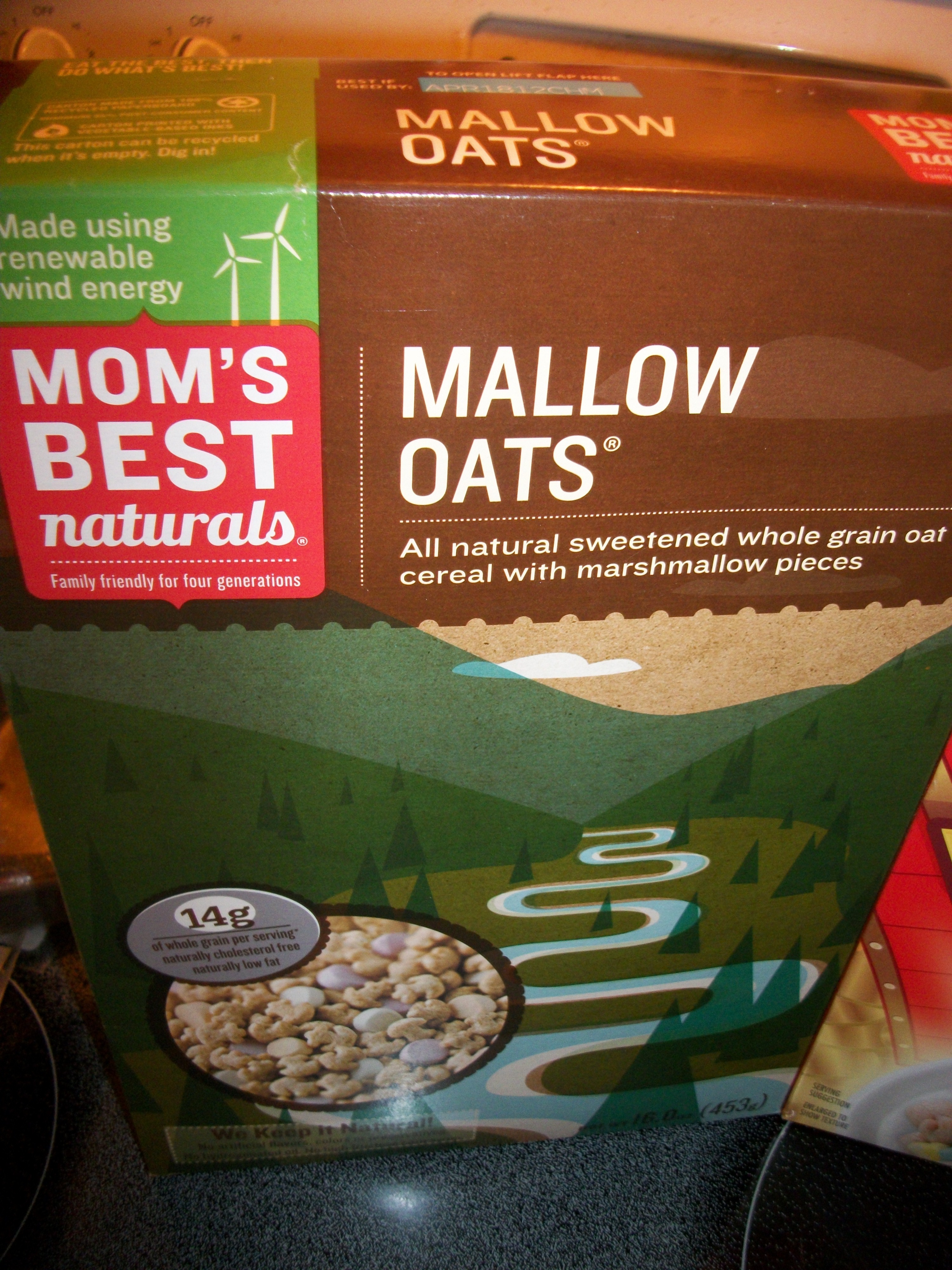
Here are two different cereal’s. One is a “natural” cereal, made with renewable energy and packaged in a box that’s recyclable! (Let’s just take this one step at a time, don’t jump ahead of me now!)

Well, maybe Mom's Best isn't really her best effort. But great marketing!

The other is a store-brand version of the same cereal (even same shapes!):

Just a plain-old sugar-sweetened regular cereal.

Let’s start off with one of it’s number one claims. (For comparison’s sake, we’ll call them Mom’s and Treasures.) Mom’s has NO high fructose corn syrup. Treasure lists HFCS on its label. But wait a minute…upon further inspection Mom’s has evaporated milled sugar, dextrose AND regular corn syrup.

So what’s the difference between HFCS and regular corn syrup? Well, basically just one chemical process. Where regular corn syrup is concentrated, making the sugar content higher, necessitating less syrup for the same amount of sweetness. That’s about it in a nutshell. (It’s way more complicated and scientific than that, but you get the picture, right? If not, Google it.)

Well, let’s take a further look at the nutritional breakdowns. That’s where I become a little surprised.

Compare the two labels...it's a little shocking to read the difference.

Here’s the breakdown:

Cereal type                  Mom’s                               Treasure

Vitamin A                        0%                                   10%

Vitamin C                         0%                                   10%

Calcium                           10%                                   10%

Iron                                     4%                                   50%

Vitamin D                          0%                                   10%

Thiamin                              8%                                    25%

Riboflavin                          2%                                    25%

Niacin                                  0%                                    25%

Vitamin B6                         0%                                    25%

Folate (Folic Acid)          2%                                    50%

Vitamin B12                       0%                                    25%

Zinc                                        2%                                    25%

So “Mom’s Best” might not actually be the “best.” But let’s move on. Hmmm…serving size the same? Check. Well, then the other information, like calorie count and stuff must be way off, right? Wrong.

According to the packaging, Mom’s has 120 calories, which includes 10 calories from fat. The same goes for Treasure. What about total fat? Same. Cholesterol? Same. Sodium? Same. Potassium? Same. Total carbohydrates? Oops. We have a difference here. Mom’s has 24 grams…and Treasure has a whopping 25 grams. Protein? Same.

Hmmm…well, the packaging. That makes a difference, right? Mom’s advertises that the carton is made from 100% recycled paperboard, with a minimum of 35% post-consumer content. That must blow Treasure out of the water, right? Wrong again. Treasure has the exact same label. Mom’s does say that the carton, “Can be recycled when it’s empty. Dig in!” Well, guess what? So can Treasure.

Guess what?!? They can BOTH be recycled!

So what’s the problem? People are free to market as they choose, right? And I completely agree. But it’s also our responsibility, as consumers, to sort through the garbage and figure out which labels have true value and meaning, and which ones are #BSLabels. And don’t get me wrong, there’s nothing wrong with choosing either one of these cereals…if you know why you’re choosing them.

If you don’t think there’s a difference, I have some boneless bananas to sell you.

Want to read more? Check out this post on peanut butter by The Farmer’s Life.