Afraid of answers – the truth behind bio-terrorists

It’s headlines like these that make me shudder and breaks my heart:

“Golden Rice” trial vandalized

I don’t understand it…and I don’t think I ever will.

I’ve been working on a post that delves a little deeper into my thoughts, but let me just say that this is the highest act of cowardice I have seen in quite some time.

Why would someone destroy research that was in the process of going through a safety check? My only conclusion is that they are afraid of the answers…or more importantly, afraid that the answer isn’t what they want to hear.

Here’s what else I’ve concluded about the terrorists cowards…I’m guessing they’ve never experienced hunger…true hunger. Not “I-don’t-feel-like-going-to-the-kitchen” hunger, but the “I-haven’t-ate-in-days-and-don’t-know-where-I-will-get-food” hunger. Once you’ve reached that point, you generally don’t go around destroying food sources. Period.

And for those that will throw around the idea that it’s OK to destroy research, because genetically modified food isn’t the way it was meant to be…well, that’s kind of where the post I’ve been working on is heading. But until I get it worded right, and until I feel a little better about putting my thoughts out there, all I have to say is this: I’m pretty certain that in the Good Book there isn’t a chapter in Genesis about how Adam and Eve gave Abel powdered formula from a can when nothing else would keep him alive, but somehow we’ve moved from the apple in Eden to where we are today. Because of that, I have a little boy that is defying the odds and showing science a thing or two about statistics.

And that, my friends, is neither about strictly God or strictly science, it’s an interwoven tale of how the two can exist…and why I believe completely in both.

No, we cannot blindly follow science and not tread lightly when it comes to advances and technology. But destroying research before the answers can be recorded? Yes, it truly makes my heart break.

Imagine, if you will, the public outrage if someone were to destroy a cancer research lab? Hunger and malnourishment are just as real and just as deadly as cancer…and the answers are there, we just need to be willing to look for them.

And we can’t be afraid of what we will find.

I fully expect that there will be people the vehemently disagree with me and my points of view…that’s your right, and I respect that, but I also expect all comments to be polite, clean and non-derogatory. If you are unable to follow those guidelines, please refrain from commenting. I reserve the right to edit/delete as needed. Thank you!
Embracing the science behind cropping technology

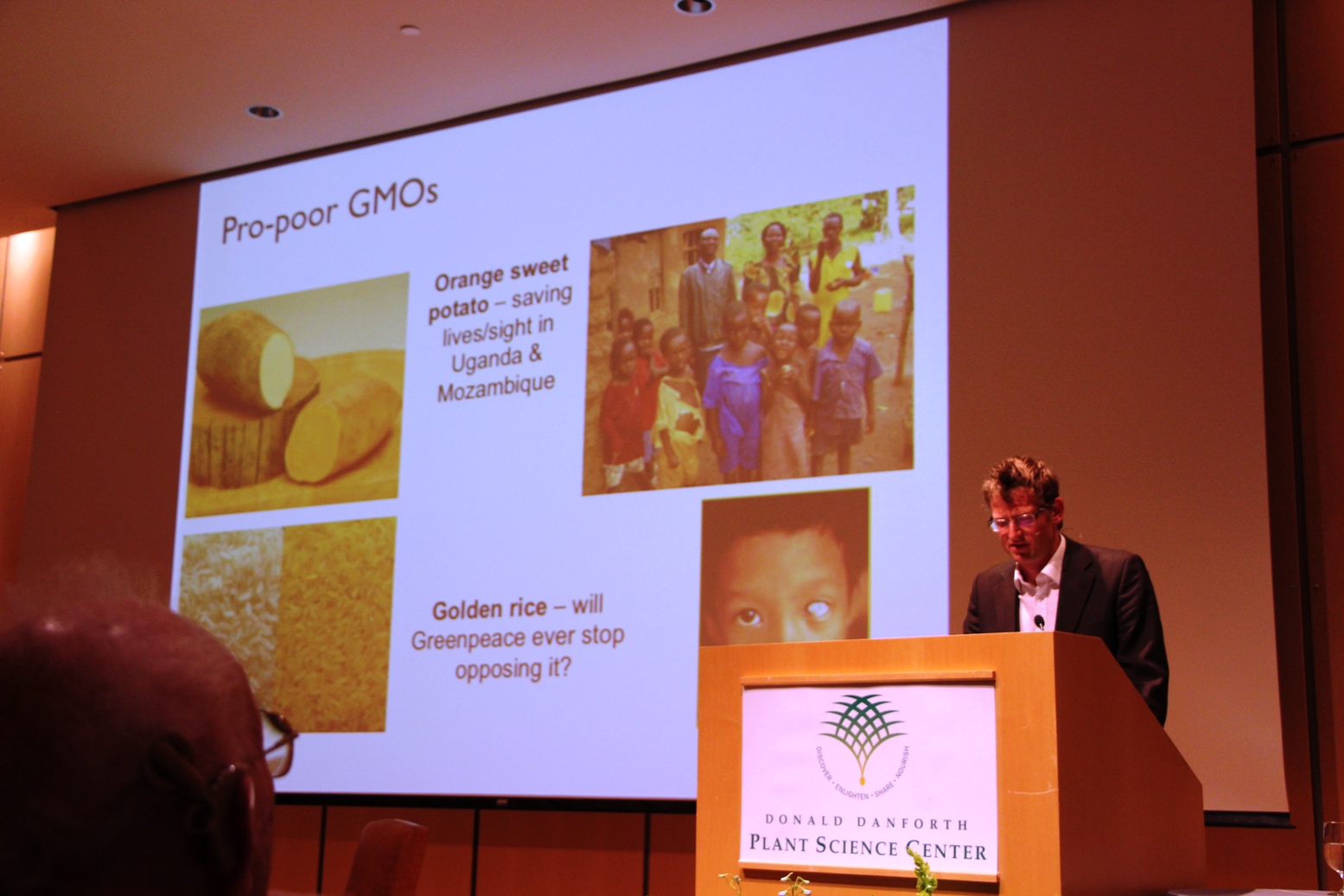
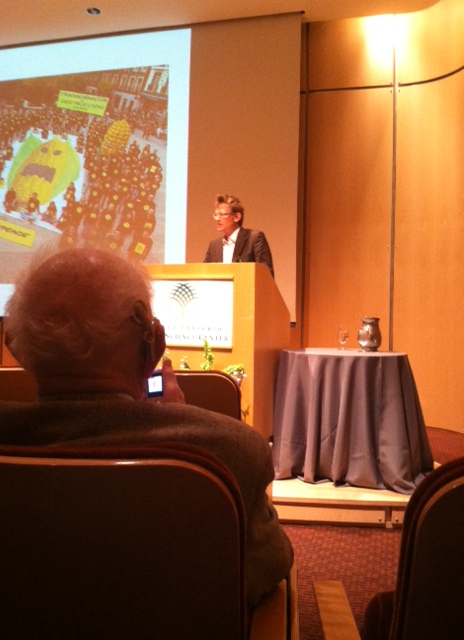
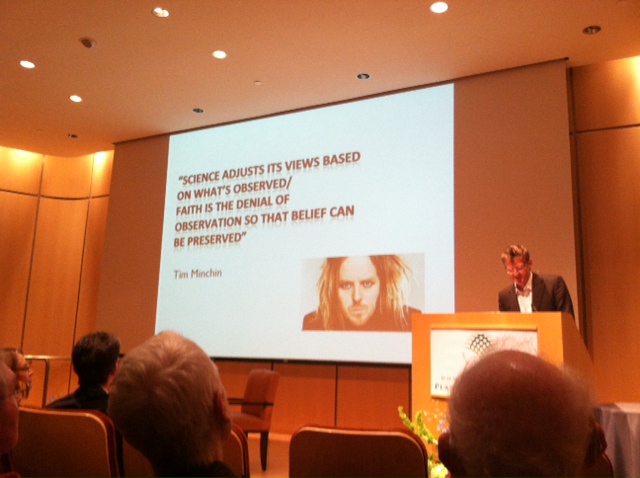
As I mentioned previously, I was fortunate to have the opportunity to travel to St. Louis last week to meet a few people that I admire greatly. Today, I’m going to tell you about Mark Lynas, a former anti-GMO activist, and the information that he shared at the Donald Danforth Plant Science Center. (Check out the whole presentation here!)

I was lucky enough to be in the audience to hear Mark Lynas give a presentation in St. Louis last week. The opportunity was an amazing one indeed!

I was lucky enough to be in the audience to hear Mark Lynas give a presentation in St. Louis last week. The opportunity was an amazing one indeed!

Mr. Lynas started out with a humble statement that it was hard for him to believe that an apology could make someone skyrocket to fame. Yet, he sincerely was sorry for the destruction and set-backs he may have caused by standing in the way of authentic scientific research by destroying biotech-research sites.

He wasn’t proud of what he had done…but what troubled him the most was the fact that he was so willing to buy into what the other activist groups were selling. It was concerning to realize that he would ignore the science behind biotechnology.

Science. The facts are there, but how long will it take until we believe them?

Science. The facts are there, but how long will it take until we believe them?

Lynas grew up determined to see a more equal world. Poverty is a terrible thing to witness, an even more terrible thing to stare in the face. Trust me, once you’ve lived with hunger…true hunger…you’ll never forget that feeling. Ever. And I do have to agree with him that we have seen great progress in our time in the reduction of poverty across the globe. Yet, I do believe we can all agree that we have a lot more work to do.

As Lynas said during his presentation, “I knew how everyone else should live their lives.”

Isn’t that the truth? Isn’t it so much easier to determine what everyone else should be doing? And how difficult is it to admit that our preconceived notions may be incorrect? That what we’ve determined to be our “truth,” may be anything but?

Lynas now works mainly behind the scenes, to help in the battle for food security. He knows that scientists need to start standing up and speaking for themselves. We cannot continue to dismiss science or destroy tests before the research is completed.

Does that mean that we should jump into biotechnology and genetically modified crops without hesitation or questions? Definitely not. Caution is always prudent, and surely mistakes will be made along the way, but we cannot keep looking back, we need to move forward to provide for our growing population.

Using technology can help ease hunger around the world.

Using technology can help ease hunger around the world.

“Being anti-science is being anti-humanitarianism.”


So where does this leave us? Do people have the right to know what’s in their food?

Of course. Questions will always be present, and people who make purchases have the right to determine what they want to buy. But as Lynas remarked, “On the other hand, we can’t stamp a skull and crossbones on every label.” And those at the market shelves should be well-aware that places such as Whole Foods are making a great living by thriving on the fear surrounding GMO foods. In fact, it’s one of the most successful marketing ploys today.

Overall, the few hours that I was able to meet Mark Lynas and take in his presentation will go down as one of the most memorable mornings of my life (right after the birth’s of my four boys!).

How do I sum up my whole experience? Well, I believe that I can quote Lynas directly on this one:

“You don’t stop learning when you leave school.”

Amen.

I know that not all of my readers agree with me on the biotechnology issue, and that’s quite all right by me. But please, if you choose to leave a comment, keep it positive and offer solutions, not just blame the establishment for your lot in life and threaten my farm or family. In the near future, I will tackle the religious side to the biotechnology argument. And it may or may not surprise you! Thanks for reading, and come back soon!

Is our farm “green”?

Recently I’ve had an influx of new followers on Twitter. Thanks to the wonders of modern technology, and my smart phone, I was able to be notified right away.

At first, I didn’t think much of it, but then I noticed that one had added me to a list. The list was titled “green bloggers.”

Come again?

My first response was, “Boy, are they going to be disappointed.” But then, with encouragement from some social media friends, I realized it was an amazing opportunity. How could I pass it up?

You see, “green” is another one of those terms that has been hijacked. It is defined so differently by so many, and yet, those that it means the most to (farmers), use it the least.

In fact, I was first offended to be called “green.” To me, it meant that I was more concerned about how my food got to my plate, instead of just being grateful that I could put anything there to begin with.

To me, it meant that I thought more about how creation began, and less about how it would continue to exist.

To me, it meant that I was willing to believe that God could use science to create cures for diseases and ailments, but He couldn’t possibly use science to prevent starvation and hunger for so many of His people.

But none of that is true.

Being green is an awareness, not an action. It can be, but doesn’t have to be. Being green is making decisions knowing that you’re doing what’s best for the next generation, based on what you know and your experiences. Being green is as personal as religion. Yet, being green is NOT a religion.

A lot of times farmers shout from the rooftops, that they are the original environmentalists. And although that is true, it doesn’t do us much good to keep reminding people…instead, let’s show them.

Actions speak louder than words. So let our actions speak for us.

Is our equipment larger than decades ago? Yes, but that means fewer trips down the field, less fuel and greater time savings. Do our fields have company signs on them? Sure, but it’s more for our information than anything else. That way, farmers know which brand, which variety worked best for the conditions that year. Kind of like labeling your garden rows.

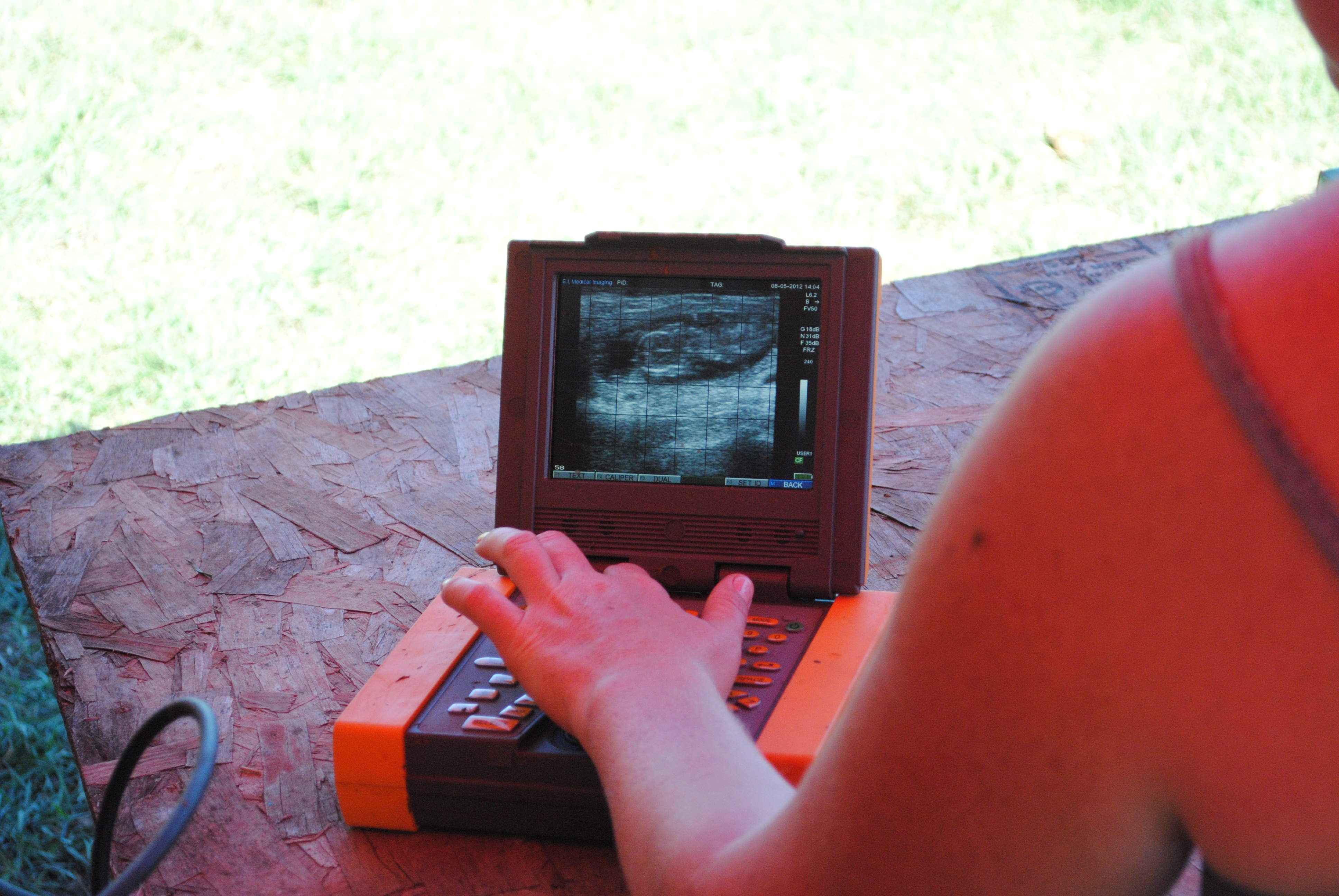
ultrasound technology in calving

Technology can be very useful in farming, including ultrasounding for calving!

The biggest question? Is technology worth it? My simple answer is yes. Unequivocally. Technology allows us the opportunity to use state-of-the-art tools and equipment to use less fuel, less chemicals and be more aware of our impact on future generations.

But the best part of it all? The ability to choose. You can choose what does/does not work for your farm, your family, your table, your health. And that’s the most important advancement of all.

I no longer will fear the label of being “green.” Instead, I will embrace it. And perhaps, before long, my grass will be, too.

How does our farm decide what to plant?

I’m tackling a few farming basics on my blog these next few weeks, for a variety of reasons: 1) spring still hasn’t showed up, delaying my ability to be outside and getting some of these very same things done, 2) search terms leading people to my blog are letting me know that there are a lot of these types of questions out there, and 3) I just so happen to have recorded some radio spots that answered these questions.

I decided to tackle our planting decisions as the first in this series. Why? Because with the late spring, our decisions may be changing rapidly. But in order for you to understand the process, I’ll start at the beginning and walk you through it all.

The next year’s season begins as we’re taking the crop off. (Actually, the plans are in the works for years before, but harvest kicks off the next planting cycle.) Boss Man has a general idea of what he would like to plant, where he plans on planting it, and what the soil conditions will need to be like in order to be successful.

combine, harvest

EJ, watching his Dad and Grandfather harvest a crop a few years ago. We have since upgraded from the Massey combines to green machines!

Shortly after the crop is off the field, our crop consultant performs soil tests to see where our soil stands, as far as nutrient needs and potential for the next spring. That’s how we find out what amenities we may need to apply, for example nitrogen, phosphorous, etc. It’s pretty scientific, but we can rely on the expertise of those around us. Kind of like taking kids to the doctor to see what’s wrong, but instead of our kids, it’s our soil we test.

Many times seed companies have discounts or incentives that make it worthwhile to purchase your seed early. That way they know what types of seed may be in demand the next year, etc., and they can better prepare for the coming spring as well.

Now, let me be clear with one thing. Although different companies may offer incentives, the decision lies solely with our farm.

I know that some believe that seed companies bully farmers or push them into making different decisions, but I have yet to encounter anything of the sort. In fact, most of the seed representatives in our area are local farmers themselves.

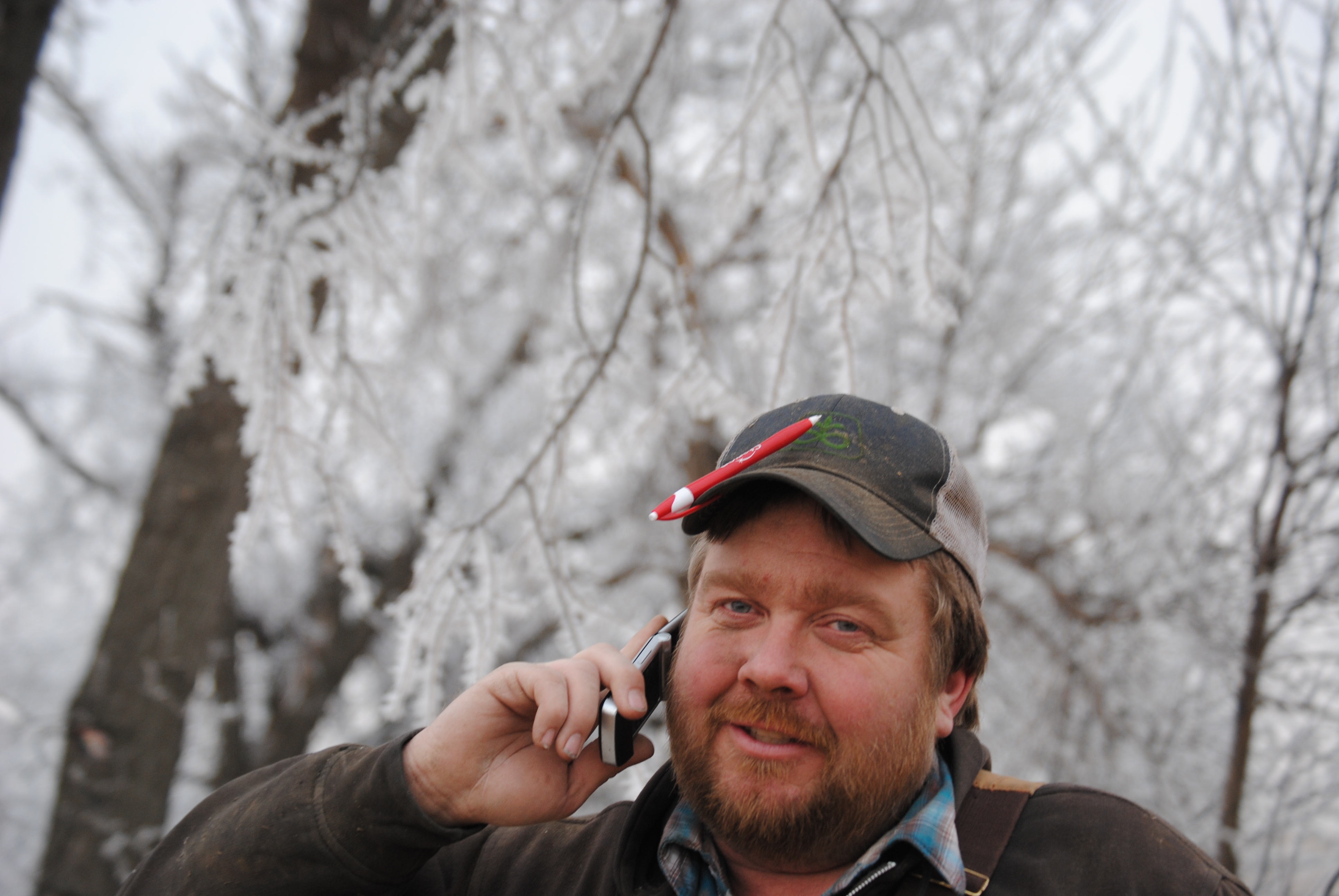
farm freebies

Freebies, such as the hat on Boss Man’s head, may seem like great perks…but they don’t play a role in the decisions we make.

On our farm, we diversify. We buy a variety of seed from a variety of places, and make decisions for the next year based on how the crop performed and the availability at the time that we order.

But that’s also all done in pencil…meaning it may change.

Take, for example, this spring. Here it is, the end of April. And we still have snow on the ground. The weather isn’t much above freezing. It doesn’t appear as if field work will happen any time soon. Before too long, some of the crop decisions that were made last fall, may end up being changed.

late spring in ND

A recent storm dumped an extra 20 inches of snow on us. It’ll be a few days before we can even think about planting anything!

Why is that?

Different crops are planted at different times, ensuring that they have a long enough growing season to fully mature before harvest. It’s similar to planning a garden. You know you can plant peas throughout the season. They grow fast and mature quickly. Yet, tomatoes are more finicky about their care and need more time to produce fruit.

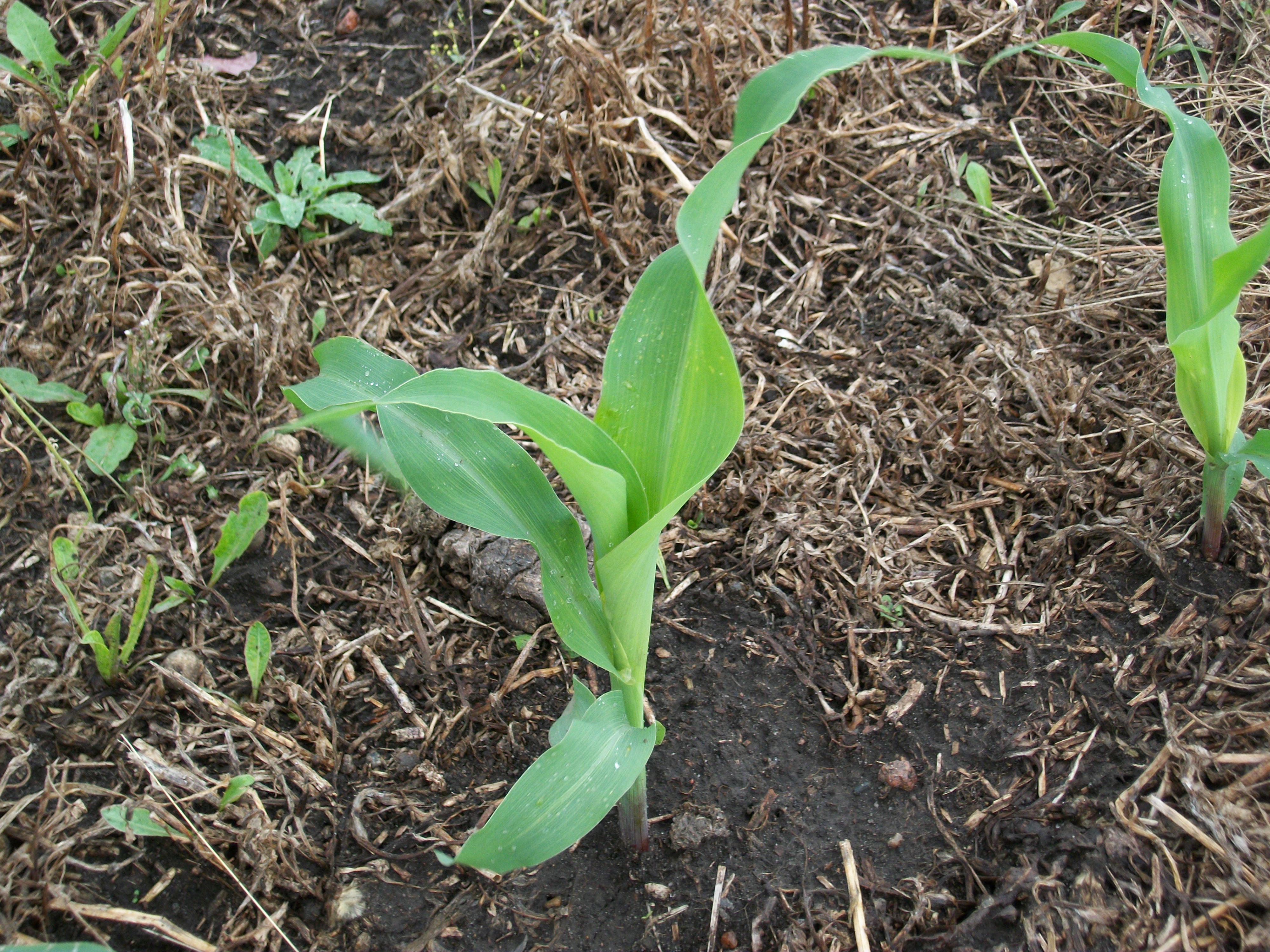
corn plant

We do what we can to make sure our crops have the best change to produce a great crop!

The same is true for crops. Corn and wheat are planted earlier in the year. They need more time to mature. Soybeans can be planted later in the season. They grow more quickly and can perform very well with a later plant date. The same is true for all of the crops that farms grow. Each one is different, and the current conditions may change a farmer’s whole plan for the year.

So the next time you hear that one company or another controls a farmer’s decision on what they plant, you can let people know that you know that’s not true. The ultimate decision lies with the farm.

Well, actually, it’s a much higher power than that, but the farmer is the one whose name is on the dotted line.

What does Earth Day mean on the farm?

Today is April 22, 2013…Earth Day. A lot of people talk about how important today is, but I believe that it’s important to consider the earth and its resources every day.

So how does our farm celebrate Earth Day? Well, to tell you the truth, we don’t. No, today is not a special day. We continue to use our resources as wisely as we can, making decisions based on what our land needs, what we have available and what is best for the future…just as we do every day.

But what does that entail? Let me show you.

seeding wheat, residue

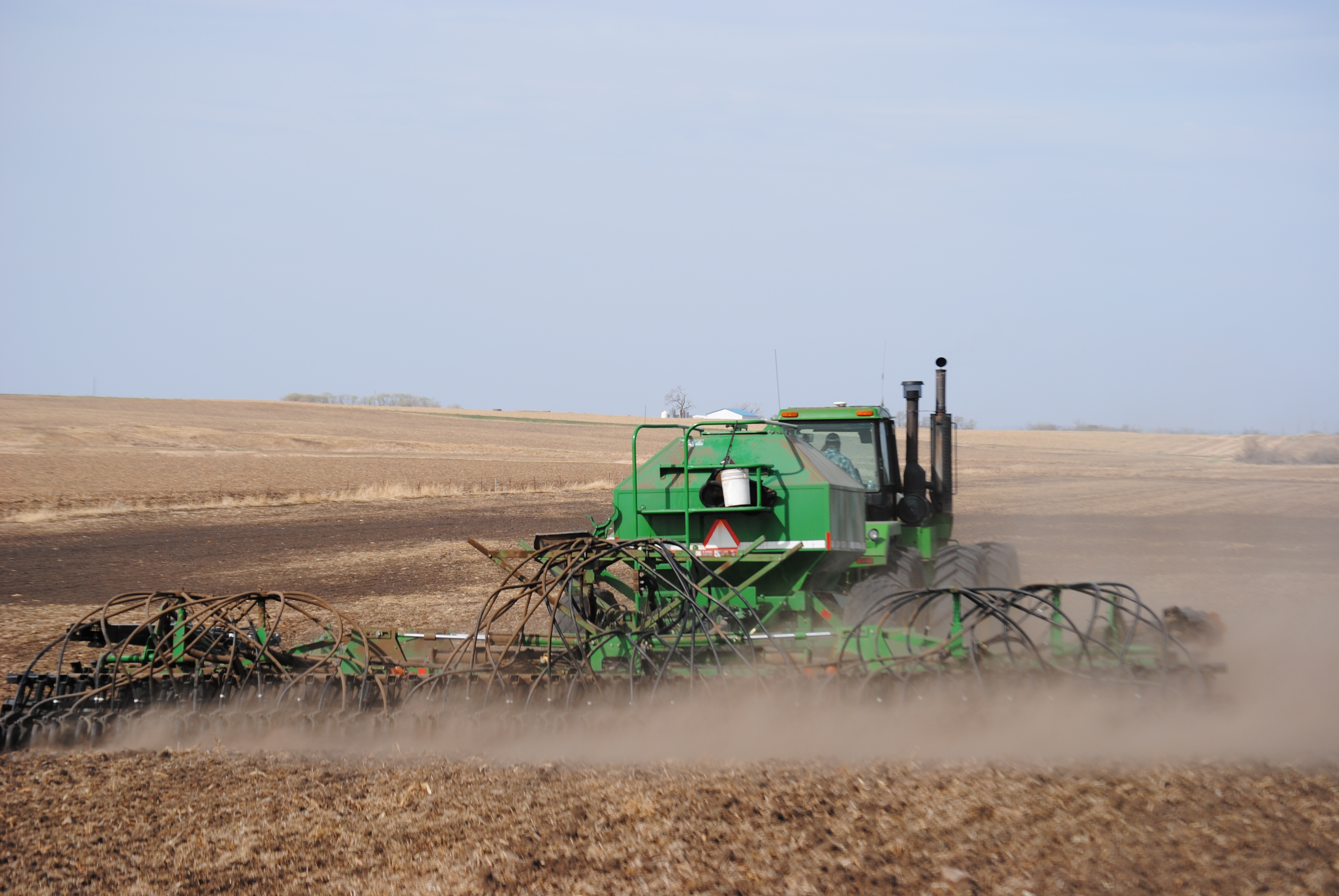
We try to limit the number of passes we make on a field with equipment. Notice the residue on the field? That’s the crop left over from last year. It breaks down and gives nutrients back to the soil. With our late spring, we won’t be in the field any time soon.

crop consultant, analysis, soil samples

We spend a lot of time going over information that’s been collected through soil samples, analysis and watching forecasts. We work closely with our crop consultant to make decisions that are best for our farm and its future.

new calf, straw

All safe and warm inside, no matter what’s going on outside, thanks in part to the wheat straw used for bedding! It’s a farm version of recycling!

Our heating system on our farm is also a great way that we save resources and limit our impact on the environment. The water from our well heats our house, our shop and also waters our cattle! Read more about it here.

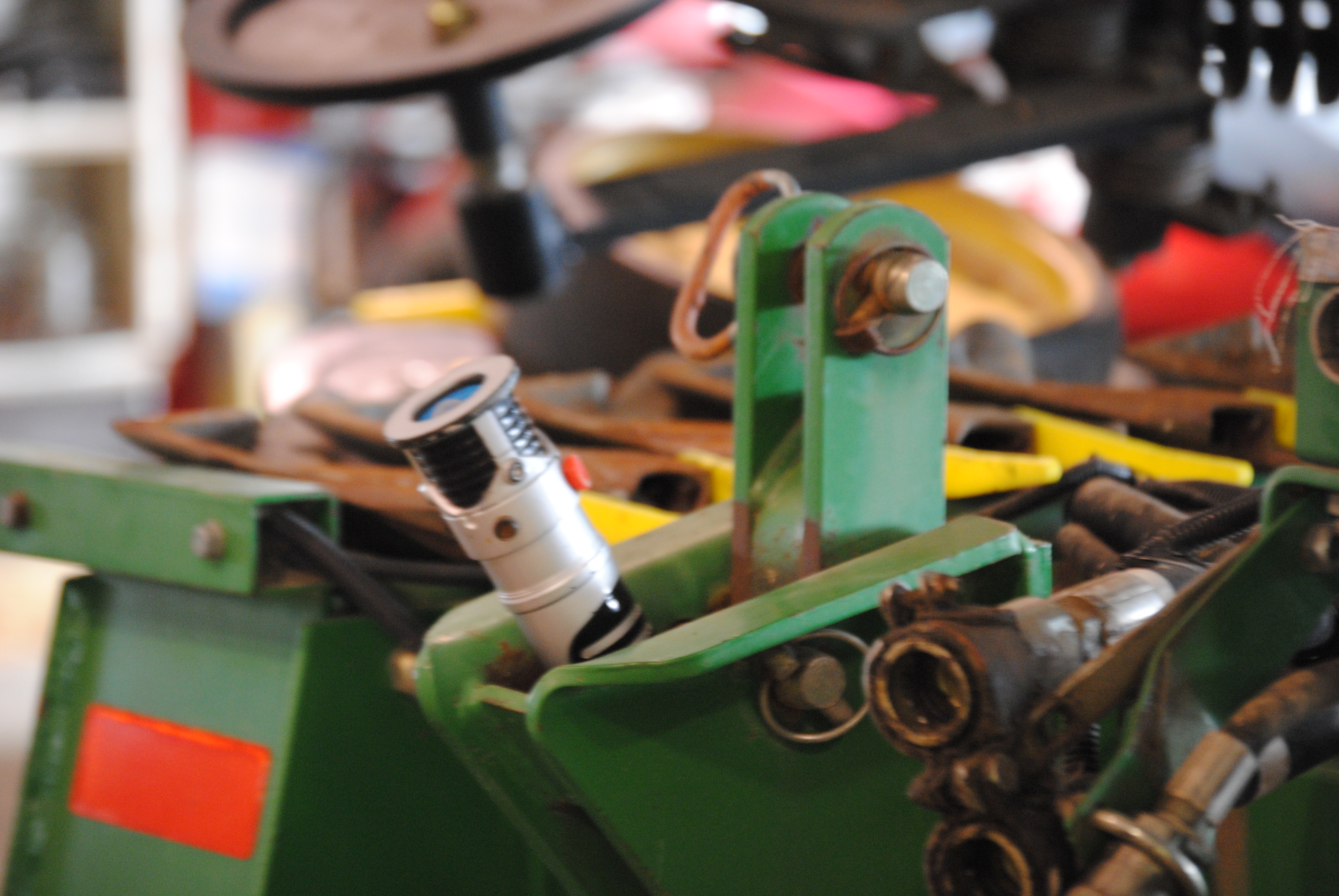
Right now spring has yet to show up here in North Dakota, so we’re working on getting our equipment ready for planting. By making sure our equipment is ready, we’re able to use less fuel, make fewer stops, leave our tractors running less often and are able to use our time the most efficiently. But sometimes you have to call in some outside help:

light saber, farming

EJ thought that the planter needed a little extra guidance last year.

force, light saber

Yes, the force was with us.

I guess it’s never too early for the next generation to start adding in their ideas for modifications! 🙂

These are just a few of the steps we take to make sure that we’re doing our part to conserve resources. We know that we need to take care of our land, so that the future of our farm is secure. Happy Earth Day, everyone!


From one farm wife to another

Recently I was privileged enough to be included with a group of bloggers that went through a little bit of a bloggy-boot camp. It was a great experience, and although I haven’t had the chance to make all the improvements I intend to make to this site, I’ve learned a TON!

I would like to thank the woman who was responsible for taking so many of us under her wing and giving us the opportunity to learn from her, and make some amazing changes to our blogs. Thank you, Judi!!! (By the way, Judi designed the rockin’ gravatar that you see on my sidebar!)

Thanks, Judi!

Thanks, Judi!

My favorite? The contact page. Sounds so simple and easy, and yet, it’s allowed so many to reach out to me already! You know, sometimes it’s the little things that mean the most!

Instead of rehashing it all, I’ll just send you over to my Prairie Sister’s page at j.l.d. photograph and let you check out what we were all doing. She covers it amazingly!

Are there any other improvements you would like to see? Just let me know, and I’ll figure out a way to do it! (Or at least try, within reason!) 😉

Want to check out what others are saying about our crash course in blogging? Read what my good friend, JP, has put together!

From one generation to the next: National Ag Day

Today is National Ag Day, and this year’s theme is “Generations Nourishing Generations.” It couldn’t be worded more perfectly, and if our farm were to have a motto, that would be about as close as we could get.

The whole reason for everything we do is for the next generation, and the one after that, and the one…well, you get what I mean. It’s the reason I became involved in agriculture advocacy, it’s the reason I started this blog, and it’s the reason I continue to communicate with those willing to talk to me. And I will keep going, as long as I can.

This farm started in the hopes of providing a brighter future for those being raised here – and we continue to have the same hopes and aspirations.

Whether it be through the gifts we are given...

Whether it be through the gifts we are given…

...the moments we share...

…the moments we share…

...the fences we cross...

…the fences we cross…

...or the challenges we face.

…or the challenges we face.

One thing I know for certain, I will enjoy every minute of watching the next generation grow and appreciate the land that we have come to love. And that is the best gift of all.

How are you celebrating National Ag Day?

From our next generation to yours...

From our next generation to yours…


Calving: Backwards Calf

Last weekend I was helping out Boss Man by checking cows. It’s become one area of the farm that I’ve been able to get more involved in, and I love it!

During these cold winter months, we check the cows that are due to calve at least every two hours. We do this to try to guarantee that calves are born inside the barn, where it’s warm and protected, not outside in the cold. Another reason to check on the cows frequently is to be able to step in when there’s a problem…and on this particular day, there was one.

One of the things that I look for when checking cows is the presentation of the calf being born. As I talked about a few days ago, sometimes calves can present in ways that jeopardize their chances of being born safely, much like when a woman is pregnant and the baby is breech, transverse, etc.

When a calf is presenting in the best way possible, they come out feet first, headlong…kind of like they’re diving out of the birth canal. You look for the feet to be toes down, or the hoof to be pointing down towards the ground.

If you look under the tail, you can see that this calf is being born with its toes pointed down. By catching the cow at this stage, she was able to walk to the barn and safely have the calf indoors.

If you look under the tail, you can see that this calf is being born with its toes pointed down. By catching the cow at this stage, she was able to walk to the barn and safely have the calf indoors.

Unfortunately, when I noticed that this particular cow was calving, the toes were pointing up, indicating that the calf was coming backwards. In this case, the calf needs to be born quickly, so that it’s chance of survival is greatest.

This is a diagram of what a calf being born backwards looks like. A quick delivery is the best way to guarantee that the calf has its greatest chance of survival.

This is a diagram of what a calf being born backwards looks like. A quick delivery is the best way to guarantee that the calf has its greatest chance of survival.

I let Boss Man know what I had found, and he was able to assist the cow in having the calf quickly by attaching pulling chains to the back feet, and pulling the calf out at the same time that the cow is pushing. Together they quickly delivered a healthy calf.

It’s great to know that your hard work and dedication can pay off, especially when sleep is short and the list of things to do gets long.

Have any other questions about calving? Be sure to ask, and I’ll explain what I can (and look up what I can’t!).

What size of brush are you painting with?

I was watching George paint the other day. It was entertaining, to say the least. He would take his paint brush, and dip it into all the colors, then get mad when the picture didn’t turn out like he had imagined.

And he expected me to fix it.

This little artist gets frustrated when his "masterpieces" don't turn out as he had planned. Sometimes instead of being a beautiful piece of work, it's just a mess.

This little artist gets frustrated when his “masterpieces” don’t turn out as he had planned. Sometimes instead of being a beautiful piece of work, it’s just a mess.

He couldn’t understand that the problem had nothing to do with the paper, or the colors, or me, but with the brush he was using and how he was using it. And it reminded me of a conversation that occurred online just a few days ago.

Someone had asked for anyone that calves this time of year to explain why they were doing it, or what benefit they perceived that they received from calving during winter months. I simply replied that with our operation and our location, calving now was what made sense for us. It’s easier for us to deal with snow and ice, rather than mud and muck.

It's not always fun making sure the cattle stay protected in the winter, but the snow and ice are easier to deal with than...

It’s not always fun making sure the cattle stay protected in the winter, but the snow and ice are easier to deal with than…

...the mud and muck of spring.

…the mud and muck of spring.

The responses that were received from people who also raise cattle was surprising, to say the least. One claimed that “winter calvers” are not profitable. Another claimed that some people were too willing to work too hard to make less money.

At first I was somewhat offended. And then I found a little humor in the situation. But it wasn’t until watching my son getting frustrated with his paintbrush, that I realized the lesson that could be learned from it all.

The humor? Well, if winter calving operations aren’t profitable…then there’s a check or two that I’d like to cancel. Mainly to the Internal Revenue Service. In fact, Boss Man will be relieved to hear that our days of paying taxes are over, now that we’re a non-profit livestock operation. Whew! What a relief that is! (Yes, my dear reader, that is sarcasm. At its finest.)

The lesson? When you’re working to make a better picture, using a broad brush will get you nowhere. Neither will dipping your brush in all the colors, expecting for everything to work out.

The same is true in agriculture…or any industry, actually. What makes our way of life great is the reds, the blues, the greens and yellows. All the different colors, all the different sizes, shapes and methods of operating. Together, agriculture makes a wonderful picture. But if you try to shoehorn us all into what you perceive to be the “only way” to farm or ranch? Well, you end up with a big old ugly mess.

We all have the same end result in mind. A great, abundant, affordable food supply for anyone looking for it. And the beauty is, in the great country we live in, the choices are there for you to make. You can decide the types of food you want, the way you want it raised and the price you want to pay for it…there’s always a decision, even if it’s take it or leave it.

Making sure that our calves are healthy and happy...that's our main objective, same as most anyone raising livestock.

Making sure that our calves are healthy and happy…that’s our main objective, same as most anyone raising livestock.

And we have choices, too. We decide our methods and what works for our operation – whether it’s calving now or in the fall, using no-till or conventional methods, growing organic crops or using biotechnology. It’s one of the main principles our country is built on.

I was upset by the insinuation that our operation was sub-par because of the decisions we made, but after the lesson my son taught me, I’ve taken something valuable away from what could have been a disappointing situation.

And that was my choice, too.

WW – Calving 2013

I have a lot of stuff running through my head, but not enough time to write it all down. Here’s some cuteness to get you through the day:

A peak at a new calf through the gate in the barn.

A peak at a new calf through the gate in the barn.

Fresh on the farm!

Fresh on the farm!

This is the fourth bull calf from #27, the famous cow the tweets!

This is the fourth bull calf from #27, the famous cow the tweets!

Just catching some rays!

Just catching some rays!

Strike a pose!

Strike a pose!

Most kids get in trouble when they drink milk straight from the carton!

Most kids get in trouble when they drink milk straight from the carton!